


Last Updated: August 2026
An option pricing method valuation is a way to split a company’s total equity value across its share classes. It treats each class, from common stock to preferred stock and options, as a call option on the whole business. The AICPA backs this model for cap tables with many tiers. A 409A valuation built this way often runs $2,500 to $9,000. Sofer Advisors uses the method most in venture-backed and 409A work, where preferred stock carries special rights.
The method matters most once a startup has raised several rounds. Each round can add a new class of preferred stock with its own payout rights. Those layered claims make a simple per-share split wrong. The option pricing method sorts out who gets paid, and how much, at every value the company might reach at exit.
Key Takeaways
- Value as options: The method treats each share class as a call option on total equity value.
- Five core inputs: It needs equity value, breakpoints, time to liquidity, volatility, and the risk-free rate.
- Built for 409A: The AICPA guide and IRC 409A rules favor it for complex cap tables.
- PWERM is the rival: PWERM fits firms with a clear, near exit; this method fits open outcomes.
- Hybrids are common: Many firms blend the method inside a PWERM frame for a defensible result.
These pieces work together to price each layer of a cap table. The sections below show how the method runs, what it needs, and when it beats the other models.
What is the option pricing method?
The option pricing method is a model that splits a company’s equity value across its share classes. It treats each class as a call option on the total business, priced with the Black-Scholes framework. Strike prices track the liquidation preferences of each preferred series. So the model shows what common stock is worth once senior claims are paid. That makes it a strong fit for venture-backed firms with layered rights.
The logic mirrors a real option. A call option only pays off above its strike price. In the same way, common stock only shares value once preferred holders clear their preferences. The method prices that gap with math, not guesswork. It gives a clear read on junior equity even when senior claims are large. For a wider view of value, see our guide on fair market value.
How does an OPM valuation work?
An OPM valuation works by modeling each share class as a call option on total equity value. It sets breakpoints, the value levels where proceeds shift from one class to the next. It then prices each layer with the Black-Scholes framework. The result shows how much value each class holds today. The Sofer Difference guides this work through four phases: Discovery, Diligence, Analysis, and Delivery.
Breakpoints are the heart of the method. Each one marks a point where payouts change as company value rises. Below the first breakpoint, senior preferred holders take most of the proceeds. Above it, junior classes and common stock start to share. The model measures the value that sits between each pair of breakpoints. That is how it turns a messy cap table into clear per-class values.
When is the option pricing method required?
The method is required when a cap table is complex and the exit path is unclear. The AICPA guide, Valuation of Privately-Held-Company Equity Securities Issued as Compensation, points to it for firms with many share classes. Teams also use it for IRC 409A work, which sets the fair market value of common stock for option grants. It supports ASC 820 fair value reporting too.
409A rules matter for any company that grants stock options. A defensible common stock price protects both the firm and its staff. The option pricing method gives that price a sound basis. It ties each grant to the real rights in the cap table. The same logic supports audit and financial reporting under ASC 820. The team helps owners match the method to the right standard, so the result holds up under review.
What are the key inputs for the OPM?
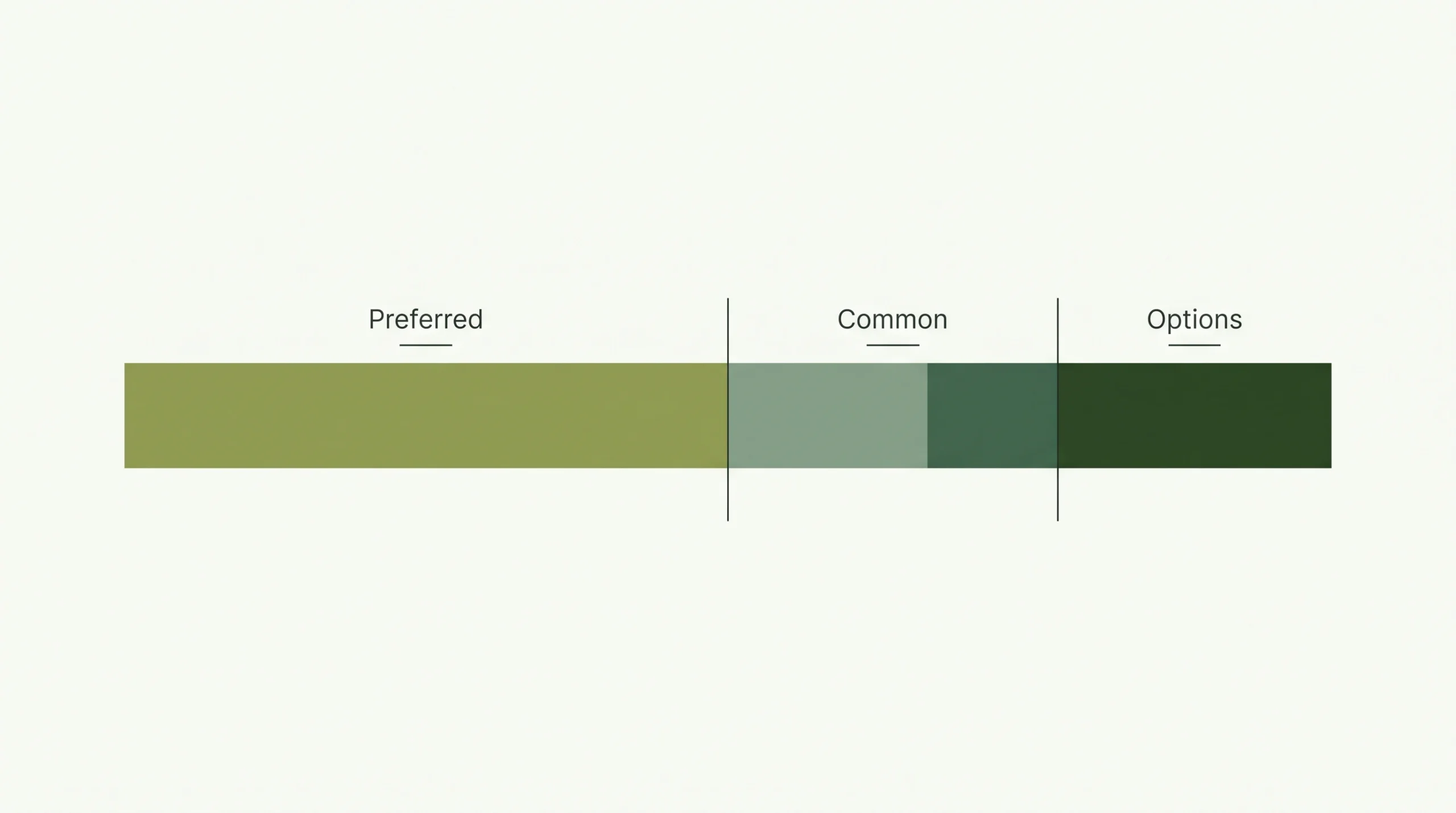
The method needs five inputs: total equity value, breakpoints, time to liquidity, volatility, and the risk-free rate. Each one shapes how value flows to the shared classes. Weak inputs lead to a weak result, so every input needs market support.
- Equity value: comes from a separate baseline business valuation.
- Breakpoints: read from the cap table and shareholder agreements.
- Time to liquidity: the years until a likely sale or IPO.
- Volatility: drawn from guideline public companies with similar risk.
- Risk-free rate: taken from current US Treasury yields.
These five inputs must line up with the company’s own facts. The team pulls volatility from guideline public companies with a similar size and risk profile. It sets the risk-free rate from Treasury yields that match the exit timeline. Breakpoints come straight from the legal papers that govern each shared class. When the inputs reflect real rights and real market data, the output can stand up to an audit or an IRS review. That is where careful diligence pays off.
How do OPM, PWERM, and CVM compare?
The three main allocation models are the option pricing method, PWERM, and the current value method. PWERM, the probability-weighted expected return method, prices a set of named exit scenarios. The current value method, or CVM, splits value as if the company sold today. Each one fits a different stage and a different level of certainty.
| Model | How it splits value | Best fit |
|---|---|---|
| Option pricing method | Treats share classes as call options across breakpoints | Open outcomes, complex cap tables |
| PWERM | Weights specific exit scenarios by probability | A clear, near-term exit path |
| Current value method (CVM) | Splits value as if the firm sold today | Very early or very late stage |
Stage drives the choice. Early firms often pick the option pricing method, since their exit path is still unclear. Firms near a sale or IPO lean on PWERM, which maps each outcome in detail. The current value method works only in narrow cases, such as a brand-new startup. Large firms like Alvarez and Marsal, Kroll, and Stout run all three for enterprise clients. Sofer Advisors, an Inc. 5000 firm in 2024 and 2025, brings that same senior-level rigor to middle-market owners.
How does DLOM affect the final value?
DLOM, the discount for lack of marketability, lowers the value of shares that cannot be sold with ease. Private stock has no ready market, so a buyer pays less for it. The option pricing method sets a value for each class before any discount. A DLOM is then applied to reach the final common stock price.
The size of the discount depends on the shares and the wait until a sale. A longer wait raises the discount, since the holder is locked in for more time. Analysts often use option-based models to size the DLOM itself. The team documents each step, so the discount rests on evidence, not a rule of thumb. This care reflects the Heart of a Teacher approach: show the owner the math, not just the answer. A clear DLOM keeps the final number defensible under USPAP and IRS review.
Frequently Asked Questions
What is option pricing in valuation?
Option pricing in valuation treats each share class as a call option on total equity value. Analysts use the Black-Scholes framework to price common stock, preferred stock, and options in one model. Each class shares value only above its own strike price, which tracks a liquidation preference. The team uses this method to find the fair value of junior equity when senior claims are large and clear.
What is the difference between OPM and PWERM?
The option pricing method prices share classes as options across breakpoints, without naming exact exit paths. It suits firms whose future is still open. PWERM, the probability-weighted expected return method, models specific outcomes such as a sale, an IPO, or a wind-down. It weights each one by probability and discounts the proceeds. Sofer Advisors helps owners pick the model that fits their stage and cap table.
What is a breakpoint in an OPM analysis?
A breakpoint is a value level where the split of proceeds among share classes changes. As total equity value rises past each point, a new class starts to share in the gains. Breakpoints come from the liquidation preferences and participation rights in the cap table. The team reads these points from shareholder agreements, so each layer of value maps to the right class.
Why is volatility a key input?
Volatility measures how much the company’s value may swing before an exit. Higher volatility raises the value of the call options in the model. That shift moves more value toward common stock and other junior classes. Analysts draw volatility from guideline public companies with similar risk and size. The team documents each pick, so the input stays market-based and holds up under a reporting review.
How does OPM relate to a 409A valuation?
A 409A valuation sets the fair market value of common stock for option grants. The option pricing method gives that value a sound basis when a firm has many share classes. It ties the common stock price to the real rights in the cap table. This meets IRS rules for deferred pay and equity awards. The team builds each 409A analysis with clear support for the final share price.
What is DLOM and why does it matter?
DLOM stands for the discount for lack of marketability. Private shares have no ready buyer, so they are worth less than public stock. The option pricing method sets a base value for each class, and a DLOM then lowers it. The size depends on the shares and the time to a likely sale. The team backs each discount with data, which keeps the final value defensible.
Is the Black-Scholes model still used?
The Black-Scholes framework is still the base for most option pricing method work. It gives a clear, steady way to price options on a complex cap table. Newer tools like PWERM exist, yet Black-Scholes remains a trusted standard for private firms and auditors. The team uses it when it fits the company’s stage and structure, in line with AICPA practice.
Can the OPM be used for profitable companies?
The method suits any firm with a complex cap table, not just early-stage startups. A mature, profitable company can still hold preferred stock, options, and layered rights. When the exit path stays open, the option pricing method allocates value well. The team checks whether the cap table is complex enough to need it, rather than a simpler income or market approach.
How much does a business valuation from Sofer Advisors cost?
A 409A or equity-allocation valuation from Sofer Advisors usually runs $2,500 to $9,000. The price depends on the company’s stage and how complex the cap table is. Simpler cap tables sit near the lower end, while many share classes raise the work and the fee. Full business valuations for deals or disputes run higher. Contact the team for a quote matched to your situation.
Related Case Studies
- Secondary Sales of Private Stock: Valuation and 409A Implications
- Section 83(b) Elections: Timing, Risk, Valuation
- Guideline Public Company Method: Comp Sets
Executive Summary
The option pricing method splits a company’s equity value across its share classes. It treats each class as a call option on the whole business, priced with the Black-Scholes framework. The model needs five inputs: equity value, breakpoints, time to liquidity, volatility, and the risk-free rate. It fits complex cap tables with open exit paths, and it supports IRC 409A and ASC 820 work. A 409A valuation built this way often runs $2,500 to $9,000. PWERM is the main rival for firms near a clear exit. A DLOM then lowers the value to a final, defensible common stock price.
What Should You Do Next?
Start by gathering your current cap table and shareholder agreements. These papers set the breakpoints and rights that drive the whole model. Then confirm the purpose of the work, since a 409A grant, an audit, and a deal each need a slightly different lens.
For a valuation you can stand behind, work with David Hern CPA ABV ASA. His team has given expert witness testimony in 11+ cases across Georgia, Florida, California, and New Mexico. Schedule a consultation to discuss the right method for your cap table.
People Also Read
- Excess Earnings: Valuing Goodwill and Assets
- The Net Asset Value Method: Balance Sheet Over Earnings
About the Author
This guide was prepared by David Hern CPA ABV ASA, founder of Sofer Advisors, a business valuation firm headquartered in Atlanta, GA serving clients across the United States. David holds dual accreditations as an Accredited Senior Appraiser (ASA) and is Accredited in Business Valuation (ABV), credentials recognized by the IRS, SEC, and FINRA. He also holds the Certified Exit Planning Advisor (CEPA) designation. With 15+ years of valuation experience, David has served as an expert witness in 11+ cases across multiple jurisdictions and built Sofer Advisors into an Inc. 5000-recognized firm with 180+ five-star Google reviews. Its full W2 employee team maintains subscriptions to all major valuation databases and operates under a next business day response policy. For professional business valuation services, visit soferadvisors.com/about-us/ or contact Sofer Advisors at soferadvisors.com/contact-us/.
Disclaimer: This content is for informational purposes only and does not constitute professional valuation advice. Business valuation conclusions depend on specific facts and circumstances. Contact Sofer Advisors for guidance regarding your specific situation.









