


Last Updated: November 2026
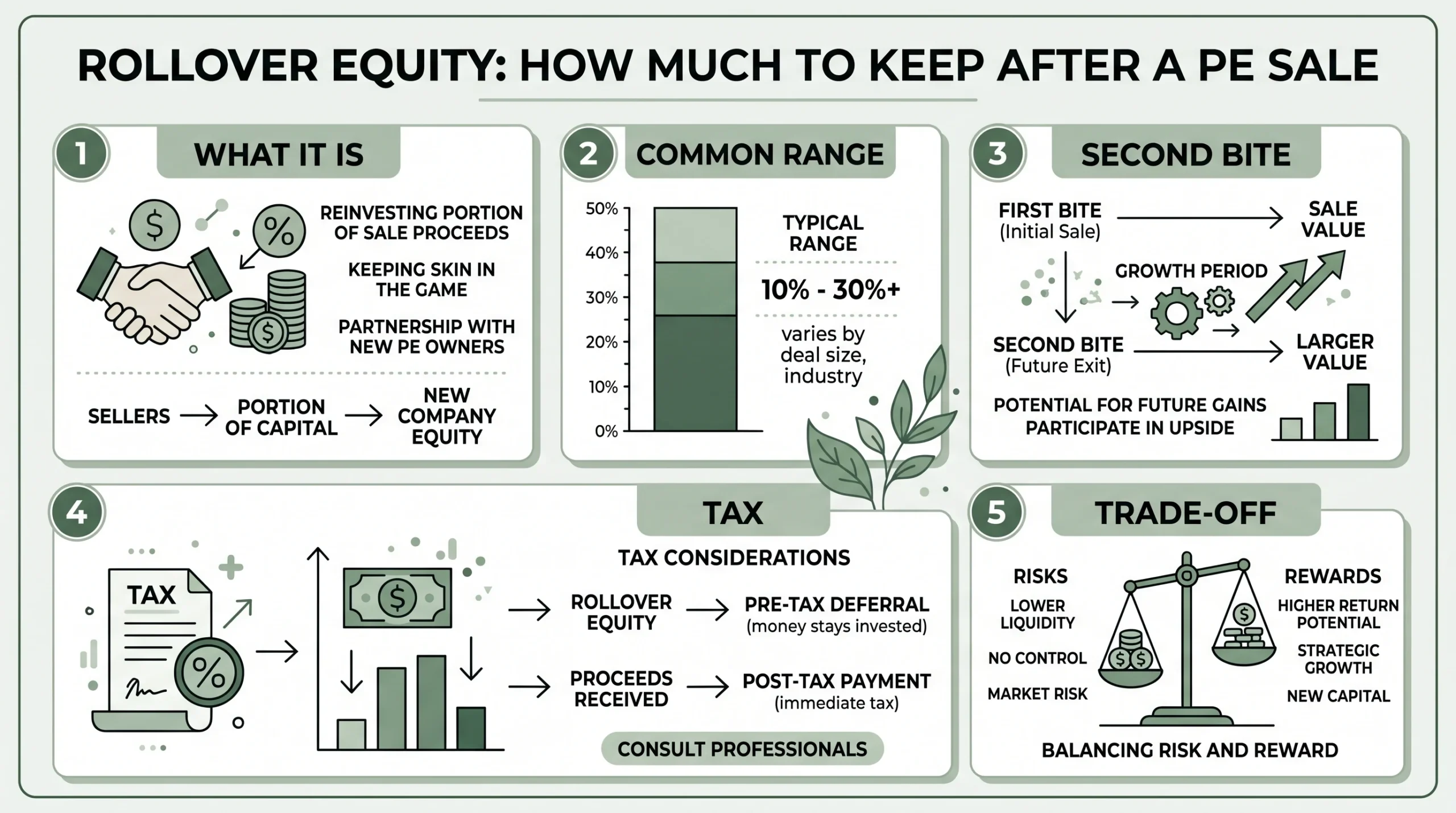
Most sellers in a private equity sale roll over somewhere between 10 and 40 percent of their proceeds, though that is a common range, not a rule. Rollover equity means reinvesting part of your sale proceeds into the buyer’s new company instead of taking the whole price in cash. You become a minority owner next to the private equity sponsor, who holds the majority. The choice sets how much cash you keep today and how much upside you keep for later. A well-structured rollover can defer tax on the rolled portion, though the cash portion is still taxed.
Sofer Advisors helps owners, CPAs, and attorneys weigh that trade-off.
This guide explains how rollover equity works, how much sellers tend to roll, how it is taxed, and where the risks sit.
Key Takeaways
- What it is: Rollover equity means reinvesting part of your sale proceeds into the buyer’s new company.
- Common range: Sellers often roll somewhere between 10% and 40% of proceeds. That is a common range, not a rule.
- Second bite: You keep a stake, so you can share in future growth if the business sells again.
- Tax: A well-structured rollover can defer tax on the rolled portion. It is not tax-free, and the cash portion is still taxed.
- Trade-off: You take a minority position. You give up control and liquidity until the next exit.
What is rollover equity in a PE sale?
Rollover equity is the part of the sale you reinvest. In a private equity buyout, the sponsor rarely wants a clean, all-cash exit. They often ask the seller to keep some skin in the game. So you roll part of your proceeds into equity of the new company. You take the rest in cash.
The new company is the entity the buyer sets up to hold the business. Your rolled dollars buy units or shares in it. You are now a minority owner next to the private equity sponsor. The sponsor holds the majority and leads the deal.
The rollover is set at closing. The purchase agreement spells out how much you roll and what you get in return. It names the entity, the class of equity, and the price. Read that section with the same care you give the cash terms. The rolled stake is money too, just in a different form.
How much equity do sellers usually roll over?
There is no fixed figure. Most rollovers fall somewhere between 10% and 40% of the seller’s proceeds. Treat that as a common range, not a rule. The exact amount depends on the deal.
Several things move the number. The sponsor’s strategy matters. So does the size of the company and the seller’s own plans. A buyer who wants the owner to stay often asks for a larger roll. A buyer who plans a quick change in leadership may ask for less. The final figure comes out of negotiation.
Why do private equity firms ask for a rollover?
The main reason is alignment. A rollover keeps the seller invested in the outcome. Both sides now win or lose together. That shared stake pushes the seller to help the business grow.
Rollovers also help keep key people in place. Many owners still run daily operations. Keeping them as part owners protects that knowledge and leadership. A rollover can bridge a price gap too. If the two sides disagree on value, rolled equity lets the seller bet on future upside instead.
What are the main benefits for the seller?
The biggest draw is the “second bite at the apple.” You keep a stake in the business. If the sponsor grows it and sells again, your stake can pay off a second time. That later sale often happens at a higher price.
You also stay aligned with a partner who has capital and a plan. A strong sponsor brings money, systems, and contacts. If the plan works, your minority stake can rise in value. The upside is real, but it is not promised.
A rollover can carry a tax benefit as well. The rolled portion may defer tax rather than trigger it at closing. That lets more of your money stay invested in the business. We cover how that works in the tax section below. A rollover also keeps you close to a company you know. You spent years building it, and you may still believe in its path.
How is a rollover taxed?
Tax is where rollovers turn technical. The general idea is deferral, not avoidance. A properly structured rollover can defer tax on the portion you roll. It is not tax-free. You usually account for the rolled gain later, at the next sale.
The cash portion works differently. You are generally taxed on that part in the year of the sale. The structure and entity type drive the result. A roll into a partnership or LLC may use IRC Section 721. A roll into a corporation may use IRC Section 351. Each path has its own rules and limits.
These rules are detailed and fact-specific. Small changes in structure can change the tax outcome. Always confirm the treatment with a qualified tax advisor before you sign.
How is rollover equity valued?
Rollover equity is usually priced at the same per-unit value the sponsor pays. If the sponsor buys units at a set price, your rolled dollars buy units at that price too. This keeps the entry point consistent for both sides.
There can be exceptions. Sometimes the seller receives a different class of equity. That class may carry different rights or terms. A formal, independent business valuation helps confirm the price is fair. It also supports the tax position if the IRS asks questions later.
Here is an illustrative example. Say you sell for $10 million and agree to roll 20%. You take $8 million in cash. You reinvest $2 million for equity in the new company. These figures are illustrative only. Your real numbers will depend on the deal.
A defensible valuation does more than set a price. It gives both sides a shared basis for the trade. It also helps you check the terms attached to your class of equity. If your stake sits behind preferred shares, the headline price may overstate its real worth. An independent review brings that detail into view before you commit.
What are the key risks?
The first risk is loss of control. You move from owner to minority partner. The sponsor sets the direction and makes the big calls. Your vote may carry little weight.
The second risk is illiquidity. You usually cannot sell your rolled stake when you want. Your money is tied up until the next exit. That exit may take several years, and the timing is not yours to pick.
The third risk is the terms of the equity itself. Your stake may sit behind other classes in a payout. Shareholder agreements can include drag-along rights, vesting, and limited information rights. Read these terms with care. They decide how much your stake is really worth.
What terms should you check in a rollover agreement?
A few terms decide what your stake is really worth. Look at each one before you sign.
Vesting schedules tie part of your equity to time or service. If you leave early, you may forfeit some of it. Put and call options set how and when shares can be bought or sold later. Liquidation preferences fix who gets paid first in a sale or wind-down. If other classes rank ahead of you, you collect only after they are paid.
Drag-along rights let the majority owner force you to sell in a later deal. Anti-dilution terms protect your percentage when new money comes in. Board seats and information rights shape how much say and insight you keep. Weak information rights can leave you guessing about the company’s health. Walk through these terms with your advisors so nothing surprises you later.
How does a rollover compare to an all-cash sale?
A rollover and an all-cash sale solve different goals. A full cash sale gives you certainty today. You take all your money and walk away. A rollover trades some of that cash for a shot at future gains.
| Factor | All-Cash Sale | Partial Rollover |
|---|---|---|
| Cash at closing | Full proceeds | Part of proceeds |
| Future upside | None | Possible second bite |
| Control | Ends at closing | Minority, limited |
| Risk | Ends at closing | Tied to new company |
| Tax | Taxed at the sale | Deferral may apply to the rolled part |
The right choice depends on you. Think about your risk tolerance and your plans. Owners who want to be done often prefer cash. Owners who believe in the next chapter may prefer to roll. Many sellers pick a middle path and roll a modest share.
There is no single correct answer. The best structure is the one that fits your goals, your timeline, and your need for cash today. Weigh the certainty of cash against the chance of a larger payout later. Then test that choice against the real terms on the table.
Frequently Asked Questions
What is rollover equity in simple terms?
Rollover equity is the part of your sale you reinvest in the buyer’s new company. Instead of all cash, you keep a minority stake. You then share in what the business does next.
How much do sellers usually roll over?
Most rolls land somewhere between 10% and 40% of proceeds. That is a common range, not a set rule. The final amount comes from negotiation and the sponsor’s plan.
Is rollover equity tax-free?
No. A well-structured rollover can defer tax on the rolled portion. It is not tax-free. The cash you take is generally taxed in the year of the sale. Confirm your situation with a tax advisor.
What is the “second bite at the apple”?
It is the chance to earn a second payout. You keep a stake, so when the sponsor sells the business again, your stake can pay off once more. The second sale is often at a higher price.
At what price is rollover equity set?
It is usually set at the same per-unit price the sponsor pays. Sometimes the seller gets a different class of equity with different terms. An independent valuation helps confirm the price is fair.
Can I sell my rollover equity whenever I want?
Usually not. Your stake is illiquid. You typically wait until the next exit to cash out. That can take several years, and you do not control the timing.
What rights do I give up with a rollover?
You often give up control. As a minority owner, the sponsor sets the direction. Your equity may also sit behind other classes and carry vesting or drag-along terms.
Which tax code sections apply to a rollover?
It depends on the entity. A roll into a partnership or LLC may use IRC Section 721. A roll into a corporation may use IRC Section 351. The right path depends on the structure, so get tax advice first.
Does a rollover make sense for every seller?
No. It fits owners who believe in the next chapter and can wait for the next exit. Owners who want full certainty today may prefer an all-cash sale.
Related Case Studies
- Rollover Equity in PE Deals: Valued and Taxed
- The Build-Up Method: Cost of Equity for Private Firms
- After-Tax Proceeds: How to Model the Net of a Business Sale
Executive Summary
Rollover equity means reinvesting part of your sale proceeds into the buyer’s new company. Sellers often roll somewhere between 10% and 40% of proceeds. That is a common range, not a rule. You keep a stake, so you can share in future growth if the business sells again. A well-structured rollover can defer tax on the rolled portion. It is not tax-free, and the cash portion is still taxed. You take a minority position. You give up control and liquidity until the next exit.
What Should You Do Next?
Start by deciding what matters most: cash now or a shot at more later. Then review the terms that shape a rollover, from the price per unit to vesting and liquidation rights. A clear, independent valuation gives you a solid basis for that review. Sofer Advisors provides independent valuations for owners weighing a rollover. This work is led by David Hern CPA ABV ASA CVA. Schedule a free consultation to talk through your situation.
People Also Read
About the Author
This guide was prepared by David Hern CPA ABV ASA CVA, founder of Sofer Advisors, a business valuation firm headquartered in Atlanta, GA serving clients across the United States. David holds accreditations as an Accredited Senior Appraiser (ASA) and is Accredited in Business Valuation (ABV), credentials recognized by the IRS, SEC, and FINRA, and is also a Certified Valuation Analyst (CVA). David has served as an expert witness in dozens of cases across multiple jurisdictions, and Sofer Advisors is an Inc. 5000 honoree in 2024 and 2025 with 240+ five-star Google reviews.
For professional business valuation services, visit soferadvisors.com/about-us/ or contact Sofer Advisors at soferadvisors.com/contact-us/.
Disclaimer: This content is for informational purposes only and does not constitute professional valuation advice. Business valuation conclusions depend on specific facts and circumstances. Contact Sofer Advisors for guidance regarding your specific situation.









