

Last Updated: August 2026
A gas station valuation is the process of setting the fair market value of a fuel and convenience store business. It weighs fuel margins, inside store sales, the real estate, and any car wash or restaurant. It also prices the risk from underground storage tanks. Private deal data shows these sites often sell near 2.5 to 4.5 times seller’s discretionary earnings. Sofer Advisors builds each number on that market evidence, not a rule of thumb.
Owners reach for a gas station valuation at a sale, an SBA loan, a partner buyout, or an estate plan, and each demands a defensible number. The mix matters here. Convenience-store in-store sales topped $340 billion in 2025, so the shop increasingly carries the value while fuel earns only cents per gallon. Prices swing and tank risk hides under the lot, so the figure turns on documented evidence.
Key Takeaways
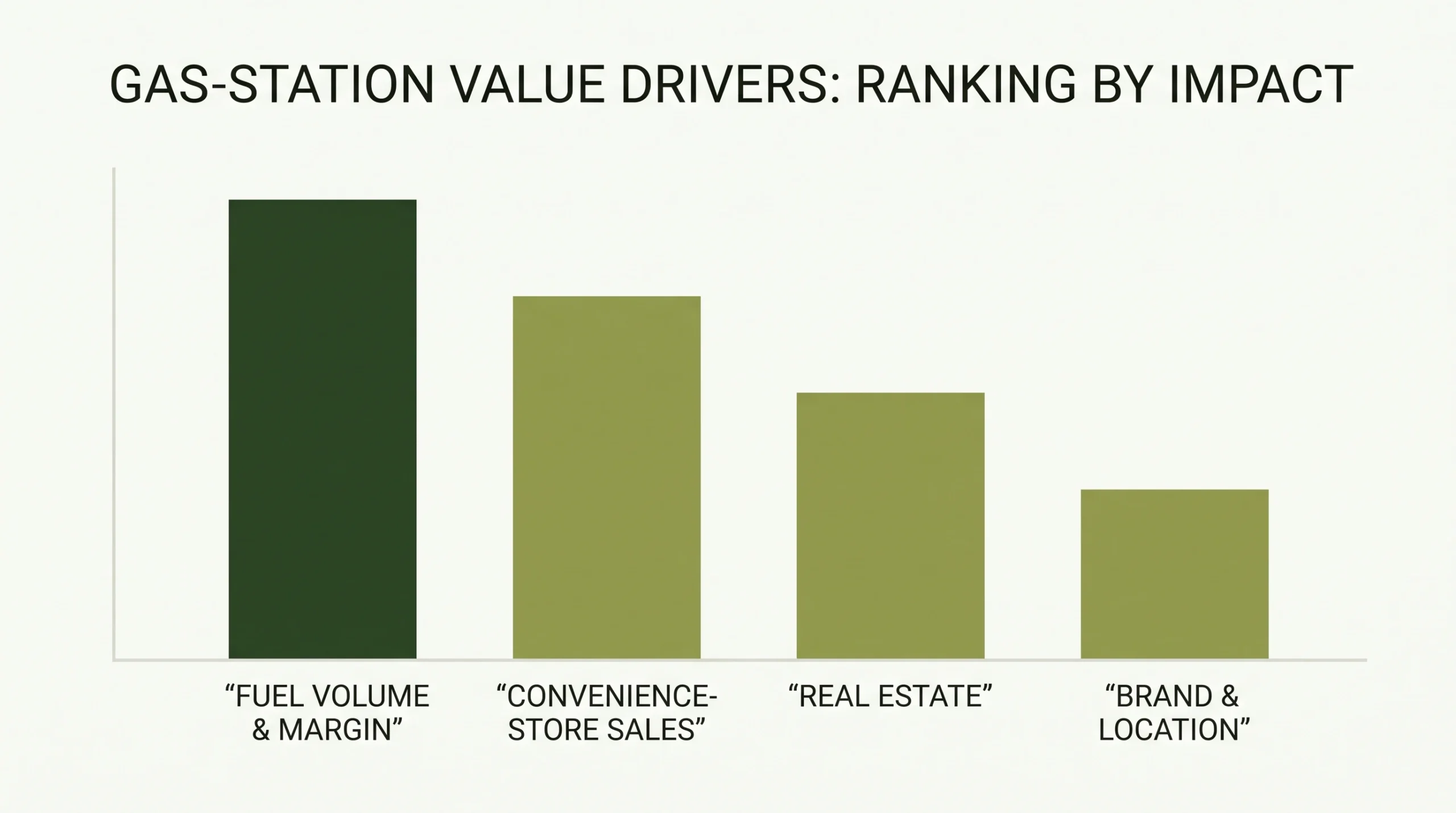
- Two profit engines: Thin fuel volume pairs with high-margin store sales. The store often carries the value.
- Earnings multiples: Appraisers apply an SDE or EBITDA multiple to normalized earnings. Site size guides the choice.
- Tank risk: Underground storage tanks can leak and create cleanup costs. A Phase I assessment measures the exposure.
- Supply contract: Branded fuel adds stable margins, while unbranded fuel can earn more per gallon. The contract terms matter.
- Real estate and add-ons: Owning the land adds a stable asset. A car wash or quick-serve restaurant adds cash flow.
These drivers rarely move together. A busy pump can sit beside a weak store. An old tank can offset prime land. The sections below show how each piece feeds the final value, and where owners tend to lose or gain the most.
What is a gas station valuation?
A gas station valuation measures what a fuel and convenience store business is worth today. It blends the income approach, the market approach, and the asset approach. The appraiser normalizes earnings, applies a market multiple, then checks the value of the land and equipment. The work follows IRS Revenue Ruling 59-60 and the AICPA SSVS standard. That keeps the number defensible for a sale, a loan, or a tax filing.
Value flows from cash flow, not from revenue alone. Two stations with equal sales can be worth very different amounts. The gap comes from fuel margin, store mix, and fixed costs. Sofer Advisors recasts three years of statements to find true earning power. The team strips out one-time items and owner perks. This reflects its Heart of a Teacher approach, which shows the owner the math behind the value rather than a single figure.
How do fuel margins drive value?
Fuel margins drive value through cents per gallon, not the pump price. A station buys fuel at a wholesale rack price. It then sells a few cents higher. That spread, times gallons sold, sets the fuel gross profit. Volume matters as much as margin. A high-traffic corner can move a large amount of fuel on a thin spread. Credit card fees eat into that margin, so appraisers study the net number.
Fuel earnings swing with wholesale prices, so one strong year can mislead. Appraisers smooth several years to find a normal margin. They also read the fuel supply contract for pricing terms and volume rebates. A site near a highway ramp draws steady traffic and stable gallons. Sofer Advisors compares each location against regional volume data. That context shows whether the pump income can hold up after a sale.
How do C-store sales lift the value?
Convenience store sales lift value because they earn far more per dollar than fuel. Inside gross margins often run near 25 to 30 percent, while fuel margins stay thin. High-margin lines like prepared food, coffee, tobacco, and drinks carry the store. Appraisers measure sales per square foot and inventory turnover. A store that turns fuel buyers into shoppers earns a higher multiple. That is why the store often decides the final price.
| Revenue stream | Typical gross margin | Role in the value |
|---|---|---|
| Motor fuel | 3 to 8 percent | High volume, thin margin |
| Packaged drinks and snacks | 25 to 40 percent | Steady store profit |
| Prepared food and coffee | 45 to 60 percent | Top margin driver |
| Tobacco | 12 to 18 percent | High volume, lower margin |
| Car wash | 50 to 70 percent | Add-on cash flow |
These margins explain why buyers pay for the store, not just the pumps. A strong food and coffee program can double the profit of a plain fuel site. Lottery commissions, ATM fees, and a car wash add steady cash on top. Appraisers confirm these figures against several years of records, not one peak season. DealStats data shows how similar stores priced in real sales. Sofer Advisors weighs each category, so the report reflects the true earning power of the site.
Does branded or unbranded supply matter?
Branded and unbranded supplies change the risk profile, so they change the value. A branded contract with a major oil company brings a known name and steady supply. It often locks in image standards and a set margin per gallon. An unbranded site buys on the open market and can earn more per gallon. But its volume and margin swing more with price moves. Buyers weigh that trade-off between stability and upside.
The fuel supply agreement is a key document in any deal. Appraisers read its length, renewal terms, and volume rules. A long branded contract can raise value by securing customer traffic. It can also limit an owner who wants to switch suppliers. Sofer Advisors reviews these terms during its business valuation services work. The team then models how the contract shapes cash flow once new ownership takes over.
How do storage tanks affect value?
Underground storage tanks can lower value by creating cleanup risk. A leak can spread into soil and groundwater. The fix can cost a lot. Buyers and lenders treat that risk as a direct hit to price. A Phase I Environmental Site Assessment is the standard first check. It reviews tank age, materials, and records for signs of trouble. USPAP and The Appraisal Foundation standards require these risks to enter the value.
Tank age and material tell much of the story. Older steel tanks carry more risk than newer double-walled ones. If a site shows a possible seepage, cleanup can reach six figures. That cost comes straight off the value. Appraisers also check spill records and insurance coverage. Sofer Advisors factors these findings into the final number. The report then reflects both the assets and the hidden risk under the lot.
Which methods set the final value?
Most gas station valuations use an earnings multiple as the core method. For a single-site owner-operator, an SDE multiple fits best. It captures the full cash benefit to one working owner. Larger, multi-site groups use an EBITDA multiple instead. An asset approach then values the land, tanks, pumps, and store build-out. The appraiser blends these views into one defensible value. The right mix depends on size, ownership, and purpose.
Real estate can be the largest single asset in the deal. Owning the land removes lease risk and appeals to lenders on an SBA loan. A car wash or quick-serve restaurant adds another income stream. Goodwill appears when the total value tops the worth of the hard assets. That extra reflects a prime corner, a loyal base, and a strong store. Large firms such as Alvarez and Marsal or Kroll serve enterprise clients. Sofer Advisors brings that senior-level rigor to middle-market owners through The Sofer Difference. Unlike a solo practitioner, it backs each number with a full W2 team of 14.
Frequently Asked Questions
How much is a gas station business worth?
A gas station has no fixed value based on sales alone. Its worth rests on cash flow after fuel costs, store expenses, and rent. Most sites trade near 2.5 to 4.5 times seller’s discretionary earnings, per DealStats deal data. The land, tank condition, and store mix then move that range. Sofer Advisors reviews your earnings and assets to set a value that fits your specific site.
What multiple do gas stations sell for?
Many single-site stations sell near 2.5 to 4.5 times seller’s discretionary earnings. Stronger stores with high inside sales sit at the top of that range. Larger groups trade on an EBITDA multiple instead. The exact figure depends on fuel volume, store margin, and lease terms. A weak tank report or short supply contract can pull the multiple down. Market evidence, not a rule of thumb, should set the number.
How do C-store sales change the value?
Convenience store sales earn far more per dollar than fuel. Because of that, they often drive most of the value. A station that converts fuel buyers into store shoppers earns a higher multiple. Prepared food, coffee, and drinks carry the strongest margins. Steady inside sales also hold up better when fuel prices swing. Sofer Advisors treats store margin as a core input in every gas station valuation.
Does owning the real estate raise the value?
Owning the land adds a stable, tangible asset to the deal. It removes lease risk and rent increases over time. Lenders often view an owned site more favorably on an SBA loan. The appraiser values the property and folds it into the total. A leased site shifts more of the value onto the earnings stream. Sofer Advisors prices the real estate and the business so you see both parts clearly.
What is seller’s discretionary earnings?
Seller’s discretionary earnings, or SDE, is the full cash benefit to one owner. It starts with net profit, then adds back owner pay, perks, and non-cash costs. This measure lets buyers compare small stations on equal footing. It removes the effect of different owner salaries and styles. Most single-site deals price off an SDE multiple. Sofer Advisors normalizes your statements to reach a clean, defensible SDE figure.
How do underground storage tanks affect the price?
Underground storage tanks carry real cleanup risk, which lowers price. A leak can reach soil and groundwater and cost six figures to fix. Buyers and lenders subtract that exposure from the value. A Phase I assessment checks tank age, material, and spill records. Newer double-walled tanks lower the concern and support a stronger price. Sofer Advisors builds these findings into the value so the number holds up in review.
How much money does a gas station owner make?
Owner earnings vary with fuel volume, store margin, and any car wash income. Owners often track this through the seller’s discretionary earnings. That figure adds owner pay and perks back to net profit. A busy site with strong inside sales earns far more than a fuel-only stop. Local traffic and the supply contract shape the result. Sofer Advisors normalizes these numbers to show the true earning power of your station.
How much does a business valuation from Sofer Advisors cost?
Business valuations from Sofer Advisors typically run from 7,500 to 25,000 dollars. The price depends on the complexity of your site and the purpose of the work. Simpler jobs for planning or a tax filing fall toward the lower end. Deals, financing, and litigation support need deeper analysis and sit higher. Contact Sofer Advisors for a fee quote matched to your situation and timeline.
What documents do I need to value my station?
Gather three years of tax returns and current profit and loss statements. Add fuel volume reports, inside sales by category, and inventory records. You should also share the fuel supply contract and tank maintenance logs. A recent environmental report helps as well. These records let the appraiser find true earnings and price the risk. Sofer Advisors reviews them during the diligence phase to reach a defensible number.
Related Case Studies
- Car Wash Valuation: How to Value Express, Tunnel, and Subscription Models
- Multi-Unit Franchisee Valuation: Multiples vs Single Units
- When the Cost Approach Wins: Valuing Asset-Heavy Businesses
Executive Summary
A gas station valuation prices the fuel business, the convenience store, and the land as one. Fuel earns cents per gallon on high volume, while inside sales earn 25 to 30 percent or more. Most single-site deals price near 2.5 to 4.5 times seller’s discretionary earnings, per DealStats evidence. Larger groups use an EBITDA multiple. Underground storage tanks, the supply contract, and any car wash then adjust the figure. Sofer Advisors builds each number on market data under IRS Revenue Ruling 59-60, the AICPA SSVS standard, and USPAP, so it holds up in a sale, a loan, or a tax review.
What Should You Do Next?
Start by gathering three years of statements, fuel volume reports, and your supply contract. Then order a Phase I assessment so tank risk does not surprise a buyer. Finally, match your value to real market evidence, not a generic multiple.
For a number you can stand behind, work with David Hern CPA ABV ASA. His team has given expert witness testimony in 11+ cases across Georgia, Florida, California, and New Mexico. Schedule a consultation to discuss the value of your gas station.
People Also Read
- Customer Concentration: Why It Cuts Sale Price 10 to 30 Percent
- EBITDA Add-Backs: What Buyers Accept and What They Reject
About the Author
This guide was prepared by David Hern CPA ABV ASA, founder of Sofer Advisors, a business valuation firm headquartered in Atlanta, GA serving clients across the United States. David holds dual accreditations as an Accredited Senior Appraiser (ASA) and is Accredited in Business Valuation (ABV), credentials recognized by the IRS, SEC, and FINRA. He also holds the Certified Exit Planning Advisor (CEPA) designation. With 15+ years of valuation experience, David has served as an expert witness in 11+ cases across multiple jurisdictions and built Sofer Advisors into an Inc. 5000-recognized firm with 180+ five-star Google reviews. Its full W2 employee team maintains subscriptions to all major valuation databases and operates under a next business day response policy. For professional business valuation services, visit soferadvisors.com/about-us/ or contact Sofer Advisors at soferadvisors.com/contact-us/.
Disclaimer: This content is for informational purposes only and does not constitute professional valuation advice. Business valuation conclusions depend on specific facts and circumstances. Contact Sofer Advisors for guidance regarding your specific situation.