


Last Updated: August 2026
A digital marketing agency valuation is the way you set the fair market value of a marketing services firm. It weighs retainer revenue, client churn, and profit margins to judge how steady future earnings will be. Sofer Advisors sees this in the multiples. Full-service agencies with $1 million to $3 million in adjusted EBITDA sold for about 5x earnings in 2025, per First Page Sage data.
The number matters most at a turning point. Owners face it when they plan a sale, add a partner, settle a dispute, or file an estate return. Buyers pay for cash flow they can count on. So the mix of retainer income versus one-time project work drives the result. A firm that runs on the founder alone is worth less than one built on systems.
Key Takeaways
- Recurring revenue rules: Retainer income earns a higher multiple than project work. It is steadier and easier to forecast.
- Churn cuts value: A yearly client churn rate above 20 percent signals risk. It pulls the multiple down.
- Concentration is a red flag: When one client is more than 10 percent of revenue, buyers see real risk.
- Owner dependence caps price: An agency that needs the founder every day is hard to sell.
- Margins and talent matter: Strong gross margins and a team that stays through a sale support a premium.
These drivers work together, not alone. The sections below show how each one moves the multiple. They also show which methods pros use, and how owners can raise the final number.
What drives a marketing agency’s value?
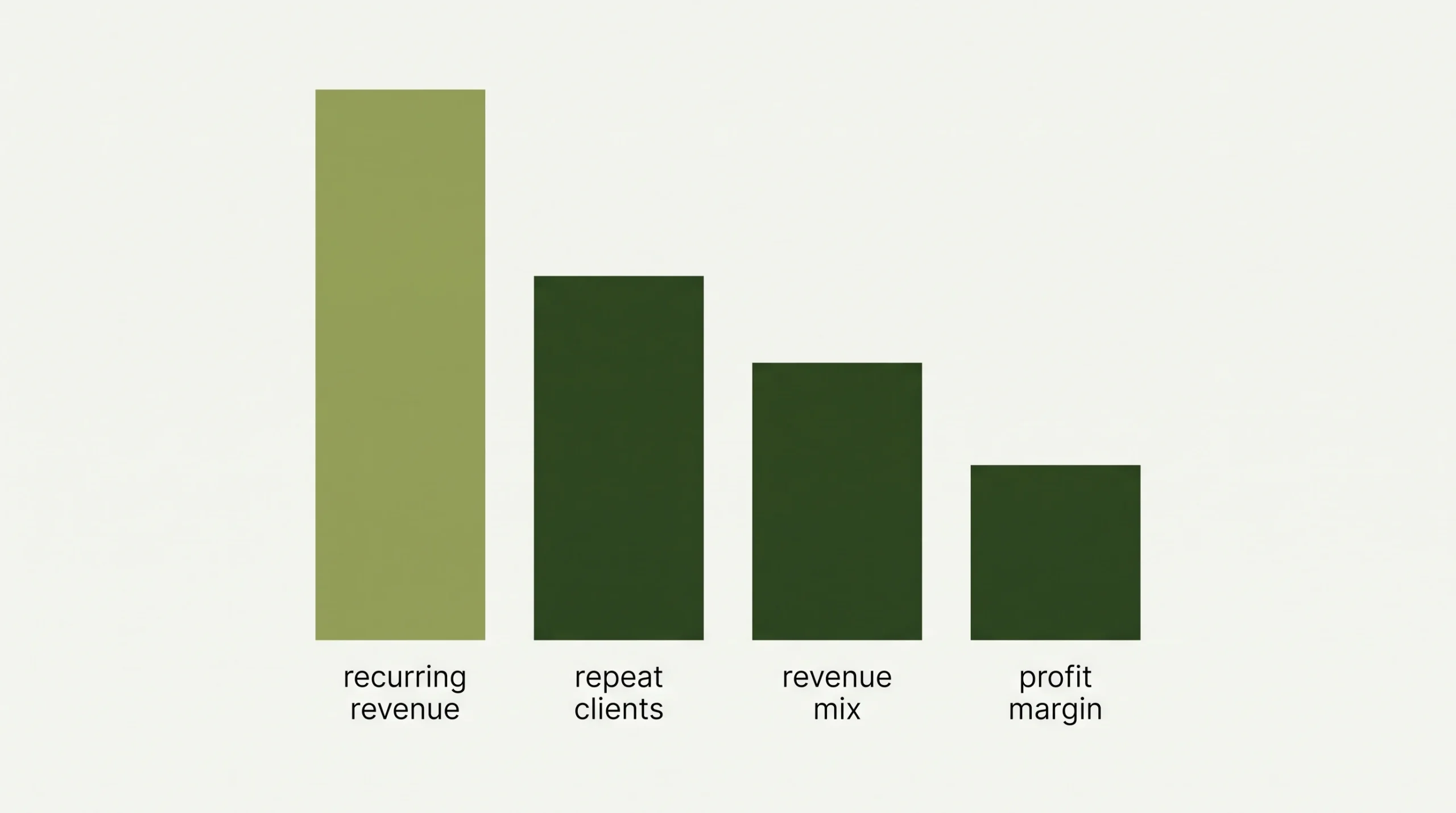
What drives a marketing agency’s value is the quality of its revenue. Retainer income is worth more than one-time project fees. It is steady, so a buyer can count on it next year. Low churn, a wide client base, and strong margins all raise the multiple. Heavy reliance on a few accounts, or on the founder, does the reverse.
Revenue mix is the first thing a buyer studies. A firm that lives on long retainer contracts looks safer than one chasing new projects each quarter. Sofer Advisors often finds that agencies with signed, multi-month deals draw more bidders. A wider field of buyers tends to lift the price.
Talent adds a second risk. Much of an agency’s value walks out the door each night. When key staff hold the client ties, a buyer fears they will leave after the sale. Signed work agreements and written systems ease that fear. They also help protect the margins that fund growth.
How are digital marketing agencies valued?
Agencies are valued mainly with the market approach and the income approach. The market approach compares the firm to similar agencies that have sold. It then applies a multiple to earnings. The income approach, often a discounted cash flow analysis, projects future cash flow and discounts it to today. Most pros blend both. Small firms use seller’s discretionary earnings as the base. Larger firms use adjusted EBITDA.
The base earnings figure matters as much as the multiple. An analyst normalizes the books first. That means stripping out one-time costs and the owner’s personal expenses. This shows the true earning power of the firm. IRS Revenue Ruling 59-60 lists the factors to weigh, and current IRS valuation guidance still points to it. Used together, the market and income approaches give a range, not a single guess.
What is a good EBITDA multiple for an agency?
A good EBITDA multiple for a mid-sized agency runs from 4x to 6x. Bigger, faster-growing shops reach higher. First Page Sage data shows account-based agencies with $5 million to $10 million in adjusted EBITDA sold near 10.6x in 2025. Smaller creative shops sat closer to 4.6x. Size, growth, and revenue quality explain most of the gap.
| Agency profile | Adjusted EBITDA | Typical 2025 multiple |
|---|---|---|
| Smaller creative or reputation shop | Under $1 million | About 3x to 4.6x |
| Mid-sized full-service agency | $1 million to $3 million | About 5x to 6x |
| Specialized or account-based agency | $5 million to $10 million | About 8x to 10.6x |
The multiple is not a fixed rule. It rises when a firm shows three years of double-digit growth, low churn, and a team that runs without the founder. It falls when one client dominates the roster. It also falls when income swings with each project. A niche focus, such as health or software marketing, can push the number up, since buyers pay for special skills. Each factor is weighed against fresh deal data before a range is set.
How does client churn affect agency value?
Client churn lowers agency value by shrinking the steady revenue a buyer pays for. When a firm loses clients fast, future cash flow looks shaky. So pros apply a lower multiple. A yearly churn rate above 20 percent is a clear warning sign. High churn also raises the cost of winning new clients. That extra spend eats into profit and drags the value down.
Churn ties straight to two numbers: what a client is worth over time, and what it costs to win one. Buyers want the first to far exceed the second. When churn is high, a firm keeps spending to refill the roster instead of growing it. That treadmill leaves less room for profit. Tracking retention closely, and fixing the causes early, is one of the surest ways to guard the multiple.
How do concentration and owner dependence lower value?
Client concentration and owner dependence both lower value by adding risk a buyer cannot easily remove. When one client is more than 10 percent of revenue, losing it could sink the firm. So the price drops. When the founder holds every client tie and makes every call, the agency is a job, not an asset. Both problems shrink the pool of willing buyers.
The fix is structure. Owners can write down their systems, spread revenue across many clients, and build a team that runs on its own. That removes much of the risk. This is where a valuation from Sofer Advisors helps beyond the number. The Sofer Difference, a four-phase process of Discovery, Diligence, Analysis, and Delivery, shows owners which factors hold the value back. Large firms such as Alvarez and Marsal or Stout serve enterprise clients. Sofer Advisors brings that same senior-level rigor to middle-market owners, backed by 180+ five-star Google reviews.
How can you raise your agency’s valuation?
You raise an agency’s value by moving project clients to retainers, cutting owner dependence, and cleaning up the books. Steady recurring income is the biggest lever. It makes future cash flow easier to forecast. Accrual-basis books give buyers a clear view that cash-basis records often hide. Every step that lets the firm run without you adds to the price.
These moves take time. The best results come from starting a year or two before a sale. A valuation built under AICPA valuation standards, known as SSVS, gives owners a solid baseline and a short list of what to fix. It also holds up when a bank, a buyer, or the IRS reviews the work. David Hern CPA ABV ASA guides owners through that process. The aim is a report that shows real, lasting earning power, not a hopeful guess.
Frequently Asked Questions
How do you value a digital marketing agency?
You value a digital marketing agency by normalizing its earnings first. Then you apply a market multiple or a discounted cash flow analysis. The work centers on revenue quality. How much comes from retainers? How sticky are the clients? How much rests on the founder? A blended method lines up market evidence with the firm’s own income. That gives owners a solid range for a sale, a buyout, or a tax filing.
What is a good EBITDA multiple for a digital marketing agency?
A good EBITDA multiple for a mid-sized agency runs from 4x to 6x. Smaller creative shops often sit lower, near 3x to 4.6x. Specialized or fast-growing agencies can reach 8x or more. The exact figure depends on growth, churn, client mix, and how well the firm runs without its owner. Strong recurring revenue is the fastest way to move toward the higher end.
Is retainer revenue valued more than project revenue?
Yes. Retainer revenue is worth more because it recurs, which lowers the risk a buyer takes on. Project revenue is often seen as one-time. So pros apply a steeper discount to it. An agency that shifts its mix toward long retainer contracts usually earns a higher multiple. The makeup of your revenue is weighed with care during any formal valuation.
How much does client churn hurt an agency’s value?
Client churn hurts value by cutting the steady revenue a buyer pays for. A yearly churn rate above 20 percent is a red flag. It signals that future cash flow may not arrive. High churn also raises the cost of winning clients, which squeezes profit. Lower churn improves the balance between what a client is worth and what it costs to win. That stronger balance supports a higher multiple.
What client churn rate do buyers want to see?
Buyers usually want yearly client churn below 15 percent for a healthy agency. A rate under 10 percent, paired with multi-year retainers, points to strong ties and steadier cash flow. Rates above 20 percent worry buyers and tend to lower the multiple. What matters most is the trend and the reason behind it. Tracking retention by client and cohort helps you tell a credible story.
How does owner dependence lower an agency’s value?
Owner dependence lowers value because it ties earning power to a person, not the firm. When the founder holds the client ties and makes every call, a buyer fears the revenue will follow the owner out the door. Without written systems and a capable team, the agency is closer to a job than an asset. Cutting that dependence before a sale protects value and widens the buyer pool.
What financial records do I need for a valuation?
You need three to five years of profit and loss statements, balance sheets, and tax returns. Accrual-basis records are best. Add client contracts, a revenue-by-client breakdown, and churn or retention reports. Records of owner pay and personal expenses help the analyst normalize earnings. Clean, tidy books shorten the work and give a more accurate number, since the analysis reflects the firm’s true, lasting earning power.
What standards guide a business valuation?
Credible valuations follow set standards. IRS Revenue Ruling 59-60 lists the factors to weigh when valuing a closely held firm, from earning power to the wider economy. The AICPA Statement on Standards for Valuation Services, or SSVS, governs how a CPA builds and reports a value. Following these keeps a report defensible when a bank, a buyer, a court, or a tax authority reviews it.
How much does a business valuation from Sofer Advisors cost?
Business valuations from Sofer Advisors typically run from $7,500 to $25,000, based on complexity and scope. Simpler work for internal planning or a basic tax filing falls toward the lower end. Deals, dispute support, and agencies with complex revenue need deeper analysis, so they sit higher. Contact the team for a fee quote matched to your records and the purpose of the report.
Related Case Studies
- How to Value an IT Managed Services (MSP) Business
- How to Value an Engineering or Architecture Firm
- Customer Concentration: Why It Cuts Sale Price 10 to 30 Percent
Executive Summary
A digital marketing agency valuation turns revenue quality into a value. Retainer income and low churn raise the multiple. Client concentration and owner dependence pull it down. Mid-sized agencies sold for about 4x to 6x adjusted EBITDA in 2025, and specialized shops reached 8x or more, per First Page Sage data. Pros blend the market and income approaches, normalize earnings first, and work under IRS Revenue Ruling 59-60 and AICPA SSVS. Sofer Advisors brings that same senior-level rigor to middle-market owners, with 180+ five-star Google reviews and expert witness work across four states.
What Should You Do Next?
Start by cleaning up your books on an accrual basis. Then organize your client contracts and churn reports. Next, take an honest look at how much the firm leans on you, and begin moving project clients toward retainers. Get a solid baseline before you plan any sale or buyout.
For a valuation you can stand behind, work with David Hern CPA ABV ASA. His team has given expert witness testimony in 11+ cases across Georgia, Florida, California, and New Mexico, and responds by the next business day. Schedule a consultation to discuss what your agency is worth.
People Also Read
- Owner Compensation Normalization: Why Salary Affects Sale Value
- EBITDA Add-Backs: What Buyers Accept and What They Reject
About the Author
This guide was prepared by David Hern CPA ABV ASA, founder of Sofer Advisors, a business valuation firm headquartered in Atlanta, GA serving clients across the United States. David holds dual accreditations as an Accredited Senior Appraiser (ASA) and is Accredited in Business Valuation (ABV), credentials recognized by the IRS, SEC, and FINRA. He also holds the Certified Exit Planning Advisor (CEPA) designation. With 15+ years of valuation experience, David has served as an expert witness in 11+ cases across multiple jurisdictions and built Sofer Advisors into an Inc. 5000-recognized firm with 180+ five-star Google reviews. Its full W2 employee team maintains subscriptions to all major valuation databases and operates under a next business day response policy. For professional business valuation services, visit soferadvisors.com/about-us/ or contact Sofer Advisors at soferadvisors.com/contact-us/.
Disclaimer: This content is for informational purposes only and does not constitute professional valuation advice. Business valuation conclusions depend on specific facts and circumstances. Contact Sofer Advisors for guidance regarding your specific situation.