
Last Updated: November 2026
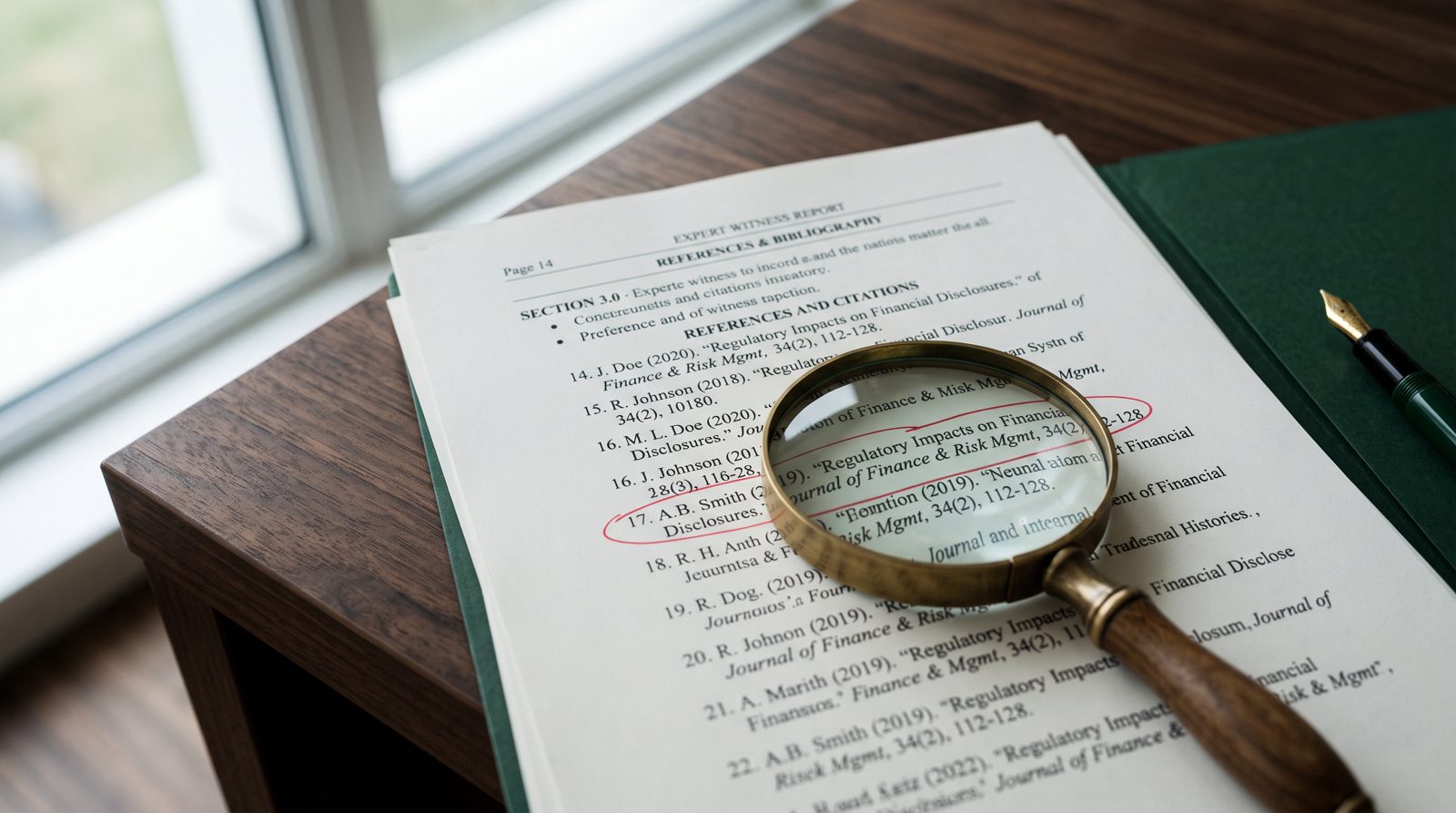
AI hallucinations in expert reports are citations an AI tool invents, references that look real but do not exist or point to the wrong source. In 2026, courts began excluding entire expert reports over them. In LeDoux v. Outliers, Inc. (W.D. Wash., Aug. 2026), a federal judge struck an expert’s whole report because it relied on AI-generated citations that no one had verified, and the plaintiff lost on summary judgment.
The team at Sofer Advisors prepares independent business valuations and expert witness reports for attorneys and their clients in litigation. A ruling like this matters to anyone who hires a financial expert, and to every valuation and damages expert who signs a report. One set of fake references, sitting in a section of the report that had already been withdrawn, was enough to sink the whole opinion and the case with it.
This guide explains what the court did in LeDoux, what Rule 702 requires, how the case compares to earlier AI citation cases, and how attorneys can vet a valuation expert’s AI use.
Key Takeaways
- A federal court excluded an expert’s entire report over AI “hallucinated” citations, even though the fake references sat in sections the party had already withdrawn.
- A second expert in the same case was excluded for giving legal conclusions instead of expert analysis.
- With no admissible expert testimony on causation, the plaintiff’s remaining claims were dismissed with prejudice.
- Under Rule 702, the side offering an expert has to show the opinion is reliable. Unverified sources undercut that.
- Experts and attorneys share the job of reading and checking every source before a report is signed.
Can an expert report be thrown out because of AI hallucinations?
Yes. A court can exclude a whole expert report, not just the bad citations, when AI errors damage the expert’s credibility and the reliability of the opinion. The judge decides what evidence the jury hears, and an opinion built on sources the expert never checked does not clear that bar.
LeDoux is not the first case to make this point. In Kohls v. Ellison (D. Minn., Jan. 2025), a federal court struck an expert declaration that contained AI-made citations. The LeDoux court leaned on Kohls when it reached the same result. The through-line is simple: a signed expert report is a promise that the expert relied on real sources, and a few invented ones put the rest in doubt.
What happened in LeDoux v. Outliers?
A nurse sued the makers of a nootropic supplement, claiming the product was adulterated with undisclosed ingredients that harmed her. By the time of this ruling, the court had already narrowed the case and thrown out the claims tied to a positive drug test. What was left came down to whether two remaining experts could testify.
The plaintiff’s regulatory expert, Evelyn Cadman, mostly opined that the products were “adulterated” and that the company broke FDA rules. The court held that this is applying the law to the facts, which is the job of the judge and jury, not the expert. Because her opinion did not help the jury understand anything only an expert could explain, it was not admissible.
The psychologist, Dr. Gabriel Holguin, filed a report that contained several AI-generated citations to academic articles that did not check out. The plaintiff had withdrawn the parts of the report that held those citations. The court excluded the report anyway, finding that the hallucinated citations “shatter[] his credibility with this Court,” a line it borrowed from Kohls v. Ellison.
The order describes how the errors got there. Plaintiff’s counsel had used an AI tool to build a formatted citation table, then handed the same table to the experts as an appendix. The experts signed their reports without catching the mistakes. Counsel was separately sanctioned for submitting the false AI citations to the court. The expert’s name was on the report, so the duty to verify was his, whoever drafted the list.
With no admissible expert on causation, the plaintiff could not prove that the supplements caused her symptoms. The court found those medical questions too complex to decide without an expert. The remaining purchase-price claims fell away for separate reasons. The court dismissed all remaining claims with prejudice, which means they cannot be refiled.
| Expert | Role | Why the court excluded the opinion | Rule applied |
|---|---|---|---|
| Evelyn Cadman | Regulatory expert | Opinions were legal conclusions, not expert analysis that helps the jury | Rule 702 / Daubert (relevance, helpfulness) |
| Dr. Gabriel Holguin | Psychologist | Multiple AI-hallucinated citations; the sources were never verified | Rule 702(b) to (d) / Daubert (reliability) |
Source: LeDoux v. Outliers, Inc., No. 3:24-cv-05808-TMC (W.D. Wash. Aug. 18, 2026), 2026 WL 2408808.
What is a hallucinated citation?
A hallucinated citation is a reference produced by an AI tool that looks real but is wrong or does not exist. The article, case, author or page number may be invented, or attached to the wrong source.
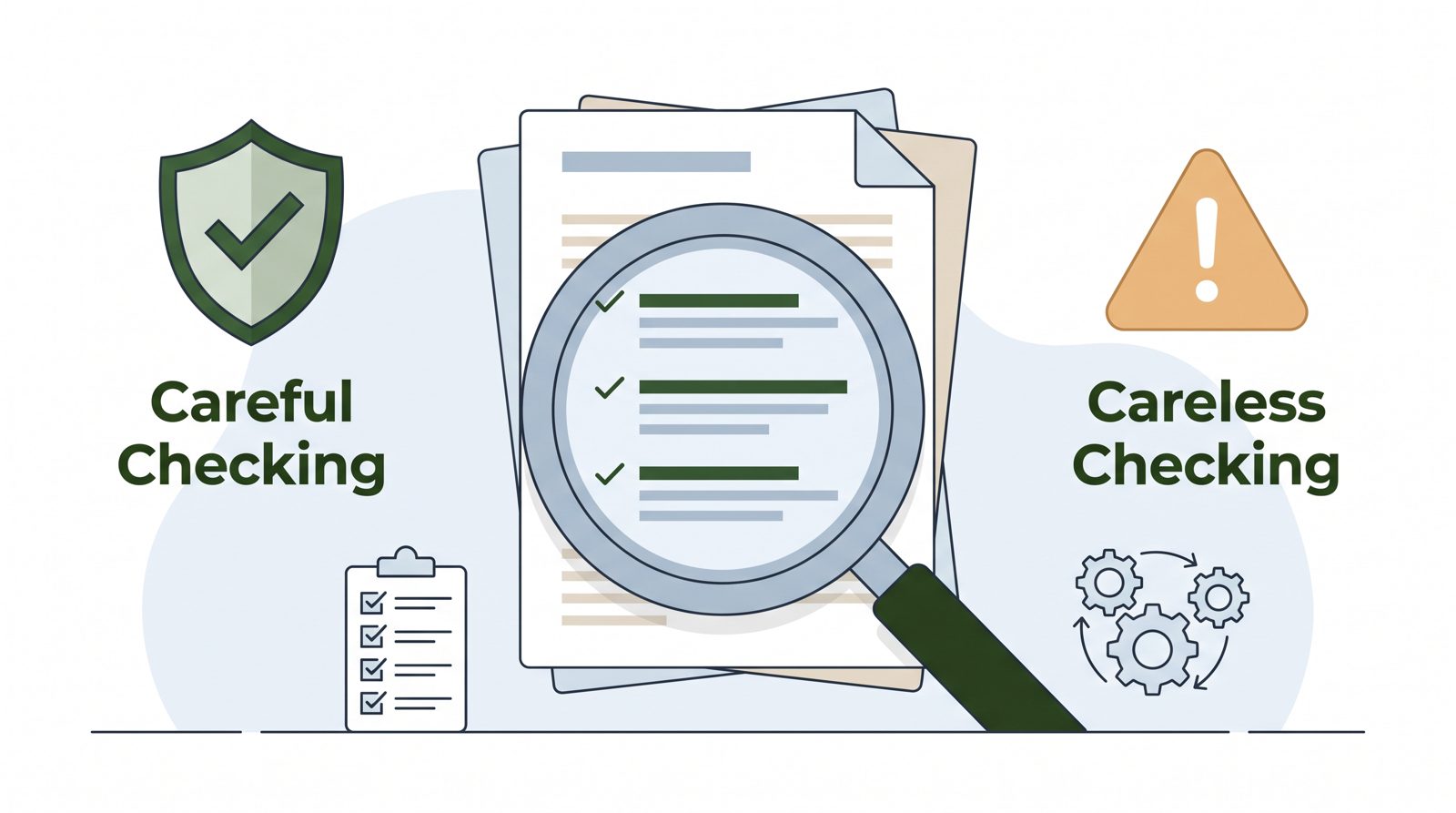
AI tools predict likely text. Asked for support, they can return a citation that reads perfectly and still points to nothing. The format looks right, the journal sounds real, and the page number is specific, which is exactly why it slips past a quick skim. The only reliable fix is to open and read each source before it goes in a report.
What do Rule 702 and Daubert require?
Under Federal Rule of Evidence 702, the judge acts as a gatekeeper for expert testimony. The side offering the expert must show the court that it is more likely than not that:
- the expert’s knowledge will help the jury understand the evidence or decide a fact;
- the opinion rests on enough facts or data;
- it is the product of reliable methods; and
- those methods were applied reliably to the facts of the case.
This is a plain-words summary. For the full framework, including the factors courts weigh, see our full Daubert guide.
The rule was amended to make two things clear. The side offering the expert carries the burden of showing reliability, and the opinion has to stay within what the method can actually support. The change answered courts that had been treating these questions as matters of weight for the jury rather than admissibility for the judge.
The court tied the fake citations straight to Rule 702(b) through (d). If the expert did not check the sources he said he relied on, the court cannot trust the facts behind the opinion, the method, or how the method was applied. The report failed all three tests at once.
How is LeDoux different from earlier AI hallucination cases?
The pattern has escalated. Earlier cases punished lawyers for fake citations in briefs. Then courts started excluding experts. LeDoux shows the next step, where the AI errors help lose the case itself.
| Case | Who used AI | What the court did |
|---|---|---|
| Mata v. Avianca, Inc. (S.D.N.Y., June 2023) | Lawyers, in a legal brief | Sanctioned the lawyers for citing fake cases |
| Kohls v. Ellison (D. Minn., Jan. 2025) | An expert, in a sworn declaration | Excluded the expert’s declaration |
| LeDoux v. Outliers, Inc. (W.D. Wash., Aug. 2026) | AI-made citations in expert reports; counsel also sanctioned | Excluded the whole report; the case was lost on summary judgment |
Mata v. Avianca remains the best-known AI citation case, and it is where many courts first drew the line. LeDoux shows how far past that line the stakes now reach.
What should valuation and damages experts learn from LeDoux?
- Open and read every source you cite. A reference list is part of the opinion. If you did not read it, do not cite it.
- Check lists and tables that counsel or staff hand you. In LeDoux, an AI-made citation table went to the experts and they signed without catching the errors. Your name is on the report, so the check is yours.
- Keep legal conclusions out of the report. Explain the numbers, the method and the data. Leave “the law was broken” to the court. That was the Cadman lesson.
- Show your causation chain. A damages or value opinion needs a clear line from facts to method to conclusion. Courts throw out opinions that skip steps.
- Document your method and data. Keep work papers that show what you relied on and how you tested it, so the file supports a court-defensible valuation.
- Follow your profession’s standards and AI guidance. The AICPA’s valuation standard (VS Section 100) and the NACVA advisory brief on AI make the same point in their own way: AI does not replace professional judgment, and every output has to be checked. The same goes for independence and the standards that keep an opinion credible.
| Safer uses (still checked by the expert) | Riskier uses |
|---|---|
| Summarizing documents the expert has already read | Letting AI find or format citations without opening each source |
| Spelling, grammar and formatting help | Asking AI for case law, studies or market data and pasting the results in |
| Brainstorming questions to ask the client | Letting AI draft opinions or conclusions |
| Organizing data the expert supplies | Uploading confidential client files to public AI tools |
Checklist: how can attorneys vet a valuation expert’s AI use?
Before you retain an expert, or before you serve a report, work through these questions. They also help when you are deciding what to ask a valuation expert witness you may hire.
- Do you use AI tools in your work? Which ones, and for what tasks? You want a clear, specific answer, not a flat denial.
- Who checks every citation and data source before you sign the report, and how? Someone has to own the verification.
- Have you personally read every source listed in the report? This is the question LeDoux turns on.
- Did anyone else, including your firm, the expert’s staff, or an AI tool, prepare the list of materials considered? Who checked it?
- Do you upload client documents to AI tools? How do you protect confidential data?
- Which professional standards do you follow, for example AICPA VS Section 100, NACVA standards, ASA standards, or USPAP?
- Can you explain every step of your method in plain words, without leaning on a tool’s output?
- Has a court ever limited or excluded your testimony? If so, why? Check it against the usual credentials and red flags.
- Does your report stay on valuation and damages, and avoid legal conclusions?
- Would you be comfortable explaining your AI use under cross-examination?
Tip: run the same check on the other side’s expert report. Fake or wrong citations can support a challenge, and checking the other side’s sources is part of a rebuttal report.
Frequently Asked Questions
Can an expert report be excluded because of AI hallucinations?
Yes. In LeDoux v. Outliers, Inc. (2026), a federal court in Washington excluded a psychologist’s entire report because it contained AI-generated citations that were never verified. The court found the errors destroyed the expert’s credibility, so it could not trust the rest of the opinion under Rule 702.
What is a hallucinated citation?
A hallucinated citation is a reference made by an AI tool that looks real but is wrong or does not exist. The article, case, author or page number may be invented or attached to the wrong source. The only reliable check is to open and read every source before citing it.
Can expert witnesses use AI?
Courts have not banned experts from using AI. In Kohls v. Ellison, the court said it did not fault the expert for using AI to research. The problem is unchecked output. An expert is responsible for every fact, source and conclusion in a signed report, whatever tools helped prepare it.
Who is responsible for checking citations in an expert report?
The expert signs the report, so the expert is responsible for every source in it. In LeDoux, the court also pointed to counsel’s role in preparing an AI-made citation list. In practice, both the expert and the attorney should check the sources before the report is served.
What does Rule 702 require of an expert?
Federal Rule of Evidence 702 lets an expert testify only if the side offering the expert shows it is more likely than not that the opinion will help the jury, rests on enough facts or data, uses reliable methods, and applies those methods reliably to the case. The rule was clarified in December 2023.
Do experts have to disclose AI use in their reports?
There is no single national rule yet. Some courts and judges have their own orders on AI, and groups such as the AICPA and NACVA have issued non-binding guidance. A safe practice is to be ready to explain any AI use, and to check every output by hand.
Related Case Studies
- Daubert and Your Business Valuation Expert’s Report
- Critiquing the Opposing Expert: What a Rebuttal Valuation Report Tests
- Litigation valuation case studies
Executive Summary
A federal court in LeDoux v. Outliers excluded an expert’s entire report because it contained AI-generated citations that were never verified, and it excluded a second expert for offering legal conclusions instead of analysis. With no admissible expert on causation, the court dismissed the remaining claims with prejudice. Under Rule 702, the side offering an expert must show the opinion is reliable, and unchecked AI sources undercut that. The practical lesson for attorneys and valuation experts is the same: read and verify every source before a report is signed, and vet any expert’s AI use.
What Should You Do Next?
If you are preparing for litigation, the valuation or damages opinion at the center of your case has to hold up under Rule 702. Start by confirming that your expert has personally read and verified every source in the report. Sofer Advisors provides independent valuation and expert witness support for disputes, led by David Hern CPA ABV ASA CVA. Talk to us about litigation and conflict resolution services, or contact our team to discuss your matter.
People Also Read
- Expert Witness Business Valuation in Georgia: What Attorneys Need to Know
- Calculation vs Conclusion of Value: Which Engagement Litigation Needs
About the Author
This guide was prepared by David Hern CPA ABV ASA CVA, founder of Sofer Advisors, a business valuation firm headquartered in Atlanta, GA serving clients across the United States. David holds accreditations as an Accredited Senior Appraiser (ASA) and is Accredited in Business Valuation (ABV), credentials recognized by the IRS, SEC, and FINRA, and is also a Certified Valuation Analyst (CVA). David has served as an expert witness in dozens of cases across multiple jurisdictions, and Sofer Advisors is an Inc. 5000 honoree in 2024 and 2025 with 240+ five-star Google reviews.
For professional business valuation services, visit soferadvisors.com/about-us/ or contact Sofer Advisors at soferadvisors.com/contact-us/.
Disclaimer: This content is for informational purposes only and is not legal advice or professional valuation advice. Legal outcomes and valuation conclusions depend on the specific facts and circumstances. Consult your attorney about your matter, and contact Sofer Advisors for valuation guidance regarding your situation.