


Last Updated: August 2026
Choosing a business appraiser means checking the credentials, independence, and track record behind the value they will sign. A qualified business appraiser holds a recognized designation, follows written standards, and keeps no stake in the result. The bar is high. The Accredited in Business Valuation credential alone asks for 1,500 hours of valuation work and 75 hours of study. Sofer Advisors brings that same rigor to every report.
The choice matters because the report often faces review. A lender, the IRS, or an opposing lawyer may test every number in it. A weak credential or a hidden conflict can sink the whole file. The right appraiser builds a value that holds up under that pressure. Knowing what to look for protects the owner long before any dispute starts.
Key Takeaways
- Credentials come first: Look for the ABV, ASA, CVA, or CFA. Each one signals tested skill and steady study.
- Independence is required: A sound appraiser has no stake in the result. Neutral footing keeps the value credible.
- Standards govern the work: USPAP and IRS Revenue Ruling 59-60 shape a report that can be defended.
- Experience must fit: Match the appraiser to your industry, your purpose, and the right standard of value.
- Watch for red flags: Guaranteed numbers, rule-of-thumb math, and no credentials all point to risk.
Each point below builds on the last. The sections walk through the credentials that carry weight, the standards that bind the work, and the warning signs that should end a search early.
What should you look for in an appraiser?
What to look for in a business appraiser comes down to four things: credentials, independence, standards, and fit. A strong designation shows tested skill. True independence keeps the opinion neutral. Written standards make the report defensible. Relevant experience ties the work to your industry and your goal. Miss any one, and the value grows weak. Weigh all four together, never in isolation.
Start with the purpose of the report. A gift tax filing, a partner buyout, and a court case each ask for a different focus. The right appraiser has done that exact type of work before. Ask for sample reports and past assignments. Sofer Advisors staffs each job with a specialist who knows both the numbers and the reporting rules for your goal. It runs the work through The Sofer Difference, a four-phase path of Discovery, Diligence, Analysis, and Delivery. That match is what makes a value hold.
Which credentials matter most?
Four credentials carry real weight in business valuation: the ABV, the ASA, the CVA, and the CFA. Each comes from a respected body and asks for testing, experience, and yearly study. The Accredited in Business Valuation comes from the AICPA. The Accredited Senior Appraiser comes from the American Society of Appraisers. The Certified Valuation Analyst comes from NACVA. The Chartered Financial Analyst comes from the CFA Institute. The IRS, SEC, and FINRA all recognize these marks.
| Credential | Issued by | Main focus | Recognized by |
|---|---|---|---|
| ABV | AICPA | Business and intangible value | IRS, SEC, courts |
| ASA | American Society of Appraisers | Business valuation | IRS, SEC, FINRA |
| CVA | NACVA | Business valuation | IRS, courts |
| CFA | CFA Institute | Investment analysis | SEC, FINRA |
A credential is a floor, not a promise. It shows the appraiser passed a hard exam and logs steady study each year. It does not tell you whether they know your industry or your purpose. So treat the letters as a first screen, then look hard at the record behind them. David Hern CPA ABV ASA holds two of these marks, both recognized by the IRS, SEC, and FINRA. That dual standing carries weight when a value is challenged.
Why does an appraiser’s independence matter?
Independence means the appraiser has no financial stake in the number. A neutral third party gives an opinion a court or the IRS can trust. Independence is a core rule under USPAP. An appraiser cannot take a job that pays more for a higher or lower value. That link would bias the result and void the report. The whole point is a value free of pressure.
This is where the fee structure matters. Reputable firms charge a flat fee or an hourly rate with a cap. They never tie pay to the final value. A business broker earns a cut of the sale, so a broker is not neutral. Big 4 practices sometimes face a conflict when they audit and value the same client. Sofer Advisors keeps its advisory and valuation teams apart, so each opinion stays clean.
What does USPAP compliance mean?
USPAP is the rulebook for appraisers in the United States. The Uniform Standards of Professional Appraisal Practice set how an appraiser must gather data, run the analysis, and write the report. The Appraisal Foundation, backed by Congress, writes and updates the rules. A USPAP report shows its work, states its assumptions, and follows a set path. That structure is what makes it stand up.
Standards go beyond USPAP. IRS Revenue Ruling 59-60 lists the factors an appraiser must weigh for fair market value, from earnings to goodwill. The AICPA SSVS sets rules for members who value a business. A skilled appraiser names the standard that governs the job and follows it line by line. This reflects the Heart of a Teacher approach: show the owner the standard, not just the number. Ask which standards a report will meet. A vague answer is a warning sign.
How much experience should an appraiser have?
Experience should match your purpose, your industry, and the standard of value. The standard of value is the kind of value the job needs, such as fair market value or fair value. The wrong standard sinks a report, no matter how clean the math. A seasoned appraiser picks the right one and defends it. Years alone are not enough. The work must fit the assignment in front of it.
Scope is another key choice. A calculation of value is a lighter, limited estimate. A conclusion of value is a full opinion built on every approach that fits. The income, market, and asset approaches each test the value from a different angle. A court or the IRS usually expects a conclusion, not a calculation. Sofer Advisors sets the standard and the scope up front, so the report suits its real use.
What are the red flags to avoid?
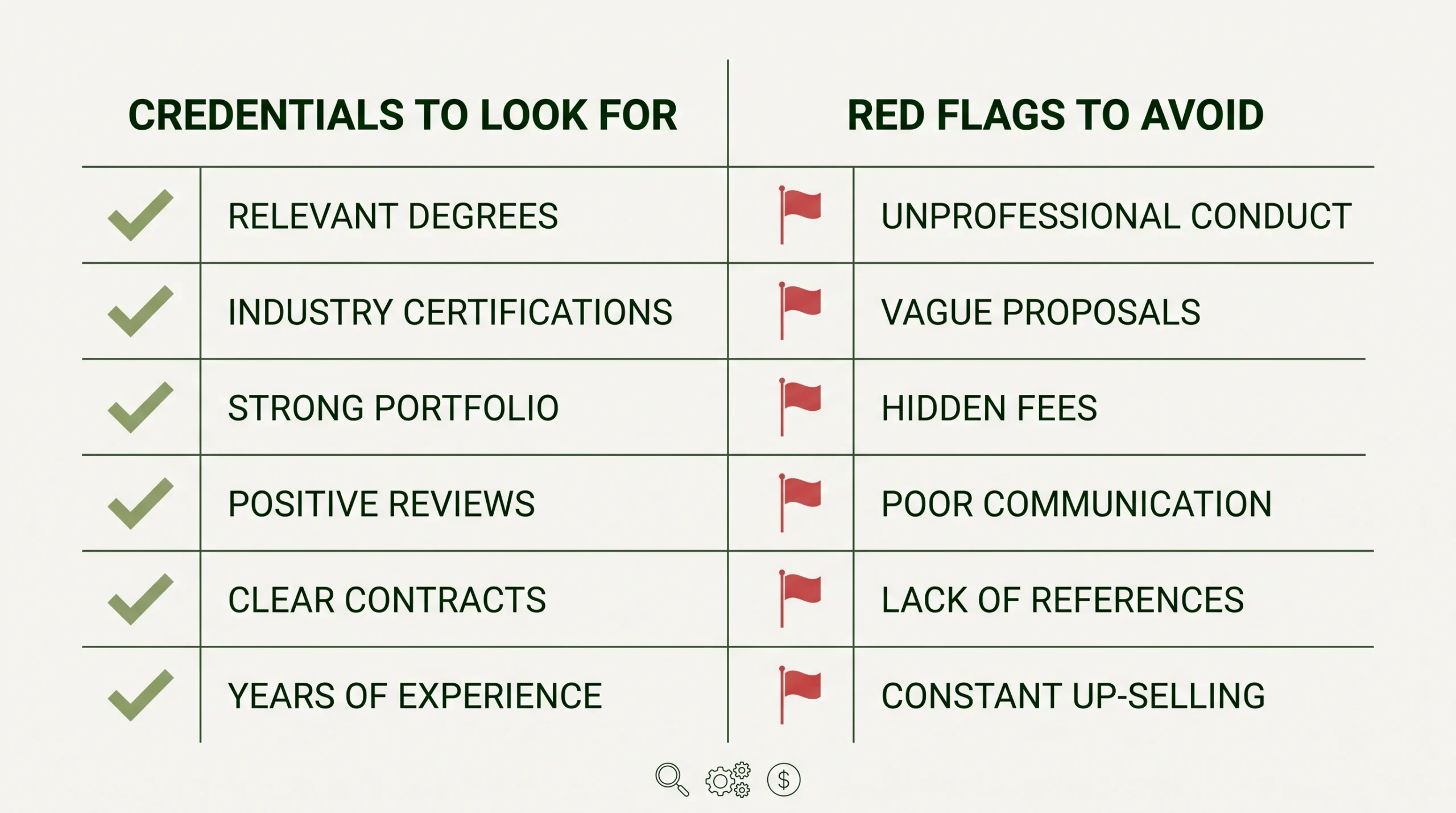
Some warning signs should end a search on the spot. A promise of a set number before any analysis is the worst. Value comes from the work, never from a pledge. A fee tied to the result signals bias. No recognized credential signals thin training. A price far below market often hides a thin report. Any one of these is a reason to walk away.
- A guaranteed value promised up front, before any review of the books.
- A fee that rises or falls with the final number.
- No ABV, ASA, CVA, or CFA, and no USPAP training.
- A rule-of-thumb multiple used alone, with no test of company risk.
A rule-of-thumb figure can serve as a quick sanity check. It is never a substitute for real analysis. Buyers, lenders, and courts want to see normalized earnings, tested approaches, and a clear path to the value. A lowball fee often means a short report that skips that work. Sofer Advisors backs every conclusion with a full W2 team of 14 and subscriptions to the major valuation databases. That depth is hard for a solo practitioner to match.
Frequently Asked Questions
What is the most important credential for a business appraiser?
No single mark stands above the rest, but the ABV, ASA, and CVA are the ones that matter most for business value. Each proves tested skill and yearly study. The ASA and ABV are both recognized by the IRS, SEC, and FINRA. Look for at least one of these when the report will face a lender, an auditor, or a court.
Can my regular CPA value my business?
Many CPAs know tax and accounting well, yet a certified valuation asks for separate training. A standard audit or tax background does not cover appraisal methods or the standard of value. The wrong approach can weaken a report in an audit or a dispute. A CPA who also holds the ABV is far better placed to do the work and defend it.
What is the difference between an appraiser and a broker?
An appraiser gives a neutral opinion of value based on data and set standards. A business broker works to find a buyer and set a list price that sells. The broker earns a cut of the deal, so the broker is not independent. For tax, court, or a partner buyout, you want the appraiser, whose value must hold up under review.
What are the biggest red flags in a business appraisal?
The clearest red flag is a promised number before any analysis begins. A real value comes from the work, not a pledge. A fee tied to the result is another, since it creates bias. Missing credentials and a rule-of-thumb multiple used alone both signal a thin report. Any of these should send an owner to look elsewhere.
Why is appraiser independence so important?
Independence keeps the value honest. When the appraiser has no stake in the number, the opinion reflects the business, not a wished-for result. That neutral footing is what gives the report weight in an IRS audit, a shareholder fight, or a court case. A value from a party who gains from the outcome rarely survives that kind of test.
What is a calculation versus a conclusion of value?
A calculation of value is a limited estimate built on a few agreed methods. A conclusion of value is a full opinion that tests every approach that fits the company. A conclusion takes more work and carries more weight. Courts and the IRS usually expect a conclusion. A calculation can suit early planning, but not a filing or a dispute.
How long does a business valuation take?
A standard business valuation usually runs four to eight weeks from start to final report. The timeline covers discovery, deep diligence, and the analysis needed to reach a value that holds. A rushed job or a complex, multi-entity company can shift that range. Sofer Advisors follows a set four-phase process and works under a next business day response policy.
How much does a business valuation from Sofer Advisors cost?
Business valuations from Sofer Advisors typically run 7,500 to 25,000 dollars, depending on complexity and scope. Simpler jobs for planning or basic tax fall toward the lower end. Litigation support and deal work need deeper analysis, so they sit higher. The purpose of the report and the state of your financials both shape the fee. Contact the team for a quote matched to your situation.
Related Case Studies
- Why Independence Matters in Valuation: AICPA, ASA, Court Standards
- Qualified Appraiser IRS Requirements: A Guide to Section 170 and 6695A
- Statutory Fair Value vs Fair Market Value in Shareholder Disputes
Executive Summary
Choosing a business appraiser rests on four checks: credentials, independence, standards, and fit. The ABV, ASA, CVA, and CFA are the marks that matter, and the IRS, SEC, and FINRA recognize them. A sound report follows USPAP and IRS Revenue Ruling 59-60, and its author holds no stake in the result. Match the appraiser to your industry and the right standard of value. Reject guaranteed numbers, contingent fees, and rule-of-thumb math. Sofer Advisors brings a full W2 team of 14, dual-credentialed leadership, and 180+ five-star Google reviews to every valuation.
What Should You Do Next?
Start by naming the purpose of your valuation and the standard of value it needs. Then gather three years of tax returns, recent financials, and any buy-sell agreement. Finally, confirm the appraiser’s credentials and independence before you sign anything.
Work with David Hern CPA ABV ASA, whose team has given expert witness testimony in 11+ cases across Georgia, Florida, California, and New Mexico. Large firms like Alvarez and Marsal serve enterprise clients; Sofer Advisors brings that senior-level rigor to middle-market owners. Schedule a consultation to find the right fit for your business.
People Also Read
- How to Defend a Business Valuation in an IRS Audit
- Forensic Accounting in Business Valuation: When You Need Both
About the Author
This guide was prepared by David Hern CPA ABV ASA, founder of Sofer Advisors, a business valuation firm headquartered in Atlanta, GA serving clients across the United States. David holds dual accreditations as an Accredited Senior Appraiser (ASA) and is Accredited in Business Valuation (ABV), credentials recognized by the IRS, SEC, and FINRA. He also holds the Certified Exit Planning Advisor (CEPA) designation. With 15+ years of valuation experience, David has served as an expert witness in 11+ cases across multiple jurisdictions and built Sofer Advisors into an Inc. 5000-recognized firm with 180+ five-star Google reviews. Its full W2 employee team maintains subscriptions to all major valuation databases and operates under a next business day response policy. For professional business valuation services, visit soferadvisors.com/about-us/ or contact Sofer Advisors at soferadvisors.com/contact-us/.
Disclaimer: This content is for informational purposes only and does not constitute professional valuation advice. Business valuation conclusions depend on specific facts and circumstances. Contact Sofer Advisors for guidance regarding your specific situation.