


Last Updated: August 2026
A carried interest valuation sets a fair market value on a fund manager’s share of future profit. That share, called the carry, is often about 20 percent of gains above a hurdle. It has no fixed price. The carry pays only if the fund does well. Under IRC Section 1061, this gain counts as long-term only when the fund holds an asset for more than three years. Sofer Advisors values these interests for tax and reporting.
The value matters most when a general partner gives the carry to heirs. Early on, its current value is low but its upside is large. A gift of a vertical slice can move that upside out of a taxed estate cheaply. Sound numbers also support financial reports under ASC 820. Each purpose sets its own standard of value.
Key Takeaways
- What it is: A carried interest valuation prices a fund GP’s right to future profit, not a return on cash the GP put in.
- Why it is done: Owners value the carry for gift and estate transfers, buyouts, divorce, and financial reports.
- Main methods: Appraisers use the Option Pricing Model, or Black-Scholes, and Monte Carlo runs on the waterfall.
- Key inputs: Volatility, time to a sale, the hurdle rate, and any catch-up clause drive the result.
- Tax angle: IRC Section 1061 sets a three-year holding period for long-term capital gain treatment.
These points frame how profit ties to risk and time. The sections below show how each method works. They also show why an early gift of the carry can save tax later.
What is a carried interest valuation?
A carried interest valuation sets a fair market value on a fund manager’s right to future profit. The general partner earns this carry for strong returns, not for cash put in. It usually equals about 20 percent of gains above a set hurdle. The carry pays only if the fund wins, so its value stays uncertain. Sofer Advisors models that risk to reach a number that holds up for tax or reporting.
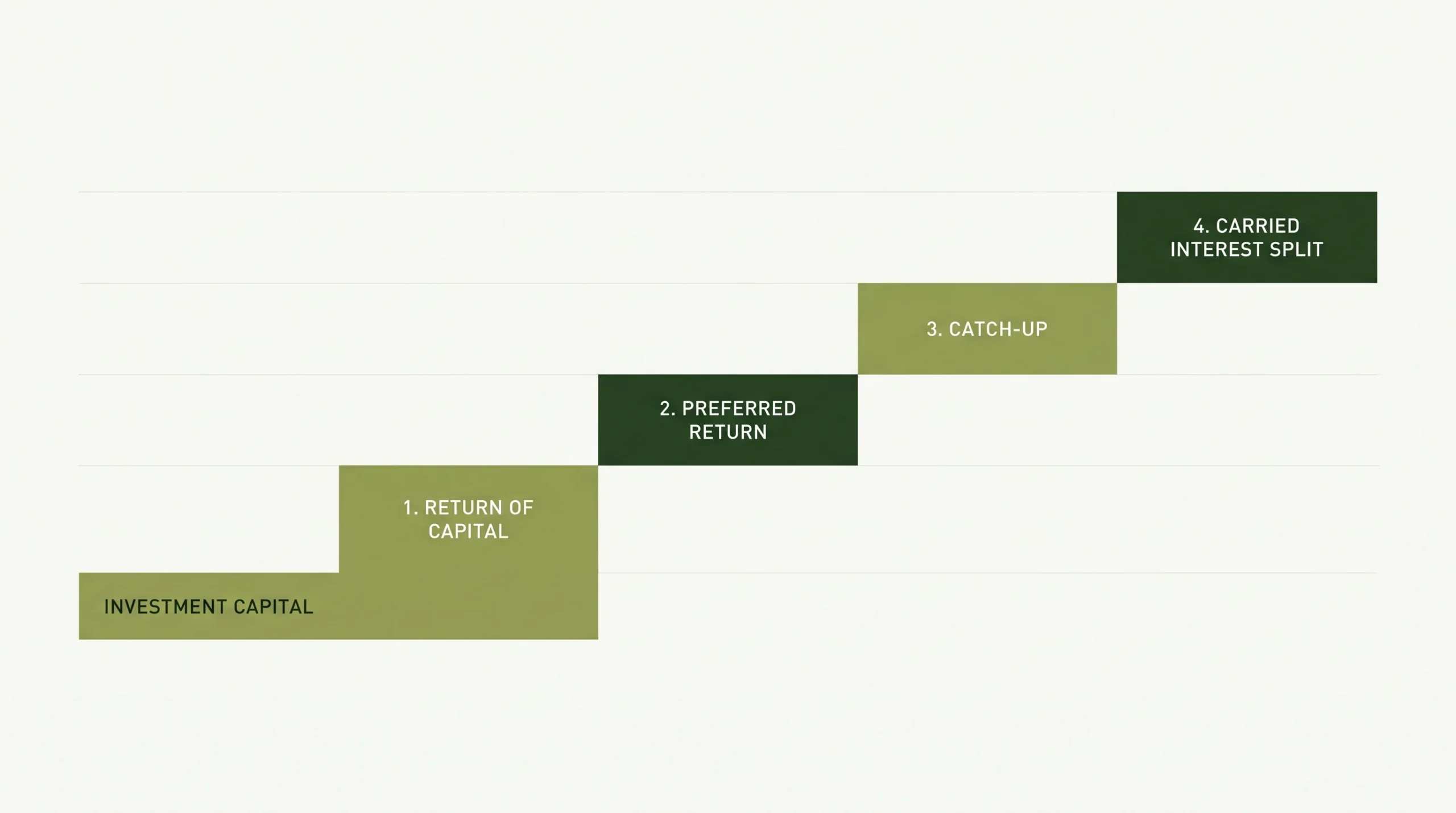
The carry is not a capital interest. A capital interest reflects money a partner actually invested. The carry reflects a promise of future upside. It also differs from a plain profits interest in an operating company. A fund pays through a waterfall. Limited partners get their capital back first, then a preferred return. Only after that does the general partner see any carry.
Why do owners value a carried interest?
Most owners value the carry to pass wealth to their heirs. When the carry is young, its value is low but its upside is large. A gift or sale of a vertical slice, or a derivative on the carry, can shift that upside to heirs at a small tax cost today. Estate planners act early, before a fund proves its returns.
Financial reporting is a second reason. Funds must report the fair value of these interests under ASC 820. Auditors expect a model they can test. Divorce and partner buyouts add a third reason. A neutral appraisal from Sofer Advisors gives each side one credible number. That cuts disputes and backs the stance on a tax return. It reflects the Heart of a Teacher approach: show the owner the math, not just the answer.
Which methods’ value carried interest?
Two methods do most of the work. The Option Pricing Model treats the carry as a call option, because it pays only above the hurdle. Black-Scholes gives a clean value when the payout has one threshold. Monte Carlo runs the full waterfall thousands of times. It models random returns and captures how a catch-up clause changes each payout.
A discounted cash flow can support the result when the exit date is clear. Most jobs pair a main model with a cross-check. The choice turns on how complex the waterfall is. The table below compares the three.
| Method | How it works | Best fit | Watch out for |
|---|---|---|---|
| Option Pricing Model | Prices the carry as a call option above the hurdle | Simple, one-threshold payouts | One tier only; misses catch-up steps |
| Monte Carlo | Runs the waterfall over many return paths | Complex, multi-tier waterfalls | Needs sound volatility inputs |
| Discounted cash flow | Discounts expected carry to today | Clear, near-term exit timing | Weak when exit timing is unknown |
No single method fits every fund. A young venture fund with an unclear exit leans toward Monte Carlo. A late-stage fund near a sale may suit a discounted cash flow. Large firms like Alvarez and Marsal or Kroll focus on big funds. Sofer Advisors brings that same senior-level rigor to middle-market managers. Unlike a solo practitioner, it backs each figure with a full W2 team of 14 and The Sofer Difference: a four-phase process of Discovery, Diligence, Analysis, and Delivery. The firm picks the method that fits the waterfall, then notes why.
What inputs drive the value?
Four inputs move the answer most. Asset volatility sets how wide the range of results runs. Higher volatility raises the carry’s value, since the option-like payout gains from big upside. Time to a sale matters too. A longer runway gives assets more room to grow past the hurdle.
The hurdle rate and catch-up clause shape the payout. A high hurdle is a barrier. The general partner earns nothing until limited partners clear their preferred return. A catch-up clause then lets the GP take a larger share until the agreed split is met. Net asset value anchors the model to today. Small input changes can swing the result. So each one rests on the fund agreement and market data, not a guess.
How do marketability discounts apply?
A carried interest is hard to sell, so appraisers apply a discount. The fund agreement often locks the carry, and it cannot transfer without consent. No ready buyer exists for a minority profit share in a private fund. A discount for lack of marketability, or DLOM, lowers the value to reflect that trapped spot.
The size of the discount depends on the facts. A long lockup or tight transfer terms push it higher. Sofer Advisors backs each discount with market studies and restricted-stock data. This follows IRS Revenue Ruling 59-60 and AICPA valuation guidance. A discount claimed without proof is the first thing an examiner will challenge. The record has to support the number.
How is carried interest taxed?
Carried interest is usually taxed as a capital gain. But the holding rule is strict. IRC Section 1061 makes the fund hold an asset more than three years for the carry gain to count as long-term. Gains on shorter holds are taxed as short-term, at higher ordinary rates. The IRS Section 1061 reporting guidance sets out the worksheets and reporting steps.
Reform proposals would go further. Several bills have tried to tax carried interest fully as ordinary income. That would remove the capital gain benefit. None has passed, so the three-year rule stands. A valuation must still reflect the tax a buyer would expect. Sofer Advisors builds that tax reality into the model, so the value matches how a real investor would price the carry. David Hern CPA ABV ASA leads this work against IRS and AICPA rules.
Frequently Asked Questions
What is carried interest in a fund?
Carried interest is a fund general partner’s share of profits, earned for running the fund rather than for money invested. It usually equals about 20 percent of gains above a hurdle rate. The carry pays through the waterfall, only after limited partners recover their capital and a preferred return. Its value rests on future returns, which is why it needs a careful, independent review.
Is carried interest the same as a profits interest?
They are related but not the same. A profits interest is a broad right to future profit in a partnership, common in operating companies. Carried interest is the fund version, tied to a waterfall with a hurdle and often a catch-up clause. The fund structure adds layers, so appraisers model the whole waterfall, not one profit split. Our team values both types.
How does a hurdle rate affect the value?
The hurdle rate is the return limited partners must get before the general partner earns any carry. A higher hurdle lowers the carry’s value, since it delays and shrinks the GP’s share. A lower hurdle does the reverse. In an option model, the hurdle acts much like a strike price. The valuation reads the exact hurdle from the fund agreement, because small gaps shift the result.
What is a catch-up provision?
A catch-up provision lets the general partner take a larger share of profits once the hurdle is cleared. It runs until the GP reaches the agreed overall split, often 20 percent of total gains. The clause raises the carry’s value by speeding up the GP’s share after the preferred return is met. Because it reshapes each payout, a Monte Carlo model captures it better than a one-threshold option.
Why use an option model for the carry?
An option model fits because the carry acts like a call option. It pays nothing until the fund clears the hurdle, then rises with gains above it. Black-Scholes and the wider Option Pricing Model value that upside while weighing volatility and time. This method captures the worth that a simple projection would miss. It follows AICPA guidance for equity interests issued as pay.
When is a marketability discount applied?
A discount for lack of marketability applies when the carry cannot be readily sold. Most fund agreements limit transfers, and no public market exists for a private profit share. The discount lowers fair market value to reflect that lack of liquidity. Its size depends on lockup length, transfer terms, and fund focus. The firm backs each discount with market data, so it stands up under IRS review.
How does Section 1061 change the tax?
IRC Section 1061 lengthens the holding period for good tax treatment. Gains on carried interest count as long-term only when the fund held the asset more than three years. Shorter holds are taxed as short-term at ordinary rates. The rule targets fund managers and applies to what the code calls an applicable partnership interest. It shapes both tax planning and the value a buyer would pay.
Could carried interest be taxed as ordinary income?
It could, if Congress changes the law. Several proposals have sought to tax carried interest fully as ordinary income and drop the capital gain rate. None has become law, so the current three-year rule under Section 1061 still governs. A valuation should reflect this risk when it is material, since a possible tax change affects what a buyer would pay. The firm tracks these bills for its clients.
How much does a business valuation from Sofer Advisors cost?
Valuations of complex equity interests from Sofer Advisors usually run from 7,500 to 25,000 dollars. The price depends on fund structure, waterfall complexity, and the number of assets. Simpler interests for planning fall toward the lower end. Multi-tier waterfalls, gift and estate filings, or litigation support need deeper work and fall higher. Contact the firm for a fee quote matched to your fund and purpose.
Related Case Studies
- Rollover Equity in PE Deals: Valued and Taxed
- Secondary Sales of Private Stock: Valuation and 409A Implications
- Solvency Opinions for LBOs: What They Cover and What They Don’t
Executive Summary
A carried interest valuation prices a fund general partner’s share of future profit, usually about 20 percent of gains above a hurdle. Because the carry pays only if the fund performs, appraisers use the Option Pricing Model and Monte Carlo runs on the waterfall. Volatility, time to a sale, the hurdle, and any catch-up clause drive the result, and a discount for lack of marketability lowers it. Under IRC Section 1061, gains count as long-term only after a three-year hold. David Hern CPA ABV ASA and the Sofer Advisors team build each model against market data and IRS Revenue Ruling 59-60, so the value supports gift, estate, and reporting needs.
What Should You Do Next?
Start by gathering your limited partnership agreement, the waterfall schedule, and recent fund performance data. Confirm the purpose of the valuation, since a gift transfer and a financial report follow different standards. Then map the fund’s holding periods against the three-year rule before you transfer any interest.
For a defensible number, work with David Hern CPA ABV ASA. His team has given expert witness testimony in 11+ cases across Georgia, Florida, California, and New Mexico, backed by 180+ five-star Google reviews. Schedule a consultation to discuss the carried interest that fits your fund.
People Also Read
About the Author
This guide was prepared by David Hern CPA ABV ASA, founder of Sofer Advisors, a business valuation firm headquartered in Atlanta, GA serving clients across the United States. David holds dual accreditations as an Accredited Senior Appraiser (ASA) and is Accredited in Business Valuation (ABV), credentials recognized by the IRS, SEC, and FINRA. He also holds the Certified Exit Planning Advisor (CEPA) designation. With 15+ years of valuation experience, David has served as an expert witness in 11+ cases across multiple jurisdictions and built Sofer Advisors into an Inc. 5000-recognized firm with 180+ five-star Google reviews. Its full W2 employee team maintains subscriptions to all major valuation databases and operates under a next business day response policy. For professional business valuation services, visit soferadvisors.com/about-us/ or contact Sofer Advisors at soferadvisors.com/contact-us/.
Disclaimer: This content is for informational purposes only and does not constitute professional valuation advice. Business valuation conclusions depend on specific facts and circumstances. Contact Sofer Advisors for guidance regarding your specific situation.









