


Last Updated: August 2026
Selling a business to an intentionally defective grantor trust (IDGT) means fixing one number first: the fair market value of the interest you transfer. That value sets the sale price and the note behind it. The trust is usually seeded with a gift worth at least 10 percent of the asset before the sale. Sofer Advisors builds the independent valuation that keeps this transfer defensible under IRS review.
Owners reach for an IDGT when a business is growing and the estate tax looms. The sale locks in today’s value, so future growth builds up outside the estate. It shifts wealth to heirs without a capital gains hit or a big gift. But the whole plan turns on one number. If the value is soft, the IRS can recast the sale and tax the gap.
Key Takeaways
- Value drives everything: The appraised fair market value sets the note’s face amount and the gift tax result.
- Seed gift first: The trust holds a gift of about 10 percent of the asset before it buys anything.
- Discounts matter: DLOM and DLOC lower the price of a minority interest, though the IRS reviews them closely.
- Note terms count: The installment note must charge interest at or above the applicable federal rate.
- Independence is required: A credentialed, outside appraiser gives the value the weight an audit demands.
These pieces work as one transaction, not in isolation. The value feeds the note, the discounts shape the value, and the standards behind them decide whether the sale holds. The sections below walk through each part.
Why does an IDGT sale need a valuation?
An IDGT sale needs a formal valuation because the price must reflect fair market value, the amount a willing buyer and seller would accept. Sell the interest too low, and the IRS can treat the gap as a taxable gift. That triggers gift tax, interest, and penalties. A qualified appraisal sets a defensible price and records the reasoning behind it. It also protects the estate freeze, the whole point of moving future growth out of your estate.
The stakes sit in the tax exposure. An unsupported price invites the IRS to recharacterize part of the sale as a gift. The income approach, market approach, and asset approach each test the number from a different angle. IRS Revenue Ruling 59-60 lays out the factors an appraiser must weigh. The firm follows that framework and documents every input, so the value rests on evidence rather than opinion.
How do the seed gift and note work?
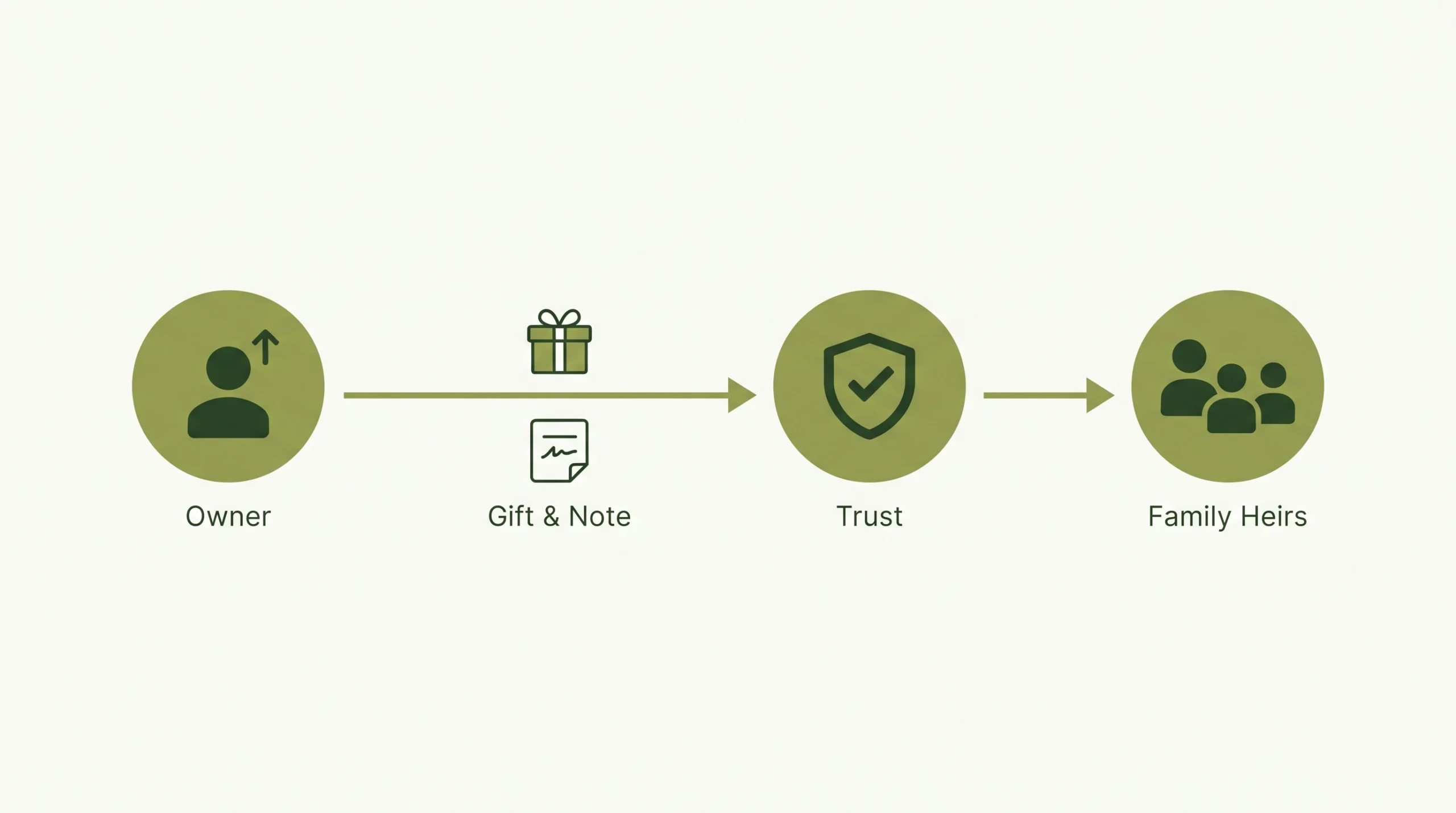
The structure has two moving parts: a seed gift and an installment note. First, you gift the trust cash or assets worth about 10 percent of the interest you plan to sell. That gift gives the trust real equity, so the later sale looks like a genuine purchase. Then the trust buys your business interest and pays you with a promissory note. The note carries interest at or above the applicable federal rate, known as the AFR.
The seed gift matters because a trust with no assets cannot credibly buy anything. Without it, the IRS may treat the note as a retained interest and pull the asset back into your estate. The note then freezes the value. Growth above the note rate shifts to the trust beneficiaries, free of estate tax. Sofer Advisors sizes the gift and the note to the appraised value, so both rest on the same defensible figure.
How are DLOM and DLOC discounts applied?
Discounts lower the price of a minority interest to reflect what it truly commands. A Discount for Lack of Control, or DLOC, applies because a minority owner cannot set dividends or force a sale. A Discount for Lack of Marketability, or DLOM, reflects how hard it is to sell a private stake for cash. Together they can cut the pro rata value sharply. That shift moves more future growth to the trust.
| Discount | What it reflects | Common basis | Evidence source |
|---|---|---|---|
| DLOC | No power over dividends, strategy, or a sale | Minority, non-controlling stake | Control premium studies |
| DLOM | Time and cost to turn a private stake into cash | Illiquid, closely held interest | Restricted stock and pre-IPO studies |
These two discounts carry the most audit risk in the whole transaction. The IRS knows they lower the transfer value, so it tests both hard. Every point of discount needs support from company facts and market data. Sofer Advisors draws on private deal studies and court-tested methods to set each figure. This reflects the Heart of a Teacher approach: the firm shows owners the math behind each discount, not just the answer. USPAP and AICPA SSVS govern how that reasoning is written up.
What is a defined-value clause?
A defined-value clause, sometimes called a formula clause, transfers a fixed dollar amount rather than a fixed number of shares. If the IRS later raises the appraised value, the clause reassigns the extra interest instead of creating a surprise gift. It works as a backstop against valuation disputes. Courts have upheld well-drafted versions, though the wording must be precise. Your attorney drafts the clause, and the appraisal supplies the value it relies on.
The clause protects you when the value is fair but the IRS still disagrees. Say the appraiser sets the interest at one million dollars, and an audit pushes it higher. A defined-value clause sends that extra slice to a charity or a separate trust, not to a taxable gift. The mechanism only works when the underlying number is credible. So the firm and your counsel coordinate early, and the value and the legal language line up.
How does grantor-trust tax affect the sale?
The trust is intentionally defective for income tax, and that word defective is the feature, not a flaw. You, the grantor, still pay income tax on the trust’s earnings. Because you and the trust count as one taxpayer for income, the sale triggers no capital gains tax. The note interest is not taxable income to you either. Paying the trust’s tax bill also shifts more value to your beneficiaries, free of tax.
This treatment is what makes the sale so efficient. The IRS respects the transfer for estate and gift tax, yet ignores it for income tax. So the installment sale moves the asset without a capital gains hit. Your tax payments quietly reduce your estate each year. None of this holds, though, if the value is wrong. A weak appraisal can unwind the whole plan, which is why the number has to be right from the start.
Why does the IRS scrutinize the transfer value?
The IRS scrutinizes the transfer value because a low price shifts wealth cheaply. If the sale price sits below fair market value, the agency can tax the gap as a gift. It can also apply the substance over form doctrine and challenge the deal outright. Aggressive discounts, thin records, or a related appraiser all raise the odds of an audit. A credentialed, independent valuation is your best defense.
Independence is not a formality here. A value from a related party carries little weight in an audit. Large firms like Alvarez and Marsal or Kroll bring this rigor to enterprise clients. Sofer Advisors brings the same senior-level standard to middle-market owners, and unlike a solo practitioner, it backs every figure with a full W2 team of 14. The Sofer Difference runs each engagement through four phases: Discovery, Diligence, Analysis, and Delivery. Led by David Hern CPA ABV ASA, the firm delivers an audit-ready report under a next business day response policy.
Frequently Asked Questions
What is an intentionally defective grantor trust (IDGT)?
An IDGT is an irrevocable trust built so its assets grow outside your taxable estate. It is defective for income tax, which means you still pay tax on the trust’s earnings. Yet the transfer counts as complete for estate and gift tax. That split is the point. Paying the income tax lets more value pass to your heirs without an extra gift tax.
What is the note freeze technique?
The note freeze sells your equity to the trust in exchange for a promissory note. That locks in today’s value for estate tax, since the note amount is fixed. Any growth above the note rate belongs to the beneficiaries. So future appreciation escapes your estate. The move only works when the sale price matches a defensible fair market value at the date of transfer.
Can personal goodwill affect an IDGT sale valuation?
Yes. Personal goodwill is the value tied to your own reputation, skills, and relationships. It belongs to you, not the company, so it often falls outside the interest you sell. Separating it can lower the price the trust pays. The firm identifies personal goodwill and subtracts it under recognized methods, which keeps the transferred value accurate and easier to defend in an audit.
How large does the seed gift need to be?
Practitioners commonly fund the trust with a gift worth about 10 percent of the asset before the sale. The gift gives the trust real equity, so the later purchase looks genuine. Without it, the IRS may argue the note is a retained interest. That would pull the asset back into your estate. The exact figure depends on your facts and your advisors’ judgment.
What happens if the IRS challenges the value?
If the IRS finds the price too low, it can tax the difference as a gift. That brings gift tax, interest, and possible penalties. A weak or aggressive appraisal makes this outcome far more likely. A defined-value clause and a credentialed report reduce the risk. Solid market evidence behind each discount gives you a record that a reviewer can follow and accept.
How do DLOC and DLOM lower the note?
Both discounts reduce the pro rata value of a minority, private interest. DLOC reflects that a small owner cannot control dividends, strategy, or a sale. DLOM reflects the time and cost of turning a private stake into cash. Applied together, they lower the fair market value that sets the note. Each figure needs support from market studies to survive IRS review.
Why must the appraiser be independent?
The IRS wants objective proof of value during an audit. An appraiser with no stake in the outcome supplies that proof. A value from a related party or an unqualified source often gets thrown out. Independence, paired with proper credentials, signals that the work follows recognized standards. That neutrality is what gives the report its weight when tax authorities review the transfer.
What standards govern an IDGT sale valuation?
Three sources shape the work. IRS Revenue Ruling 59-60 lists the factors an appraiser must weigh for a closely held interest. USPAP, from The Appraisal Foundation, sets the rules for how the report is developed. AICPA SSVS governs how a CPA presents the conclusion. Together they define what a defensible appraisal looks like, and reviewers expect to see all three respected.
How much does a business valuation from Sofer Advisors cost?
A full business valuation from Sofer Advisors generally runs 7,500 to 25,000 dollars. The range depends on the company’s complexity, the reporting standard, and the intended use. Estate and gift work spans that range, since tax filings demand deep documentation. Simpler planning engagements fall toward the lower end, while litigation support runs higher. Contact the firm for a fee quote matched to your situation.
Related Case Studies
- Estate Freeze Strategies: How Valuations Lock In Today’s Value
- Section 6166: Deferring Estate Tax on a Business
- Adequate Disclosure on Form 709: Starting the Statute of Limitations
Executive Summary
An IDGT sale valuation sets the price when a business owner sells an interest to a grantor trust. The trust is seeded with a gift of about 10 percent, then buys the interest with a note at the applicable federal rate. A credentialed appraiser fixes fair market value under IRS Revenue Ruling 59-60, then applies DLOM and DLOC discounts backed by market data. Get the number wrong, and the IRS can tax the gap as a gift, with interest and penalties. A full report from Sofer Advisors typically runs 7,500 to 25,000 dollars and holds up under audit.
What Should You Do Next?
Start by gathering three to five years of financial records before your planned transfer date. Confirm the purpose and timing with your tax counsel, since the note terms and the value must line up. Then commission an independent appraisal early, so the sale rests on evidence rather than a rushed estimate.
For a valuation you can defend, work with David Hern CPA ABV ASA. His team has given expert witness testimony in 11+ cases across Georgia, Florida, California, and New Mexico. Schedule a consultation to discuss your transfer.
People Also Read
- Holding Company Discounts: How DLOC and DLOM Apply to Holdcos
- Revenue Ruling 93-12: Why Family Attribution Doesn’t Apply
About the Author
This guide was prepared by David Hern CPA ABV ASA, founder of Sofer Advisors, a business valuation firm headquartered in Atlanta, GA serving clients across the United States. David holds dual accreditations as an Accredited Senior Appraiser (ASA) and is Accredited in Business Valuation (ABV), credentials recognized by the IRS, SEC, and FINRA. He also holds the Certified Exit Planning Advisor (CEPA) designation. With 15+ years of valuation experience, David has served as an expert witness in 11+ cases across multiple jurisdictions and built Sofer Advisors into an Inc. 5000-recognized firm with 180+ five-star Google reviews. Its full W2 employee team maintains subscriptions to all major valuation databases and operates under a next business day response policy. For professional business valuation services, visit soferadvisors.com/about-us/ or contact Sofer Advisors at soferadvisors.com/contact-us/.
Disclaimer: This content is for informational purposes only and does not constitute professional valuation advice. Business valuation conclusions depend on specific facts and circumstances. Contact Sofer Advisors for guidance regarding your specific situation.









