


Last Updated: August 2026
A section 1060 allocation is the split of a business sale price across the assets that change hands. It applies to any applicable asset acquisition, meaning a deal where the assets add up to a trade or business. Both sides must report the same split on IRS Form 8594. The stakes are real. The top federal rate on ordinary income is 37 percent, while long-term capital gains cap at 20 percent, so where value lands changes the final tax bill.
The split matters because it sets two numbers at once. It fixes the buyer’s basis for future depreciation and amortization. It also fixes the character of the seller’s gain. Sofer Advisors prepares the valuation that supports each figure. A clean allocation, backed by evidence, lowers the odds of an audit and keeps both tax returns in step.
Key Takeaways
- Definition: A section 1060 allocation splits a purchase price across seven asset classes, from cash to goodwill.
- Both sides file: The buyer and seller each file Form 8594, and their numbers must match.
- Residual method: Goodwill is the value left over after every other asset gets its fair market value.
- Built-in tension: Buyers favor fast write-offs, while sellers favor capital gain. The split decides who benefits.
- Valuation defends it: A third-party appraisal gives both parties a number that holds up under IRS review.
These points connect tax reporting to the future write-offs each asset allows. The sections below cover the seven classes, the residual math, Form 8594, and the buyer versus seller tug of war.
What is a section 1060 allocation?
A section 1060 allocation is the split of a sale price across the assets a buyer acquires. The rule sits in IRC Section 1060 and covers any applicable asset acquisition. That term means a deal where the assets form a trade or business, and the buyer’s basis rests only on what was paid. The buyer and seller must use the same seven classes and report the split the same way. A matched report keeps both returns clean.
The goal is consistency. The IRS wants the buyer’s cost to equal the seller’s proceeds in each class. When the two returns agree, the file draws less notice. When they clash, both parties invite a closer look. The split also drives real money. It sets how fast the buyer deducts each asset, and whether the seller pays at ordinary or capital gain rates. So the numbers deserve careful support, not a rushed guess at closing.
What are the seven asset classes?
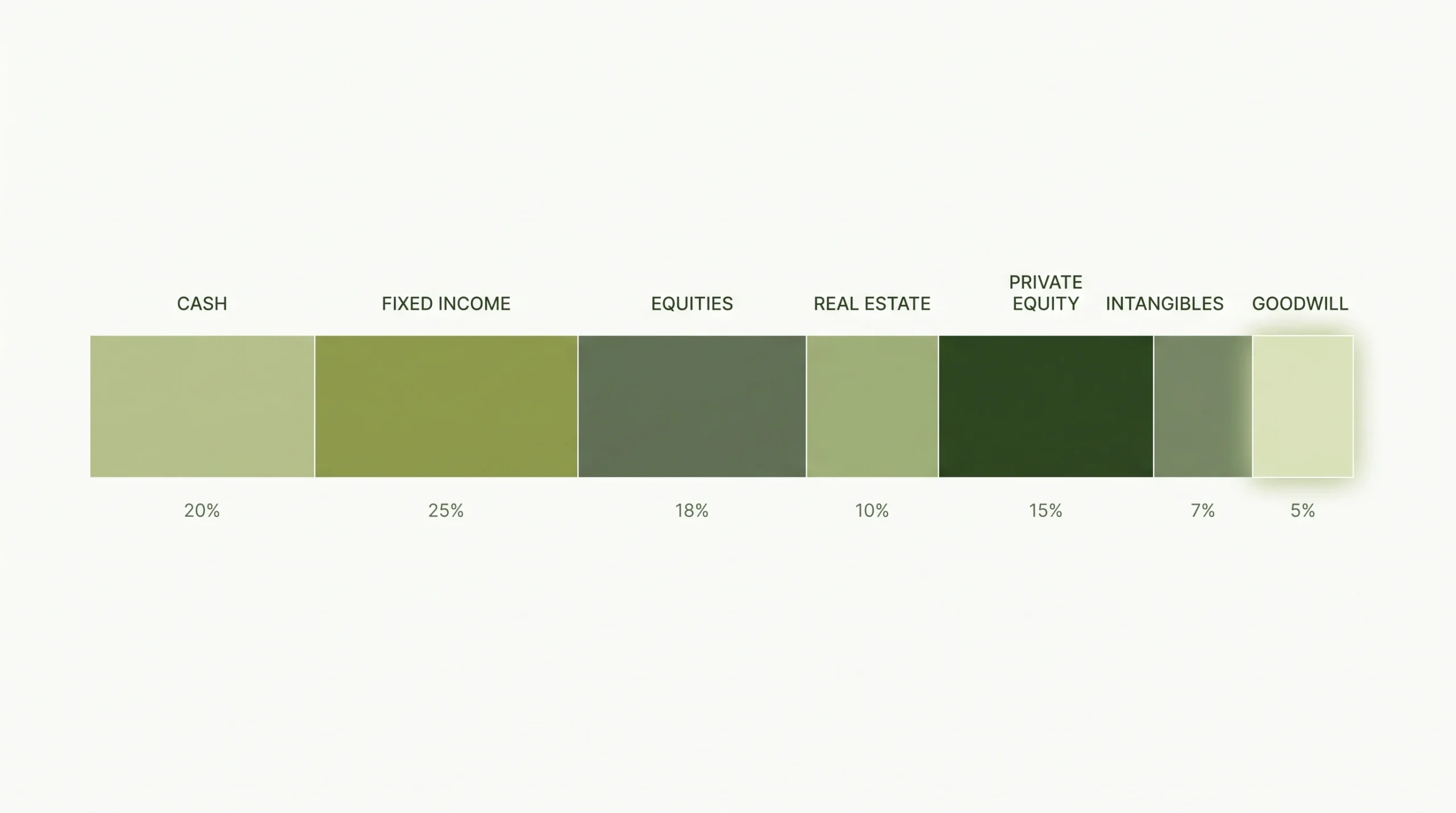
Section 1060 sorts every asset into seven classes, ranked by how liquid each one is. The order runs from Class I cash to Class VII goodwill. You fill the classes in order. Each class takes value up to its fair market value before the next one gets any. This ranking controls how much of the price lands in fast write-off assets versus slow ones. The class an asset falls into shapes the tax result for years.
| Class | What it holds | Typical tax effect |
|---|---|---|
| Class I | Cash and bank deposit accounts | No gain, dollar for dollar |
| Class II | Traded securities, CDs, foreign currency | Little or no gain |
| Class III | Accounts receivable and debt instruments | Often ordinary income |
| Class IV | Inventory and stock in trade | Ordinary income |
| Class V | Equipment, furniture, buildings, land | Mix of ordinary and capital |
| Class VI | Section 197 intangibles except goodwill | Amortized over 15 years |
| Class VII | Goodwill and going concern value | Capital gain for the seller |
The split among these classes is where buyer and seller interests pull apart. Class V equipment and Class VI intangibles give the buyer fast deductions through depreciation and amortization. Class VII goodwill gives the seller a lower capital gain rate. Because the total price is fixed, more value in one class means less in another. A defensible allocation rests on the fair market value of each asset, tested against market and cost evidence.
How does the residual method set goodwill?
The residual method sets goodwill as the value left after every other asset is priced. You start with the full purchase price. You assign fair market value to Classes I through VI in order. Whatever price remains falls into Class VII as goodwill and going concern value. The method never measures goodwill on its own. It is the balance that makes the assets add up to the price paid. The Form 8594 instructions require this exact approach.
Say a buyer pays 5 million dollars for a company. Its cash, receivables, inventory, and equipment carry a fair market value of 3.2 million dollars. Named intangibles, such as a customer list, are worth 800,000 dollars. That leaves 1 million dollars, which the residual method books as goodwill. The stronger the support for the first six classes, the more defensible the goodwill figure. Weak inputs push guesswork into Class VII, and the IRS notices.
Who files Form 8594 and why?
Both the buyer and the seller file Form 8594, the Asset Acquisition Statement, with their federal returns. Each side reports the same allocation across the seven classes. The form exists so the IRS can match the two returns. A mismatch is a known audit trigger. Filing matched forms is the simplest way to keep a clean sale out of the audit queue.
The duty does not end at closing. If the price later shifts, through an earn-out or an indemnity claim, both parties file a supplemental Form 8594. The update keeps the two returns in step with the new total. Early coordination pays off here. When the buyer and seller agree on one valuation before signing, they file matching forms without a scramble. When they wait, the gap can surface years later during an exam.
Why do buyers and sellers clash on the split?
Buyers and sellers clash because the same allocation cuts in opposite directions. A buyer wants value in assets with fast write-offs, such as equipment and Section 197 intangibles. Those deductions lower taxable income soon after the deal. A seller wants value in goodwill, which is taxed at the lower capital gain rate. Every dollar moved toward one goal moves away from the other, so the split becomes a contest over a fixed total.
| Party | Prefers value in | Tax reason |
|---|---|---|
| Buyer | Equipment, Section 197 intangibles | Faster depreciation and amortization deductions |
| Seller | Goodwill and going concern value | Lower long-term capital gain rate |
| Both | A matched, supported allocation | Fewer audit questions on either return |
The fix is not for either side to win the argument. It is to anchor the split to fair market value that an outside appraiser can defend. A written allocation inside the purchase agreement then binds both returns to the same numbers. When the split rests on evidence, the IRS has little room to challenge it. When it rests on preference, both parties carry risk long after the deal closes.
How does a valuation defend the allocation?
A valuation defends the allocation by proving each asset’s fair market value. An appraiser applies the cost, market, and income approaches to price tangible and intangible assets. The work follows USPAP and AICPA SSVS standards, and it draws on IRS Revenue Ruling 59-60 for closely held value. The result is a report the buyer, the seller, and the IRS can all follow, turning a raw number into a defensible position.
General IRS instructions explain the classes, but they do not price your assets. The Sofer Difference closes that gap through four phases: Discovery, Diligence, Analysis, and Delivery. Large firms such as Alvarez and Marsal or Stout bring this rigor to enterprise deals. Sofer Advisors brings the same senior-level work to middle-market owners. Unlike a solo practitioner, it backs each conclusion with a full W2 team of 14 and every major valuation database. David Hern CPA ABV ASA leads that work, with expert witness testimony in 11+ cases across Georgia, Florida, California, and New Mexico. That reflects a Heart of a Teacher: the report shows the owner the math, not just the answer.
Frequently Asked Questions
What is an applicable asset acquisition?
An applicable asset acquisition is a deal where the assets sold add up to a trade or business, and the buyer’s basis rests only on what was paid. This trigger makes the section 1060 rules apply. Both parties must then allocate the price across the seven classes and file Form 8594. If the assets do not form a business, the rules usually do not apply.
Which assets go into Class VII?
Class VII holds goodwill and going concern value. Goodwill reflects the earning power a business keeps beyond its named assets. Going concern value reflects the worth of an operation that keeps running after the sale. You do not price these directly. The residual method assigns them whatever purchase price remains once Classes I through VI receive their fair market value.
Do I file Form 8594 for a stock sale?
A standard stock sale does not need Form 8594, because the buyer acquires shares rather than the underlying assets. The main exception is a Section 338(h)(10) election, where a stock sale is treated as an asset sale for tax. In that case, the section 1060 classes and Form 8594 apply. Check your deal structure early, since it changes the forms you file.
What happens if the buyer and seller disagree?
Disagreement often invites IRS scrutiny, because the agency watches whether the two returns report the same values. If the numbers differ, the audit risk rises for both parties. The better path is to settle the split before closing with a neutral valuation. A written allocation in the purchase agreement then binds both sides to one set of numbers, removing the gap examiners look for during a review.
Can I change a section 1060 allocation after filing?
You can update a section 1060 allocation when the purchase price later changes, such as through an earn-out or a post-closing adjustment. Both the buyer and seller then file a supplemental Form 8594 to report the new figures. The two returns must still match. You cannot simply revise the split to chase a better tax result, since a change without a real economic reason will not hold up under IRS review.
How are covenants not to compete allocated?
A covenant not to compete is usually a Class VI intangible, separate from goodwill. It has real value because it keeps the seller from opening a rival shop and drawing away customers. An appraiser prices the covenant on its own, based on the income it protects. This split matters, since a covenant is taxed as ordinary income to the seller while goodwill often earns the lower capital gain rate.
How does section 1060 differ from ASC 805?
Section 1060 governs the split of a price for tax, while ASC 805 governs it for financial reporting under GAAP. The two use different value standards. Section 1060 uses fair market value across seven fixed classes. ASC 805 uses fair value and its own asset categories. Because the rules diverge, one deal often needs two allocation models. A single split for both goals can create a reporting problem later.
Why does a valuation lower audit risk?
A valuation lowers audit risk by replacing opinion with evidence the IRS accepts. Without a report, the split can look arbitrary, which invites a challenge to the reported basis and gain. A third-party appraisal documents the fair market value behind each class using recognized methods. That record gives both parties a consistent, defensible position, and it gives the examiner a clear trail to follow.
How much does a business valuation from Sofer Advisors cost?
Business valuations from Sofer Advisors typically run from 7,500 to 25,000 dollars, depending on the complexity and scope of the work. Simpler engagements for tax reporting fall toward the lower end. Deals with many intangible assets or litigation support need deeper analysis, so they fall higher. Every project includes a defensible report you can hand to your tax advisor. Contact Sofer Advisors for a fee quote matched to your specific transaction.
Related Case Studies
- Installment Sale of a Business: Tax Deferral and Buyer Pushback
- Built-In Gains Tax: S-Corp Conversions at Sale
- Excess Earnings: Valuing Goodwill and Assets
Executive Summary
A section 1060 allocation splits a business sale price across seven asset classes, from cash to goodwill. The residual method sets goodwill as the value left after every other asset takes its fair market value. Both the buyer and seller file Form 8594, and the numbers must match to avoid an audit trigger. Buyers favor fast depreciation and amortization, while sellers favor a lower capital gain, so the split creates tension on a fixed total. A third-party valuation from Sofer Advisors, built under USPAP, AICPA SSVS, and Revenue Ruling 59-60, gives both sides a defensible position.
What Should You Do Next?
Review your purchase agreement and confirm the asset split matches your tax goals before you sign. If the deal carries heavy intangibles or an earn-out, plan for a supplemental Form 8594. Then secure a neutral valuation that both parties can file behind.
For an allocation you can stand behind, work with David Hern CPA ABV ASA and his team, which operates under a next business day response policy. Schedule a consultation to discuss the section 1060 allocation that fits your sale.
People Also Read
- Mid-Market M&A Due Diligence Checklist: 14 Categories Buyers Review
- When the Cost Approach Wins: Valuing Asset-Heavy Businesses
About the Author
This guide was prepared by David Hern CPA ABV ASA, founder of Sofer Advisors, a business valuation firm headquartered in Atlanta, GA serving clients across the United States. David holds dual accreditations as an Accredited Senior Appraiser (ASA) and is Accredited in Business Valuation (ABV), credentials recognized by the IRS, SEC, and FINRA. He also holds the Certified Exit Planning Advisor (CEPA) designation. With 15+ years of valuation experience, David has served as an expert witness in 11+ cases across multiple jurisdictions and built Sofer Advisors into an Inc. 5000-recognized firm with 180+ five-star Google reviews. Its full W2 employee team maintains subscriptions to all major valuation databases and operates under a next business day response policy. For professional business valuation services, visit soferadvisors.com/about-us/ or contact Sofer Advisors at soferadvisors.com/contact-us/.
Disclaimer: This content is for informational purposes only and does not constitute professional valuation advice. Business valuation conclusions depend on specific facts and circumstances. Contact Sofer Advisor for guidance regarding your specific situation.









