


Last Updated: August 2026
A defined value clause valuation fixes a gift as a set dollar amount, not a set number of business units. It caps gift tax exposure when you transfer a hard-to-value stake in a closely held business. If the IRS later raises the appraised value, the excess units shift to a non-taxable recipient. The 2026 lifetime gift and estate exemption sits near 15 million dollars per person. Sofer Advisors builds the defensible appraisal that makes the clause hold.
These clauses matter most for owners passing equity to the next generation. A private business interest has no public price. So the IRS often disputes its value on audit. A formula gift removes much of that risk. It anchors the transfer to a dollar figure that both sides can test. That certainty is why estate planners pair the clause with a qualified appraisal.
Key Takeaways
- Dollar, not units: The clause gifts a fixed dollar value of the business. The number of units flexes to match that value.
- Case law backs it: Courts upheld these clauses in Wandry, Petter, McCord, and Christiansen. Each ruling shaped how they are drafted today.
- The appraisal is the anchor: A qualified appraisal under IRS Revenue Ruling 59-60 sets the value the clause needs. A weak report sinks it.
- Two main types: A formula transfer clause caps a gift. A formula allocation clause splits value between an heir and a charity.
- The IRS pushes back: The IRS did not acquiesce in Wandry. Strong valuation evidence is your best defense.
Each takeaway points back to one fact. The clause is only as strong as the appraisal behind it. The sections below show how the mechanism works, which cases govern it, and why the report matters so much.
What Is a Defined Value Clause Valuation?
A defined value clause valuation is an appraisal that supports a gift set as a fixed dollar amount rather than a fixed percentage of a business. The clause says the donor gives units equal to one million dollars, for example. It does not say the donor gives 10 percent of the company. If a later IRS review raises the per-unit value, the count of units falls. The total dollar gift stays the same. That link is what caps the tax.
The tool fits closely held businesses, family partnerships, and LLC interests. These assets have no daily market price. Their fair market value rests on judgment and method, not a ticker. So two experts can reach different numbers in good faith. The clause turns that gap into a manageable risk. It ties the gift to a dollar figure, then lets the unit count adjust. Sofer Advisors prepares the report that fixes the starting value with care.
How Does the Clause Cap Gift Tax?
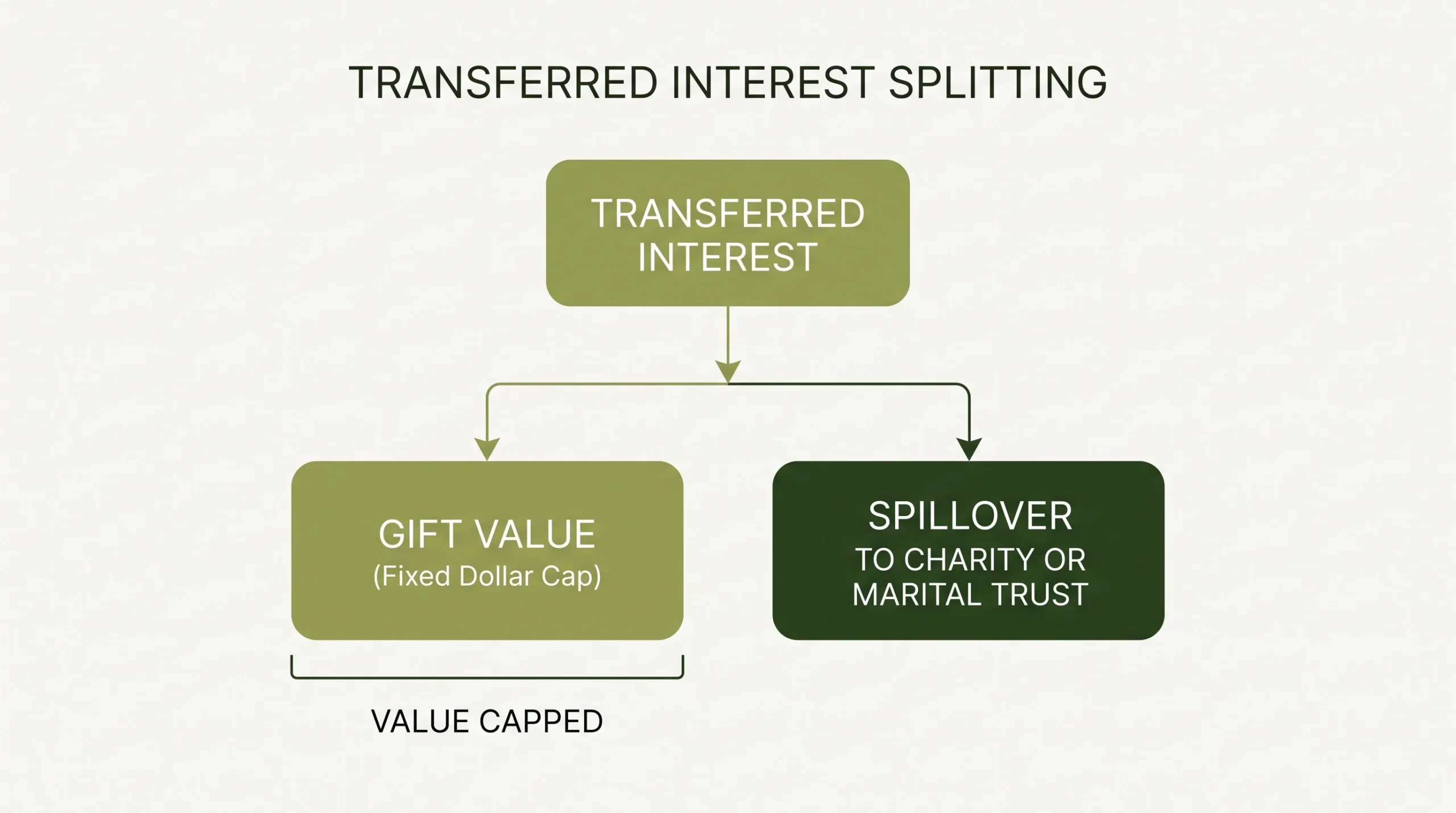
The clause caps gift tax by treating any excess value as a transfer to a non-taxable party. Say the donor gifts one million dollars of LLC units to a child. The appraisal supports that value on the gift date. If the IRS later argues the units are worth more, the formula reacts. It moves the extra units to a spouse or a charity. Those recipients owe no gift tax. So the taxable gift never grows past the target.
This design answers the core problem of private transfers. Value is an opinion, and opinions can shift on audit. Without the clause, a higher IRS number means a surprise taxable gift. The formula blocks that outcome and holds the gift at its planned size. The IRS gift tax rules still require a Form 709 filing, and a qualified appraisal should back it.
Which Court Cases Shaped These Clauses?
Four cases built the legal ground for defined value clauses. Christiansen and Petter blessed formula allocation gifts that sent excess value to charity. McCord, decided by the Fifth Circuit, backed a dollar-based gift split among family and charity. Wandry went further in 2012. It upheld a straight formula transfer with no charity at all. The Tax Court agreed the donors gave a fixed dollar amount, not a fixed slice. That ruling is the reason the pure transfer clause works today.
| Case | Year | Clause type | Core holding |
|---|---|---|---|
| McCord | 2006 | Formula allocation | Fifth Circuit backed a dollar-defined gift |
| Christiansen | 2009 | Formula allocation | Excess to charity upheld on appeal |
| Petter | 2011 | Formula allocation | Gift to trust plus charity respected |
| Wandry | 2012 | Formula transfer | Dollar gift upheld with no charity donee |
Each case teaches the same lesson in a slightly different way. Courts respect a gift defined by a real dollar figure and clear drafting. They reject clauses that try to undo a gift after the fact. That kind of savings clause fails as against public policy. A defensible appraisal ties the whole structure together. It gives the court an objective value to trust. The reporting from the Journal of Accountancy on Wandry shows how closely the IRS still reads these facts.
What Are the Two Main Clause Types?
The two main types are the formula transfer clause and the formula allocation clause. A formula transfer clause gifts a set dollar value to one heir. Any value above that amount simply stays with the donor. Wandry approved this form. A formula allocation clause moves a whole block of units, then splits the value. The first slice goes to a family trust. The rest goes to a charity or a marital trust. Petter and Christiansen approved this form.
The choice depends on the family goal and the assets involved. A transfer clause is clean when the donor wants no charity in the plan. An allocation clause suits a donor who already gives to charity. It uses the charitable deduction to soak up any excess value. Both forms need the same base: a fair market value opinion built on the income, market, and asset approaches. The appraisal must also apply a discount for lack of control and a discount for lack of marketability. Those discounts reflect the true worth of a minority stake.
Why Does the Qualified Appraisal Matter So Much?
The qualified appraisal matters because the entire clause rests on the value it sets. The formula only works if the starting number is defensible. A credentialed appraiser, such as an ABV or ASA holder, gives the gift its footing. The report must follow the IRS valuation guidance and Revenue Ruling 59-60. It must also meet USPAP from The Appraisal Foundation and the AICPA SSVS standard. A weak or thin report invites an audit and can void the plan.
David Hern CPA ABV ASA leads this work with a method built for scrutiny. The Sofer Difference runs in four phases: Discovery, Diligence, Analysis, and Delivery. Each phase adds a layer of proof to the final number. Large firms like Alvarez and Marsal or Kroll aim this rigor at big corporate clients. Sofer Advisors brings the same senior-level care to middle-market owners. And unlike a solo practitioner, it backs every conclusion with a full W2 team of 14. That depth is the Heart of a Teacher in practice: show the owner the math, then defend it.
How Does the IRS Challenge a Defined Value Clause?
The IRS challenges these clauses on two fronts: the value and the wording. On value, it argues the units are worth more than the appraisal shows. A higher value would push a bigger taxable gift, if the formula fails. So the agency probes the discounts, the method, and the data behind the report. On wording, it tests whether the clause is a valid transfer or a banned savings clause. The IRS did not acquiesce in Wandry, so it still presses both points.
A strong appraisal answers the value attack head on. It documents the income, market, and asset approaches and shows the reasoning for each discount. Clear drafting by the attorney answers the wording attack, and the two must line up. David Hern CPA ABV ASA and his team focus on the number, while your counsel shapes the language. Sofer Advisors has supported 11+ expert witness cases across Georgia, Florida, California, and New Mexico, so it prepares each report to stand up in a dispute.
Frequently Asked Questions
What is a defined value clause valuation?
A defined value clause valuation is the appraisal that supports a gift set as a fixed dollar amount. The gift transfers units equal to a stated value, such as one million dollars, not a fixed percentage. If the IRS later raises the per-unit value, the number of units drops so the dollar gift holds. Sofer Advisors prepares the fair market value report that fixes that starting number.
How is this different from a savings clause?
A savings clause tries to undo part of a gift after the IRS raises the value. Courts reject that as against public policy. A defined value clause is different. It defines the gift by a dollar amount from the start, so no excess reaches the taxable party. The value adjusts by shifting units, not by canceling the gift.
What did the Wandry case decide?
The Wandry case, decided in 2012, upheld a pure formula transfer clause. The Tax Court held the donors gave a fixed dollar value of LLC units, not a fixed percentage. It was the first case to bless such a gift with no charity as a backstop. The ruling confirmed that the transfer document, not the later appraisal, sets the size of the gift for tax purposes.
Does the IRS accept defined value clauses?
The IRS has not fully accepted them. It did not acquiesce in the Wandry decision, so it may still challenge a clause on audit. Even so, the case law favors well-drafted, well-supported transfers. A strong qualified appraisal and clean legal wording give the plan its best defense. Sofer Advisors builds reports designed to hold up if the agency reviews the value or the method.
What makes an appraiser qualified for this work?
A qualified appraiser holds a recognized credential, such as the ABV from the AICPA or the ASA from the American Society of Appraisers. The appraiser must follow USPAP and the reasoning in IRS Revenue Ruling 59-60. These standards set the quality bar for tax reports. Sofer Advisors holds these designations in house, so its value meets the level courts and the IRS expect.
Who drafts the clause, the attorney or the appraiser?
The estate planning attorney drafts the legal wording of the clause. The appraiser prepares the independent report that supports the dollar amount. These are two distinct roles. The attorney owns the language that must satisfy tax court precedent. The appraiser owns the value that must satisfy the IRS. Sofer Advisors handles the valuation side, so your counsel can draft the transfer documents on a solid factual base.
Can a defined value clause be used in a sale?
These clauses appear most often in gifts, because of the tax-free exemption limits. A similar formula can also price a sale to guard against a value dispute. In a sale, the price must still match the fair market value of the interest. That link keeps the deal from creating a disguised gift. Sofer Advisors delivers the objective report that anchors the price in both gift and sale settings.
What happens if the IRS raises the value on audit?
If the IRS raises the value, the formula reacts rather than the tax bill. The clause shifts the extra units to a non-taxable recipient, such as a charity. The taxable gift stays at its planned amount. That is the whole point of the structure. A defensible appraisal makes the shift far less likely, since a well-supported value gives the IRS little room to argue for a higher number.
How much does a business valuation from Sofer Advisors cost?
A business valuation from Sofer Advisors typically runs from 7,500 to 25,000 dollars. The price depends on the complexity of the entity, the purpose of the report, and the delivery timeline. Simpler gift and estate reports fall toward the lower end. Litigation support and complex holdings run higher. Contact Sofer Advisors for a fee quote matched to your specific transfer and situation.
Related Case Studies
- Estate Freeze Strategies: How Valuations Lock In Today’s Value
- Adequate Disclosure on Form 709: Starting the Statute of Limitations
- Revenue Ruling 93-12: Why Family Attribution Doesn’t Apply
Executive Summary
A defined value clause valuation caps gift tax on hard-to-value business interests. The clause gifts a fixed dollar amount, not a fixed percentage. If the IRS raises the appraised value, extra units shift to a non-taxable recipient, so the taxable gift holds. Four cases built the legal ground: McCord, Christiansen, Petter, and Wandry. The 2012 Wandry ruling upheld a pure transfer clause with no charity. The whole plan rests on a qualified appraisal under IRS Revenue Ruling 59-60, USPAP, and AICPA SSVS.
What Should You Do Next?
Start by securing a qualified appraisal from an expert in estate and gift tax valuation. Then coordinate with your attorney so the clause wording matches the report. Confirm the value before your counsel finalizes the formula, since the appraisal sets the whole plan.
For a valuation you can defend, work with David Hern CPA ABV ASA. His team has given expert witness testimony in 11+ cases across four states and earned 180+ five-star Google reviews. Schedule a consultation to discuss the transfer that fits your goals.
People Also Read
- Holding Company Discounts: How DLOC and DLOM Apply to Holdcos
- Section 6166: Deferring Estate Tax on a Business
About the Author
This guide was prepared by David Hern CPA ABV ASA, founder of Sofer Advisors, a business valuation firm headquartered in Atlanta, GA serving clients across the United States. David holds dual accreditations as an Accredited Senior Appraiser (ASA) and is Accredited in Business Valuation (ABV), credentials recognized by the IRS, SEC, and FINRA. He also holds the Certified Exit Planning Advisor (CEPA) designation. With 15+ years of valuation experience, David has served as an expert witness in 11+ cases across multiple jurisdictions and built Sofer Advisors into an Inc. 5000-recognized firm with 180+ five-star Google reviews. Its full W2 employee team maintains subscriptions to all major valuation databases and operates under a next business day response policy. For professional business valuation services, visit soferadvisors.com/about-us/ or contact Sofer Advisors at soferadvisors.com/contact-us/.
Disclaimer: This content is for informational purposes only and does not constitute professional valuation advice. Business valuation conclusions depend on specific facts and circumstances. Contact Sofer Advisors for guidance regarding your specific situation.









