


Last Updated: August 2026
A GRAT valuation is the value of a closely-held business interest on the day it funds a Grantor Retained Annuity Trust. That day fixes the gift value the IRS will later test. This number sets the annuity payments. It also decides how much growth reaches heirs tax-free. Report the gift with adequate disclosure on Form 709. A three-year statute of limitations then begins. Sofer Advisors treats the funding-date value as the most important figure in the plan.
Owners turn to a GRAT when a business is set to grow fast. The federal gift and estate exemption is 15 million dollars in 2026. A rising company can still outgrow it. So they lock in today’s value now. That move sends future growth to heirs and keeps it out of the taxed estate.
Key Takeaways
- The gift value is the event: A GRAT valuation measures the fair market value of the interest on the funding date. That figure fixes the reported gift.
- Discounts lower the entry number: A discount for lack of marketability and a minority interest discount cut the starting value. That makes the assets easier to grow past the hurdle.
- The Section 7520 rate sets the bar: This IRS hurdle rate drives the annuity math. A zeroed-out GRAT reports a gift near zero.
- A qualified appraisal is a must: Form 709 calls for an outside, credentialed valuation. Adequate disclosure then starts the statute of limitations.
- The number must be defensible: Estate and gift work draws IRS review. The value must hold up in an audit or in court.
The sections below show how pros set the gift value, apply discounts, and build a report that holds up.
What is a GRAT valuation?
A GRAT valuation sets the fair market value of a business interest moved into a Grantor Retained Annuity Trust. The appraiser measures it on the funding date. That value defines the gift. It sizes the annuity the grantor gets. It also sets the base the trust assets must outgrow. Because the interest is private, the appraiser estimates the price a willing buyer and seller would agree on.
A GRAT is an irrevocable trust. The grantor moves assets in and collects a fixed annuity for a set term. Any value left at the end passes to the heirs. The plan works when the assets grow faster than the IRS hurdle rate. The extra growth then moves outside the taxable estate. The whole plan rests on one appraisal. So the funding-date value must be right and well recorded. Learn more about how to calculate fair market value of a company before you fund the trust.
Why does a GRAT need a qualified appraisal?
The IRS wants an outside, qualified appraisal for any interest moved into a GRAT and reported on Form 709. A credentialed report proves the gift reflects true fair market value. Just as vital, it meets the adequate disclosure rules. They start the clock on the statute of limitations.
Skip the appraisal and the whole transfer stays exposed. With no solid record, the IRS can adjust the value years later. That move can trigger a surprise gift tax. It can also quietly drain the grantor’s lifetime exemption. A qualified appraisal comes from a credentialed analyst who holds the ABV or ASA designation. See our guide on how to determine what a business is worth for the groundwork behind that record.
How does the Section 7520 rate shape a GRAT?
The IRS Section 7520 rate is the hurdle a GRAT’s assets must beat. The IRS sets it each month. It fixes the assumed rate of return. That rate values the annuity the grantor keeps. If the interest grows faster than the rate, the extra value passes to heirs. No gift or estate tax applies. If it does not, the plan just returns the assets to the grantor. No wealth moves.
This is where the zeroed-out GRAT comes in. The trust is built so the present value of the annuity payments equals the funding value of the interest. Because that present value soaks up the full contribution, the reported taxable gift lands near zero. This shifts future growth without spending lifetime exemption. A lower funding value, backed by proper discounts, lowers the bar the assets must clear.
Which methods and discounts set the gift value?
Appraisers value a closely-held interest in a GRAT mainly two ways: the income approach and the market approach. The income approach turns expected cash flow into value. It uses a discount rate or a capitalization rate. The market approach studies real sales of private companies. A good report blends the two into one fair market value. The asset approach checks the result when earnings are thin.
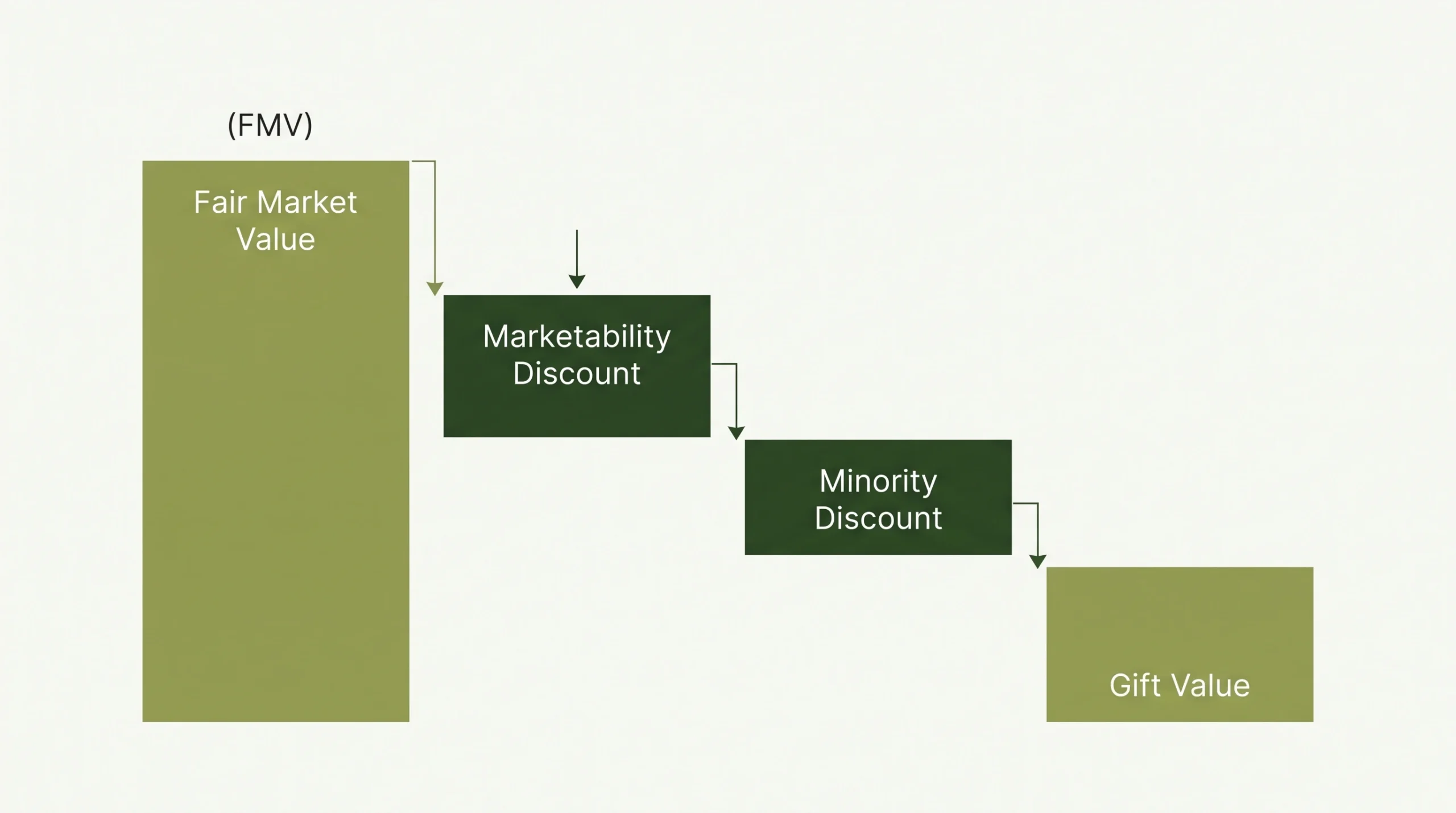
Discounts then adjust the raw figure. A minority interest discount reflects the lower control of a non-controlling stake. A discount for lack of marketability, or DLOM, covers illiquidity. A private interest is hard to sell fast. Both follow standard practice under IRS Revenue Ruling 59-60 and AICPA SSVS. And both must be sized to real evidence, not a handy percentage. DLOM figures draw on restricted-stock and pre-IPO studies from databases such as DealStats.
| Element | What it measures | Effect on gift value | Where it comes from |
|---|---|---|---|
| Income approach | Value of future cash flow | Sets the base figure | Discount or capitalization rate |
| Market approach | Price of comparable sales | Cross-checks the base | Private transaction databases |
| Minority interest discount | Lack of control | Lowers the value | Reduced voting and cash-flow rights |
| Discount for lack of marketability | Illiquidity of a private stake | Lowers the value | Restricted-stock and pre-IPO studies |
Sizing these discounts is where judgment matters most. An aggressive DLOM with no support quickly invites a gift tax audit. A well-backed discount grounded in market data holds firm. Sofer Advisors builds each discount from evidence and explains it in plain terms. That is the Heart of a Teacher approach: show the owner the math, not just the answer.
What happens if the grantor dies during the term?
If the grantor dies before the GRAT term ends, the trust assets are often pulled back into the taxable estate. The tax benefit disappears. The law treats the transfer as though it never happened. The growth then faces the same estate tax as everything else the grantor owned. This mortality risk is the main weakness of the structure. So the term length is a real strategic choice.
Shorter terms narrow the window where that risk lives. But they often demand larger payments to hit the zeroed-out target. Balancing term, payment, and expected growth calls for modeling, not guesswork. Sofer Advisors reviews these structures with a client’s attorney. That way the funding value, the annuity, and the term all point toward one goal.
How do you keep a GRAT valuation defensible?
A defensible GRAT valuation rests on current financials, a credentialed appraiser, and discounts backed by evidence. The common failures run the other way: stale numbers that miss recent results, a report written by someone with no valuation credentials, and discounts pulled from thin air. Each one gives the IRS a clear opening. Gift and estate filings draw closer review than most valuations.
This is where The Sofer Difference shows up. It is a four-phase process of Discovery, Diligence, Analysis, and Delivery that yields an audit-ready report. Large firms such as Alvarez and Marsal, Kroll, and Stout aim their estate work at the biggest estates. Many owners instead hire a solo practitioner who lacks database access and review depth. Sofer Advisors brings senior-level rigor to middle-market owners. It is backed by a full W2 team of 14 and every major valuation database. Its analysts follow USPAP and The Appraisal Foundation standards. The firm has given expert witness testimony in 11+ cases across Georgia, Florida, California, and New Mexico. That record, plus 180+ five-star Google reviews and Inc. 5000 status in 2024 and 2025, points to work that stands up when tested.
Frequently Asked Questions
How do you calculate the gift in a GRAT?
You calculate the gift by subtracting the present value of the retained annuity from the fair market value of the interest. The IRS Section 7520 rate drives the present-value math. The funding-date appraisal supplies the interest value. In a zeroed-out design, the two figures match and the gift nears zero. Sofer Advisors records the appraisal so the math stays defensible if the IRS reviews Form 709.
What does GRAT mean in estate planning?
A GRAT is a Grantor Retained Annuity Trust, an irrevocable trust used to move future growth to heirs with little or no gift tax. The grantor funds it and collects a fixed annuity for a set term. Any growth above the IRS hurdle rate passes to heirs. Sofer Advisors values the private business interests that often drive these transfers. That gives the plan a solid starting figure.
What is a zeroed-out GRAT?
A zeroed-out GRAT sets the present value of the annuity payments equal to the fair market value of the assets put in. Balancing those two figures yields a reported gift of nearly zero. That protects the grantor’s lifetime exemption while still letting extra growth reach heirs. Sofer Advisors sets accurate funding values, so this tax-smart design holds together and reports correctly on the gift tax return.
Why do valuation discounts matter for a GRAT?
Discounts matter because they lower the funding value. That lowers the bar the assets must clear to beat the hurdle rate. A minority interest discount reflects limited control. A discount for lack of marketability reflects the illiquidity of a private stake. Both must rest on market evidence. Sofer Advisors sizes each discount from real data so it survives an IRS gift tax audit rather than inviting one.
Who needs a GRAT valuation?
Any owner planning to move a non-public business interest into a GRAT needs a qualified valuation. The IRS wants outside proof of the gift value for the Form 709 filing, and adequate disclosure depends on it. Sofer Advisors prepares these appraisals for taxpayers and their attorneys. It acts as a neutral third party that confirms the funding value under known professional standards.
What is the difference between a GRAT and a GRUT?
A GRAT pays a fixed annuity based on the value moved in at funding. A GRUT pays a percentage of trust assets revalued each year. A GRAT needs one funding-date appraisal. A GRUT needs a fresh valuation every year. Sofer Advisors prepares technical reports for both. Each one matches the payment terms in the trust instrument and the current fair market value.
What happens if the GRAT fails to beat the hurdle rate?
If the assets do not grow faster than the Section 7520 rate, the remainder passing to heirs is zero. The grantor just gets the original value back through the payments. No wealth transfers, though little is lost beyond planning costs. Sofer Advisors weighs the growth outlook for your closely-held interest, so you can judge whether a GRAT fits your goals before you commit.
How long does a GRAT valuation take?
A valuation of a private business interest for a trust often takes four to eight weeks. It depends on how fast financial records arrive. The timeline covers discovery, document review, and analysis under the income and market approaches. Sofer Advisors manages the work to meet gift tax reporting deadlines. The firm runs on a next business day response policy, so clients never wait.
How much does a business valuation from Sofer Advisors cost?
Standard business valuation services often range from 7,500 to 25,000 dollars. Gift and estate work sits within that range. Simpler filings fall toward the lower end. Entities with many layers, complex capital structures, or heavier paperwork fall higher. Contact Sofer Advisors for a fee quote matched to the size and complexity of your transfer and reporting needs.
Related Case Studies
- What Is a GRAT and How Does It Transfer Business Value to Heirs?
- How Family Limited Partnerships Are Valued for Gift and Estate Tax
- How to Calculate Fair Market Value of a Company
Executive Summary
A GRAT valuation sets the fair market value of a business interest on the day it funds a Grantor Retained Annuity Trust. That figure decides the gift and the annuity. The IRS Section 7520 rate sets the hurdle the assets must beat. A zeroed-out design reports a gift near zero. A minority interest discount and a discount for lack of marketability lower the entry value when they rest on real evidence. Because gift and estate work invites IRS review, the appraisal must meet Form 709 adequate disclosure and stand up under Revenue Ruling 59-60, USPAP, and AICPA standards. Sofer Advisors delivers that defensible number.
What Should You Do Next?
Confirm your transfer timeline and current exemption limits with your tax attorney. Then order a formal appraisal so your Form 709 carries outside support from the funding date. File with adequate disclosure to start the statute of limitations and protect your lifetime exemption. Move early, because the value set at funding governs the full term.
For a valuation that holds up under IRS review, work with David Hern CPA ABV ASA, whose team has given expert witness testimony in 11+ cases across Georgia, Florida, California, and New Mexico. Schedule a consultation to discuss the funding value for your GRAT.
People Also Read
- How Do You Determine What a Business Is Worth
- The Alternate Valuation Date: Section 2032 for Estates
About the Author
This guide was prepared by David Hern CPA ABV ASA, founder of Sofer Advisors, a business valuation firm headquartered in Atlanta, GA serving clients across the United States. David holds dual accreditations as an Accredited Senior Appraiser (ASA) and is Accredited in Business Valuation (ABV), credentials recognized by the IRS, SEC, and FINRA. He also holds the Certified Exit Planning Advisor (CEPA) designation. With 15+ years of valuation experience, David has served as an expert witness in 11+ cases across multiple jurisdictions and built Sofer Advisors into an Inc. 5000-recognized firm with 180+ five-star Google reviews. Its full W2 employee team maintains subscriptions to all major valuation databases and operates under a next business day response policy. For professional business valuation services, contact Sofer Advisors at soferadvisors.com/contact-us/.
Disclaimer: This content is for informational purposes only and does not constitute professional valuation advice. Business valuation conclusions depend on specific facts and circumstances. Contact Sofer Advisors for guidance regarding your specific situation.









