


Last Updated: July 2026
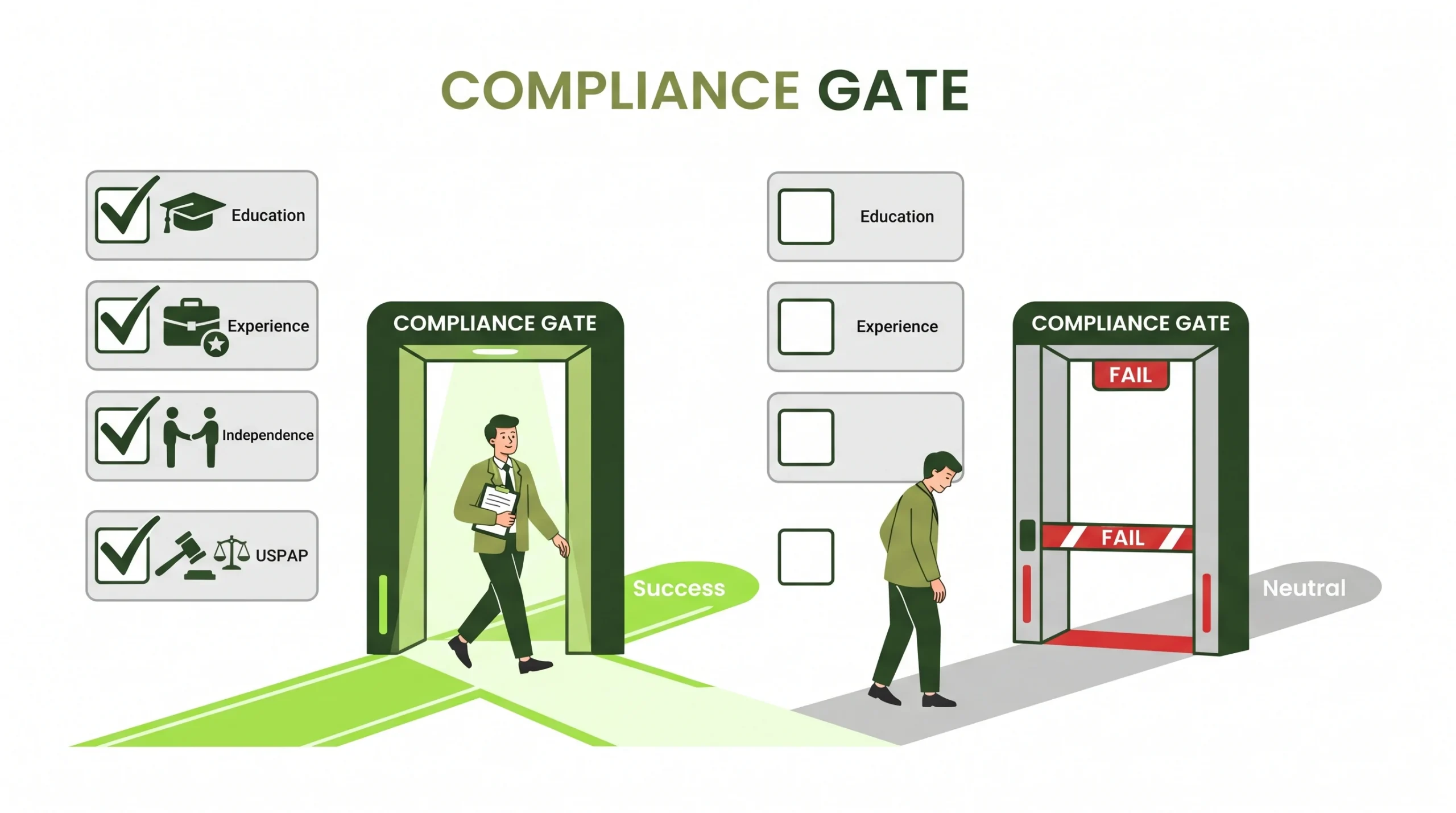
A qualified appraiser meets the education, experience, and independence criteria in Treasury Regulation 1.170A-17(b). That lets them prepare a defensible qualified appraisal for tax reporting. The rules confirm the appraiser has the skill to value complex assets. To meet them, the appraiser must appraise for pay on a regular basis, hold relevant designations, and show real training in appraisal theory.
Sofer Advisors works from the view that accurate valuations depend on strict adherence to these benchmarks. Founded in 2019, it has built a name for technical precision, serving as expert witness in 11+ business valuation cases across several states. With 180+ five-star Google reviews, it applies the Heart of a Teacher approach so owners understand why specific documentation matters for their filings.
An appraiser must stay neutral to protect the integrity of the conclusion, which means no prohibited interest in the property. Owners filing tax returns or resolving disputes need to confirm their expert meets the full scope of IRS rules. Engaging an unqualified person can lead to disallowed deductions or penalties, so understanding these credentials is a priority.
Key Takeaways
- Appraiser standards: a qualified appraiser must meet IRS independence, education, and experience rules under Treasury Regulation 1.170A-17.
- Formal appraisal: a qualified appraisal is a written report, and the donor summarizes it on IRS Form 8283.
- Personal penalties: appraisers face financial penalties under IRC Section 6695A for significant valuation misstatements.
- USPAP is the benchmark: adherence to USPAP is the primary marker of credibility in Tax Court and IRS audits.
- Verify credentials: confirming ASA or ABV designations is a critical step so the valuation withstands scrutiny.
Selecting an advisor means checking credentials against industry standards. The sections below outline the criteria and process owners should review before an engagement.
What are the key IRS requirements for an appraiser?
A qualified appraiser has earned a designation from a recognized professional organization and regularly performs appraisals for pay. To satisfy Treasury Regulation 1.170A-17(b), the person must show the education and experience to value the type of property at hand. These standards keep skill high when a report is issued. Our guide to finding a qualified appraiser covers what to check.
The formal rules call for a verified credential such as the Accredited Senior Appraiser (ASA) or Accredited in Business Valuation (ABV) title. These bodies confirm the person follows USPAP on every project. That rigor produces a report that can hold up under review by tax authorities. Sofer Advisors confirms every expert meets these marks before any engagement, so the value stays defensible.
What excludes someone from being a qualified appraiser?
A lack of independence excludes someone from being a qualified appraiser. If a person is a party to the deal, such as the buyer, the seller, or anyone with a financial interest in the outcome, the IRS disqualifies them. The bar also extends to family members and employees of any person or entity in the transfer. The appraiser must stay a neutral third party to keep the report valid. Disqualifying interests include:
- The buyer, seller, or donor of the property
- Anyone with a financial stake in the outcome
- Family members of a party to the transaction
- Employees of any person or entity involved
When any of these exist, a conflict of interest compromises the valuation. The IRS reviews these assignments to confirm no bias. If it finds the appraiser has a stake in the outcome, it may invalidate the whole report. Owners often work with an independent firm so the valuation holds up. A neutral third party meets the strict standards the IRS sets for tax reporting.
How does IRS Section 170 define a qualified appraisal?
Under IRS Section 170, a qualified appraisal is a formal written document prepared by a qualified appraiser no more than 60 days before the donation date. For noncash charitable contributions, the taxpayer attaches this report to the return via Form 8283. The code requires the appraiser to hold specific credentials and regularly perform appraisals for pay.
The document must include a complete property description, its condition, and the valuation date. It must state the fair market value at the time of the contribution and explain the methods used to reach it. Every report requires the signature and tax identification number of the person who did the analysis. These standards are necessary for compliance with IRS guidelines.
What are the penalties under IRC Section 6695A?
IRC Section 6695A puts penalties directly on appraisers whose work causes a substantial or gross valuation misstatement on a return. The penalty holds the professional to account for the accuracy of their work. It deters biased, sloppy, or flawed opinions that could produce a wrong tax bill.
A substantial misstatement can bring a penalty of $1,000 or 10 percent of the tax understatement tied to the report. A gross misstatement raises it to 125 percent of the income the appraiser earned for the work. These rules confirm that professionals must hold to the highest standards. Owners who rely on third-party opinions should verify that their advisors work with the care needed to avoid these sanctions.
Meeting every regulatory rule takes specialized technical knowledge. You can get a defensible valuation for tax reporting so your documentation aligns with current IRS expectations. Qualified experts provide the clarity and independence to support your filings during an audit.
Why is USPAP compliance critical for IRS valuations?
USPAP matters because it gives the IRS one framework to judge a report. The tax code does not require these guidelines by name, but tax courts treat them as a key sign of a reliable, unbiased opinion. Following them builds a defensible value that lowers risk in a review.
Guidance from The Appraisal Foundation keeps the expert focused on objective data, not personal preference. That builds a clear audit trail that can hold up under IRS scrutiny. Without a report built on these marks, the agency may argue the analysis lacks the rigor tax reporting needs. A firm aligned with these rules protects the taxpayer from a rejected or penalized finding.
How can you verify an appraiser’s qualifications?
To verify qualifications, confirm the appraiser holds a designation from a recognized body, such as the American Society of Appraisers (ASA) or the AICPA’s Accredited in Business Valuation (ABV). These signify the person has met rigorous education, testing, and experience requirements. Our guide to the IRS fair market value standard shows what a credible opinion looks like.
Beyond credentials, verify a history of expert-witness testimony in tax court, which shows the ability to defend findings under hard questioning. Confirming the appraiser stays in good standing with professional bodies and state licensing is another safeguard. Sofer Advisors holds these standards when preparing a litigation and dispute valuation. Owners must prioritize transparency on credentials so the valuation carries weight for tax or legal use.
Which provider meets the IRS qualified appraiser bar?
The provider must clear the IRS bar on credentials, independence, and USPAP. A general accounting firm may support basic financial statements but often lacks the specialized certification for audit defense. An uncredentialed broker prioritizes deal facilitation over rigorous analysis. Large advisory practices like Alvarez & Marsal, Stout, and Kroll maintain these certifications so their work stays above challenge. The table below compares the options.
| Provider type | Meets IRS 1.170A-17? | USPAP and Tax Court ready? |
| Sofer Advisors (ASA, ABV) | Yes | Yes; extensive expert-witness experience |
| Accounting firm, no valuation credential | No, unless it holds a separate credentialed practice | Unlikely; not their primary area |
| Uncredentialed appraiser or broker | No | No; lacks standing and credibility |
These distinctions reflect different training and regulatory expectations. A general accounting firm may help with basic statements but often lacks the certification for audit defense. Uncredentialed brokers tend to prioritize the deal over the technical analysis the standards require. A firm that keeps ASA and ABV credentials, and defends its work in court, gives the taxpayer a higher degree of protection. Owners often find the difference in outcomes justifies vetting an advisor’s credentials before engaging.
Qualified appraisals reward credentials, independence, and documented methods. The questions below cover what taxpayers ask most.
Frequently Asked Questions
What is considered a qualified appraisal for the IRS?
A qualified appraisal is a document that meets the specific requirements under Treasury Regulation 1.170A-17(a). It must be prepared by a qualified appraiser, state fair market value, and explain the methods used. Sofer Advisors produces these reports by strictly following USPAP so every valuation stays technically accurate for tax purposes.
What is the IRS qualified appraisal form?
Taxpayers report noncash charitable contributions on Form 8283. The form identifies key details about the property and the donor, but the qualified appraisal itself is a separate, comprehensive document that supports the reported values. The donor keeps the full appraisal in their records. Sofer Advisors provides the documentation that supports the data on this form during tax preparation.
How do you get a qualified appraisal?
Engage an independent expert who holds relevant credentials and follows USPAP. The appraiser must confirm no prohibited interest in the property. Ask for a summary of the advisor’s experience with the IRS or tax court to confirm they can defend the work. Sofer Advisors assists by offering independent, standards-compliant valuations for tax reporting.
Who is a qualified appraiser for Form 706 estate reporting?
For estate tax on Form 706, a qualified appraiser has earned a designation from a recognized organization and regularly performs appraisals for pay. They must show verifiable education and experience valuing the specific property in the estate. Sofer Advisors uses professionals with ASA and ABV credentials who meet these federal requirements for estate and gift tax work.
Can a regular CPA act as a qualified appraiser for the IRS?
A CPA can act as a qualified appraiser only if they also hold a recognized appraisal designation and can show the education and experience for that specific property. A CPA license alone does not satisfy the IRS standards under Treasury Regulation 1.170A-17. Sofer Advisors uses CPAs who also hold the ABV or ASA designation to meet these mandates.
What is the difference between a standard appraisal and a qualified appraisal?
A standard appraisal is an opinion of value that may or may not follow formal regulatory standards. A qualified appraisal must follow the specific procedural and reporting rules the IRS sets, including USPAP adherence and appraiser independence. Those requirements make the report fit for federal filings and litigation support. Sofer Advisors prepares qualified appraisals to give owners the highest level of protection.
What happens if the IRS rejects my appraisal?
A rejection can bring tax adjustments, interest, and substantial valuation misstatement penalties under IRC Section 6695A. It often happens when the report lacks required components, fails to show independence, or does not follow USPAP. Sofer Advisors prevents this through its four-phase process, so each report is defensible and fully compliant.
Does the IRS require a specific valuation method?
The IRS requires generally accepted approaches, the income, market, and asset methods, as outlined in Revenue Ruling 59-60. The appraiser must justify the chosen method by the facts of the specific business or asset. Sofer Advisors selects the most appropriate method for each project so the value is logical and defensible under scrutiny.
How much does a qualified appraisal from Sofer Advisors cost?
A qualified appraisal from Sofer Advisors runs $7,500 to $25,000, based on its published engagement data, with complex entities and estate work reaching the higher end. Cost depends on entity complexity, the project timeline, and the regulatory purpose. For a quote tied to your filing, request a valuation estimate with your entity details and the reporting purpose.
Related Case Studies
- Applying IRS Revenue Ruling 59-60: 8 Factors in Every Valuation
- Fair Market Value for Estate Tax: What Executors Need
- FMV of Closely Held Business Stock: IRS Methods
Executive Summary
A qualified appraiser meets strict IRS education, experience, and independence rules under Treasury Regulation 1.170A-17, and independence is decisive: any financial stake, or a family or employment tie to a party, disqualifies them. A qualified appraisal is a formal written report, prepared within 60 days of the donation, that the donor summarizes on Form 8283. USPAP adherence is the benchmark tax courts weigh for credibility, and a substantial or gross misstatement exposes the appraiser to personal penalties under IRC Section 6695A. Before you engage, verify ASA or ABV credentials and a record of tax court testimony. To prepare, gather your financial statements, ownership records, and operational history.
What Should You Do Next?
Confirm your appraiser holds an ASA or ABV credential, has no prohibited interest in the property, and follows USPAP, then gathers your financial statements, ownership records, and operational history. A complete document set lets the advisor build a defensible analysis that meets the IRS requirements from the start.
David Hern CPA ABV ASA, founder of Sofer Advisors, prepares qualified appraisals that meet Section 170 and USPAP standards. Schedule a free consultation to discuss your situation.
People Also Read
- Stepped-Up Basis at Death: What Business Owners Must Know
- Tax Implications of Selling a Business: An Owner’s Guide
About the Author
This guide was prepared by David Hern CPA ABV ASA, founder of Sofer Advisors, a business valuation firm headquartered in Atlanta, GA serving clients across the United States. David holds dual accreditations as an Accredited Senior Appraiser (ASA) and is Accredited in Business Valuation (ABV), credentials recognized by the IRS, SEC, and FINRA. He also holds the Certified Exit Planning Advisor (CEPA) designation. With 15+ years of valuation experience, David has served as an expert witness in 11+ cases across multiple jurisdictions and built Sofer Advisors into an Inc. 5000-recognized firm with 180+ five-star Google reviews. Its full W2 employee team maintains subscriptions to all major valuation databases and operates under a next business day response policy.
For professional business valuation services, visit soferadvisors.com/about-us/ or contact Sofer Advisors at soferadvisors.com/contact-us/.
Disclaimer: This content is for informational purposes only and does not constitute professional valuation advice. Business valuation conclusions depend on specific facts and circumstances. Contact Sofer Advisors for guidance regarding your specific situation.









