


Last Updated: July 2026
A boutique hotel valuation finds the worth of a small, independent, or uniquely branded hotel by analyzing its operating cash flow, real estate, and brand reputation. Owners perform it to support a sale, a tax filing, or a financing decision. The method relies on the standard in the Uniform Standards of Professional Appraisal Practice (USPAP) to define value through objective reporting.
Setting a fair market value for a specialized property takes detailed analysis of revenue per available room, occupancy, and local market trends. Sofer Advisors provides these insights through a structured method with senior analysts who hold specialized credentials. With 11+ expert-witness cases, it knows how to build a position that withstands scrutiny from auditors or courts. Every engagement follows a rigorous framework to keep the output defensible.
Managing hotel assets takes an understanding of how seasonal performance moves total enterprise value. Owners often need this data to align their financial strategy with regional conditions. With 180+ five-star Google reviews, Sofer Advisors prioritizes transparency in every calculation. This educational approach gives stakeholders the information to address their objectives with clarity.
Key Takeaways
- Track three metrics: Average Daily Rate, occupancy, and Revenue Per Available Room reveal a property’s operating performance.
- Lead with income: a discounted cash flow model is often the most reliable method for a hospitality asset.
- Use market multiples: EBITDA multiples of 8x to 12x add context, and RevPAR multiples give a useful check.
- Quantify intangibles: brand, guest reviews, and design have a real, measurable impact on value.
- Separate operations from real estate: distinguish the business value from the property, and fee simple from leasehold.
Each component shapes how a property performs in a transaction or tax event. The sections below cover how the methods change with operating results and regional demand.
What are key boutique hotel performance metrics?
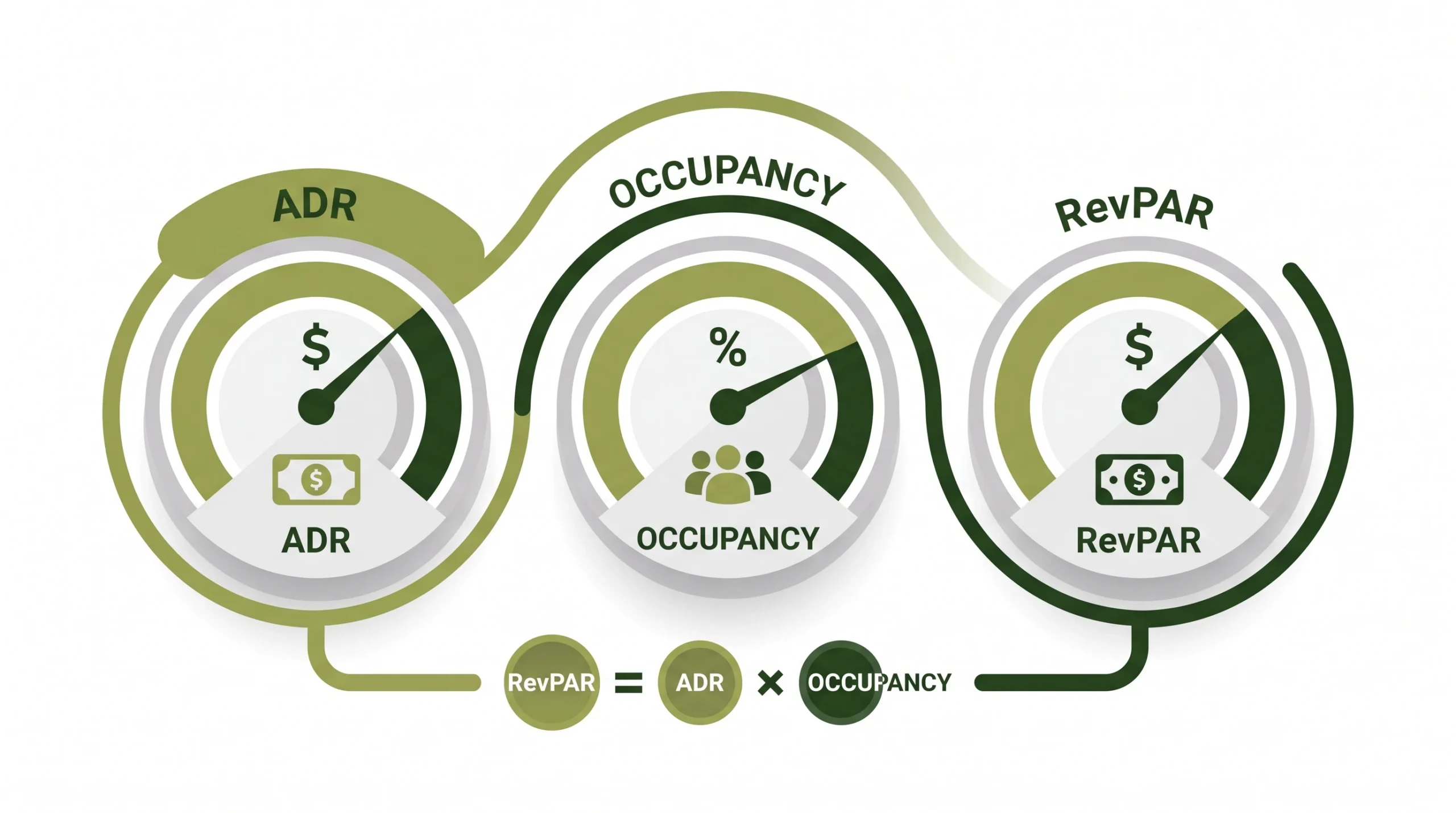
The key metrics are Average Daily Rate (ADR), occupancy rate, and Revenue Per Available Room (RevPAR). These three show how well a property earns from its rooms. ADR tracks the price paid per room, and occupancy measures the share of rooms filled over a period. RevPAR ties them together into one number that reflects both pricing power and volume.
Beyond these, Gross Operating Profit Per Available Room (GOPPAR) gives a clearer view of health by accounting for operating costs. Chain hotels often report high revenue, but a boutique hotel must watch GOPPAR to see how its unique service model hits the bottom line. Tracking costs against revenue separates top-line popularity from real profit.
Which valuation methods apply to boutique hotels?
Three standard methods apply: the income approach, the market approach, and the asset approach. The income approach is primary, because these properties run as cash-flow-centric businesses. The market approach gives a useful benchmark against recent sales, but the income approach captures the operating nuances of a niche hotel more effectively. Our guide to valuing a business on cash flow covers the income method.
Within the income approach, a discounted cash flow (DCF) analysis accounts for the operating profile and brand identity of a boutique property. It projects future cash flows from occupancy, ADR, and local trends. Unlike a standard hotel, a boutique hotel’s value leans heavily on reputation and guest experience. The asset approach, which values the real estate and the furniture, fixtures, and equipment (FF&E), acts as a value floor. Sofer Advisors uses these inputs for a formal valuation in tax reporting or transaction planning.
How do you apply the income approach to a hotel?
Applying the income approach means projecting the hotel’s future Net Operating Income (NOI) over a 5 to 10 year window. Analysts then discount those cash flows to the present using a rate that reflects the property’s risk. This method focuses on the hotel’s ability to generate consistent profit.
Beyond the projection period, the appraiser sets a terminal value that represents the expected exit price. Choosing the right capitalization rate is critical, since it comes from sales of comparable properties in the regional market. For a boutique hotel, that rate must adjust for factors like key-person dependency and high market sensitivity. These steps keep the valuation tied to the current operating environment.
Talk to a Sofer Advisors specialist about which approach fits your property.
What multiples are used in the market approach?
The market approach uses EBITDA multiples and RevPAR multiples to value a hotel against peer properties. Analysts identify guideline transactions with similar amenities, locations, and brand affiliations to set a baseline. Databases such as Business Valuation Resources (BVR / DealStats) provide the empirical data to calculate these multiples.
An EBITDA multiple is applied to the hotel’s normalized earnings to project total enterprise value. A RevPAR multiple lets analysts assess a property by its rooms revenue, a standard hospitality metric. Because no two hotels run identically, analysts apply qualitative adjustments for property condition, market position, and brand strength. These adjustments keep the final estimate tied to the subject’s specific risk.
What unique factors affect a boutique hotel’s value?
Unique factors include brand reputation and goodwill, the aesthetic appeal of the design, high-quality online reviews, and the skill of the management team. These intangibles drive guest demand and set a property apart from chain hotels. Because value hinges on a distinct guest experience, analysts weigh these against physical risks, such as a looming Property Improvement Plan (PIP). The main value drivers are:
- Brand reputation, goodwill, and a curated identity
- Online review sentiment and repeat-guest rates
- Design appeal and a strong location
- Management skill and any pending PIP cost
A property with a strong, curated identity often commands higher room rates and occupancy. Online reviews act as a digital barometer, shaping future bookings and the cash flow used in an income valuation. If the physical plant has fallen behind current design standards, a costly PIP will weigh down the appraisal. Each of these interacts with the broader market conditions.
How does real estate impact a hotel’s total value?
Real estate is a core part of a hotel’s value, giving the tangible foundation for all operations. Analysts must identify whether the interest is fee simple, which covers land and building, or leasehold, which is limited to the business operations. This distinction changes the income projections and risk assessment. Under Appraisal Foundation standards, reports define these interests so the value reflects the specific bundle of rights the owner holds.
For complex deals, a Purchase Price Allocation under ASC 805 is often needed to give granular insight into asset cost. It separates tangible assets, like the building and furniture, from intangibles like brand equity and goodwill. That allocation carries real implications for the buyer’s future reporting and tax. Isolating these components classifies each asset by its economic role. By separating the physical site from the business enterprise, owners see the true drivers of the total price. Our franchise valuation guide shows a similar brand-and-property split.
Which valuation provider is best for a boutique hotel?
The right provider depends on the engagement, whether tax compliance or a strategic exit. National firms like Alvarez & Marsal, Stout, and Kroll serve the largest deals, while a hospitality consultant focuses on operating metrics and an M&A advisor focuses on maximizing a sale price. A specialist valuation firm blends all three approaches for a defensible conclusion. The table below compares the options.
| Provider type | Valuation approach | Best for |
| Sofer Advisors | Blends income, market, and asset for a defensible conclusion | Certified valuation for tax, deals, reporting, or litigation |
| Hospitality consultant | Hospitality-specific metrics and portfolio analysis | Institutional investors and lenders needing feasibility studies |
| M&A advisor | Market approach focused on the sale price | Sellers seeking a partner to market and sell the hotel |
Each firm meets different reporting needs, which can affect the outcome. Owners should prioritize transparency on the method and the standards applied. A firm that blends income and asset approaches typically produces more reliable results for tax or legal purposes. An investment-banking specialist may lean on short-term market momentum to lift a sale price. A report that meets recognized professional standards gives a higher degree of certainty during a transition.
Hotel valuation rewards clean operating data and the OpCo/real estate split. The questions below cover what owners ask most.
Frequently Asked Questions
How do you value a boutique hotel?
Valuing a boutique hotel balances operating cash flow with the underlying real estate. Analysts typically favor the income approach, using a DCF to forecast future earnings from occupancy and room rates. Sofer Advisors also investigates tangible and intangible assets, like brand reputation and unique amenities, to set a defensible baseline.
Is owning a boutique hotel profitable?
Profit depends on high occupancy and the ability to hold premium room pricing. Capital needs are high, but a well-managed property often earns strong margins through targeted marketing and a distinct guest experience. Sofer Advisors tracks market trends to help owners compare their efficiency against sector benchmarks.
What is a good EBITDA margin for a hotel?
A good EBITDA margin usually runs 25% to 40%, though it depends on size and service level. Boutique hotels with lower labor costs or high demand can reach the top of that range. Sofer Advisors adjusts a hotel’s EBITDA for non-recurring expenses so owners see a clear read on operating strength during tax or transaction planning.
What is the difference between RevPAR and ADR?
ADR measures average revenue per occupied room, while RevPAR tracks revenue per total available room. ADR focuses only on rooms that sell, while RevPAR spreads total room revenue across the whole inventory, so it accounts for vacancies. Sofer Advisors distinguishes these when calculating value, since RevPAR gives better insight into overall performance.
How does a Property Improvement Plan (PIP) affect a hotel’s value?
A PIP is a mandated commitment to renovate a property to meet current brand standards. Before completion, the PIP cost often reduces the immediate market value due to the capital drain on cash flow. Sofer Advisors assesses the impact of these required investments on long-term enterprise value for accurate reporting under ASC 360.
What documents are needed for a boutique hotel appraisal?
A formal appraisal needs three years of profit and loss statements, current occupancy records, and property tax assessments. Appraisers also gather capital expenditure details, lease agreements, and any management contracts. Sofer Advisors collects these during diligence to verify the property information before finalizing a report for tax or litigation.
How is a hotel’s brand and reputation factored into its valuation?
Brand value is often measured through guest feedback scores, online review sentiment, and repeat-customer rates. These intangibles shape an owner’s ability to command a price premium over local rivals. Sofer Advisors accounts for them by adjusting discount rates or projected revenue growth so the value reflects real market standing and loyalty.
How long does it take to get a boutique hotel valuation?
A boutique hotel valuation from Sofer Advisors usually takes four to eight weeks, based on the property’s complexity and available data. That covers the discovery, diligence, analysis, and delivery phases for a defensible report. This time-tested process gives owners an accurate estimate that withstands scrutiny from regulators or the IRS under Revenue Ruling 59-60.
How much does a hotel valuation from Sofer Advisors cost?
A hotel valuation from Sofer Advisors runs $7,500 to $25,000, based on its published engagement data, with larger properties and complex records reaching the higher end. Cost depends on property size, the complexity of the financials, and the report’s purpose. For a quote tied to your property, request a valuation estimate with your financials and occupancy records.
Related Case Studies
- How to Value a Pizza Business: An Expert Guide
- How to Value a Commercial Cleaning Company for Sale
- How to Value a Landscaping Business: Recurring Revenue Matters
Executive Summary
A boutique hotel is valued on three operating metrics, ADR, occupancy, and RevPAR, with GOPPAR revealing true profit after costs. The income approach and a DCF lead the analysis, projecting NOI over 5 to 10 years and discounting it at a risk-adjusted rate, while EBITDA multiples of 8x to 12x and RevPAR multiples serve as a market check, and the asset approach sets a floor. Brand, reviews, and design drive intangible value, but a looming Property Improvement Plan drags it down. The business value is separated from the real estate, and the fee-simple versus leasehold distinction matters. To prepare, gather three years of financials, occupancy records, capital expenditure plans, and any management or lease agreements.
What Should You Do Next?
Gather three years of profit and loss statements, current occupancy records, capital expenditure plans, and any management or lease agreements, then confirm whether your interest is fee simple or leasehold. Flag any pending Property Improvement Plan, since it will affect value. An independent valuation can then blend the income, market, and asset approaches into a defensible number.
David Hern CPA ABV ASA, founder of Sofer Advisors, provides neutral, defensible valuations for boutique hotels and hospitality assets. Schedule a free consultation to discuss your situation.
People Also Read
- How to Value a Roofing Company: Storm Markets and Crew Risk
- How to Value an Electrical Contracting Company
About the Author
This guide was prepared by David Hern CPA ABV ASA, founder of Sofer Advisors, a business valuation firm headquartered in Atlanta, GA serving clients across the United States. David holds dual accreditations as an Accredited Senior Appraiser (ASA) and is Accredited in Business Valuation (ABV), credentials recognized by the IRS, SEC, and FINRA. He also holds the Certified Exit Planning Advisor (CEPA) designation. With 15+ years of valuation experience, David has served as an expert witness in 11+ cases across multiple jurisdictions and built Sofer Advisors into an Inc. 5000-recognized firm with 180+ five-star Google reviews. Its full W2 employee team maintains subscriptions to all major valuation databases and operates under a next business day response policy.
For professional business valuation services, visit soferadvisors.com/about-us/ or contact Sofer Advisors at soferadvisors.com/contact-us/.
Disclaimer: This content is for informational purposes only and does not constitute professional valuation advice. Business valuation conclusions depend on specific facts and circumstances. Contact Sofer Advisors for guidance regarding your specific situation.