


Last Updated: October 2026
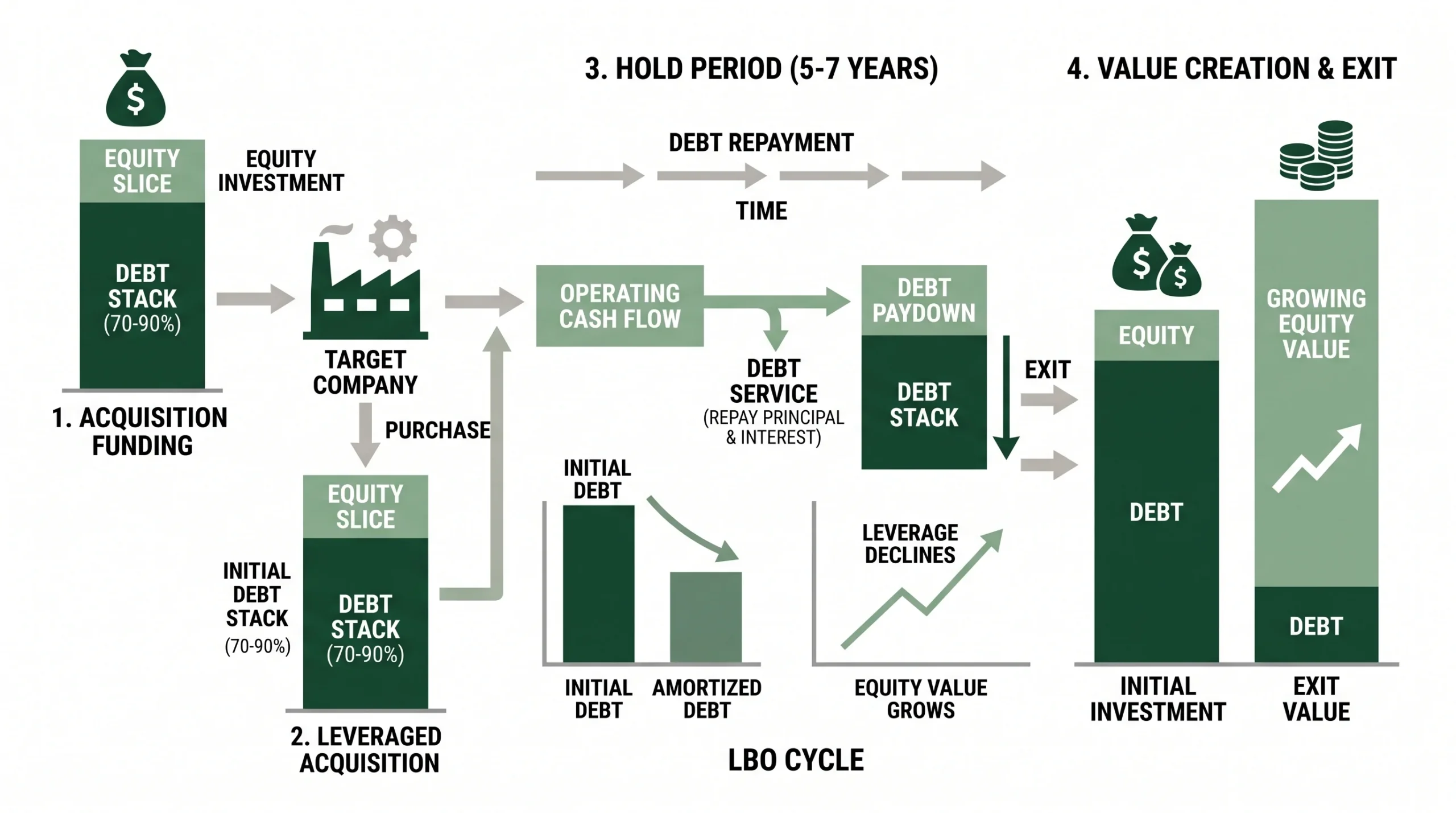
An LBO is a way to buy a company using mostly borrowed money. The buyer puts in a small slice of equity and funds the rest with debt. That debt is secured by the target company’s own assets and cash flow. So the business being bought helps pay for its own purchase. This one fact changes how the deal is priced.
The team at Sofer Advisors values these deals for owners, boards, and lenders, and holds Inc. 5000 recognition in both 2024 and 2025. An LBO price is not a gut number. It is the output of a model that tracks debt, cash flow, and the return a buyer needs.
This guide explains what an LBO is, how debt paydown and cash flow drive the return, and why a private equity buyer’s LBO value often sets a floor under the price. It also covers debt capacity, the solvency opinion, and how an LBO value differs from fair market value.
Key Takeaways
- Mostly debt, little equity: an LBO funds most of the purchase price with borrowed money secured by the target’s assets and cash flow, with a small equity check from the buyer.
- Three levers drive the return: debt paydown, earnings growth, and a higher exit multiple. As the company repays debt, value shifts from lenders to the equity owner.
- IRR and MOIC measure the result: MOIC is exit equity divided by money invested, and IRR adds the time it took, so a faster exit is worth more.
- Debt capacity sets the ceiling: a company can carry only as much debt as its cash flow safely services, and that limit caps what a buyer can pay.
- LBO value is a floor, not fair market value: it shows the most a debt-funded buyer can pay, which differs from fair market value and from a strategic buyer’s price.
Each point below ties back to one idea. The debt both funds the deal and shapes the value. The sections that follow take them one at a time.
Why Does an LBO Change What a Company Is Worth?
An LBO changes a company’s worth because the buyer’s return depends on debt, not just profit. A private equity buyer solves for the most it can pay while still hitting a target return. That number is driven by how much debt the business can carry and how fast it pays down. So the price reflects the financing plan, not only the company’s earnings.
A cash buyer asks what the future cash flows are worth today. An LBO buyer asks a second question on top of that. How much of this price can debt cover, and what return is left for my equity? The answer sets a ceiling on the offer. Change the interest rate or the amount of available debt, and the price a buyer can justify moves with it. That is why the same company can be worth different amounts to different buyers.
What Is an LBO in Plain Terms?
An LBO is the purchase of a company funded mostly by debt, with a small equity investment from the buyer. The buyer, often a private equity sponsor, sets up a new entity to make the purchase. The target’s assets and cash flow secure the loans. The company then repays that debt over time out of its own earnings, which is the core of the structure.
The debt usually comes in layers. Senior bank loans sit at the top and carry the lowest rate because they are repaid first. Below that sit mezzanine debt or high-yield notes, which cost more and take more risk. The buyer’s equity is the thin layer at the bottom. Lenders study the company’s cash flow closely before they commit, because that cash flow is what repays them.
How Do Debt Paydown and Cash Flow Drive the Return?
The return comes from three sources. First, debt paydown. As cash flow repays the loans, value that belonged to lenders shifts to the equity owner. Second, earnings growth, which raises the company’s value. Third, multiple expansion, if the buyer sells at a higher multiple than it paid. Together these three levers decide how much the buyer earns.
Buyers measure the result two ways. MOIC, short for multiple on invested capital, is exit equity divided by the equity first put in. So if a buyer invests 100 and later takes out 250, that is a 2.5 times MOIC. IRR adds timing, since a multiple earned faster is worth more. Sponsors set a target return before they bid, then solve for the price that can still reach it.
How Does Debt Capacity Set the Ceiling on an LBO?
Debt capacity is the most debt a business can safely repay from its cash flow. It sets the ceiling on an LBO because the buyer can borrow only what lenders will lend. More stable cash flow supports more debt, which lets the buyer pay a higher price. Weak or swingy cash flow supports less debt, so the offer has to come down.
Lenders and courts both watch this limit. Interest on that debt is only deductible within the rules of Section 163 of the tax code, which caps how much interest a business can write off each year. If a deal loads on so much debt that the company cannot pay its other creditors, it can be attacked later as a fraudulent transfer under Section 548 of the Bankruptcy Code. That risk is why boards and lenders often ask for an independent read on what a solvency opinion for an LBO covers before they close.
A buyer or lender that needs an independent view of debt capacity and value can see how Sofer Advisors approaches business valuation services for transactions like these.
How Does LBO Value Differ From Fair Market Value and Strategic Value?
An LBO value is the most a debt-funded buyer can pay and still earn its target return. It is one buyer’s price, not a neutral standard. Fair market value is the price between a hypothetical willing buyer and seller, neither forced to act. A strategic buyer’s value can be higher, because it counts cost savings and extra revenue the deal creates. The three numbers rarely match.
This matters when a board weighs an offer. A private equity buyer’s LBO value often acts as a floor, the lowest serious bid on the table, because the model builds in a required return. A strategic buyer may top it by paying for benefits only it can capture. An independent appraiser sorts these out. Owners who want the distinction clear can compare fair market value and investment value in business sales.
Who Values an LBO, and How Do the Options Compare?
Buyers, sellers, and lenders pick a valuation partner by deal size, audit risk, and budget. Large national firms such as Alvarez & Marsal, Stout, and Kroll serve big public companies with broad advisory teams. Specialized firms focus on defensible, partner-led valuations and solvency opinions for middle-market deals. The table below sets out the common options.
| Provider | Typical role | Best for |
|---|---|---|
| Specialized valuation firm (e.g. Sofer Advisors) | Prices debt capacity and the buyer’s return, and writes solvency and fairness opinions | Middle-market buyouts that need audit-ready, partner-led support |
| Large national firm | Broad advisory plus valuation at enterprise scale | Large public companies with complex, cross-border deals |
| Corporate attorney | Drafts the loan and purchase agreements; does not value the business | Parties that need the legal structure built and reviewed |
Sofer Advisors runs each engagement through a four-phase process it calls The Sofer Difference, moving from Discovery to Diligence to Analysis to Delivery. That order keeps every number tied to the cash flow and the debt behind it, with expert witness testimony in 11+ cases and 180+ five-star Google reviews behind its reports. It reflects a Heart of a Teacher approach, which means explaining why a value lands where it does instead of just handing over a figure. For a deal that has to satisfy a board or a lender, that trail of reasoning is the point.
Frequently Asked Questions
What does LBO mean?
LBO is short for a buyout funded mostly with borrowed money. The buyer puts in a small amount of equity and covers the rest with debt that the target company’s assets and cash flow secure. The business then repays that debt from its own earnings. Private equity buyers use the structure most often. Sofer Advisors values these deals so owners, boards, and lenders can test whether the debt and the price actually hold together.
What is the difference between an LBO and private equity?
Private equity is the broad category of firms that invest in private companies. An LBO is one strategy those firms use to buy a business, built on a large amount of debt and a small equity check. A private equity firm can also buy with mostly cash, so not every deal is an LBO. Sofer Advisors values the specific debt-heavy structure, because the debt load is what a board or lender most needs tested.
How does an LBO change a company’s valuation?
An LBO changes a valuation because the buyer’s return depends on the debt plan, not profit alone. The buyer solves for the highest price it can pay and still earn a target return. More debt capacity lets it pay more, and less debt pulls the offer down. Interest rates move the number too. Sofer Advisors models these inputs so owners can see why a debt-funded buyer arrives at the price it offers.
What is a typical debt and equity mix in an LBO?
A common split puts most of the purchase price in debt and a smaller share in the buyer’s equity, though the exact mix shifts with the market and the company. Stronger, steadier cash flow supports more debt. Riskier earnings force the buyer to put in more equity. Lenders set the real limit based on cash flow. Sofer Advisors tests whether the proposed mix is one the company’s cash flow can actually carry.
Who uses an LBO model, and why?
Private equity sponsors, lenders, and corporate development teams use an LBO model. It forecasts whether a target can repay new debt while still returning enough to equity. Boards also lean on it when they weigh a buyout offer against other options. The model turns a price into a tested plan rather than a guess. Sofer Advisors builds and reviews these models so each input reflects the company’s real cash flow and debt terms.
What do IRR and MOIC measure in an LBO?
MOIC, or multiple on invested capital, divides the equity a buyer takes out at exit by the equity it first put in. It shows the size of the gain. IRR adds timing, so the same multiple earned faster scores higher because money back sooner is worth more. Buyers read both together. Sofer Advisors documents the cash flow and exit assumptions behind these figures so a board can judge whether the targets are realistic.
Why does an LBO need a solvency opinion?
A solvency opinion is an independent check that a company can still pay its debts after a debt-funded deal closes. Boards and lenders ask for one because an overloaded deal can be challenged later as a fraudulent transfer. The opinion tests whether the business remains solvent and has enough capital to operate. Sofer Advisors prepares these opinions so the people approving a transaction have written, defensible support if the deal is ever questioned.
How does LBO value compare to fair market value?
LBO value is the most a debt-funded buyer can pay and still hit its return, so it reflects one buyer’s math. Fair market value is a neutral price between a willing buyer and seller, neither under pressure. The two often differ, and a strategic buyer may top both by paying for benefits only it gains. Sofer Advisors measures fair market value first, then shows how an LBO price sits against that standard.
How much does an LBO valuation or solvency opinion cost?
Most LBO support work, such as a valuation or a solvency opinion, runs from $15,000 to $40,000 and takes about four to eight weeks, depending on the deal’s size and deadline. The fee covers the modeling and the written report a board or lender can rely on. A fixed price is quoted up front. Sofer Advisors scopes the work first, then sets that price. Request a fee estimate for your transaction.
Related Case Studies
- The Management Buyout Process: Steps, Financing, and Valuation
- How Rollover Equity in PE Deals Is Valued and Taxed
- Quality of Earnings Report: What Buyers Discover Before a Sale
Executive Summary
An LBO buys a company with mostly debt and a small slice of equity, with the target’s own assets and cash flow securing the loans. The buyer’s return comes from three levers: paying down that debt, growing earnings, and selling at a higher multiple. MOIC measures the size of the return and IRR measures it against time. Debt capacity sets the ceiling, because a company can carry only as much debt as its cash flow safely repays. The result is an LBO value that often acts as a floor under the price, separate from fair market value and from what a strategic buyer would pay. A documented model and a solvency opinion keep that value defensible.
What Should You Do Next?
Start by gathering three years of financial statements, the current debt terms, and any draft deal structure. Confirm how much debt the company’s cash flow can actually service before anyone agrees on a price. This guide was prepared by David Hern CPA ABV ASA, founder of Sofer Advisors, an Inc. 5000 firm that provides independent valuations and solvency opinions for transactions. To review your deal, see our business valuation services or schedule a free consultation through our contact page.
People Also Read
- What Is a Solvency Opinion? A Complete Guide for Business Owners
- What Is a Fairness Opinion in Mergers and Acquisitions?
About the Author
This guide was prepared by David Hern CPA ABV ASA, founder of Sofer Advisors, a business valuation firm headquartered in Atlanta, GA serving clients across the United States. David holds dual accreditations as an Accredited Senior Appraiser (ASA) and is Accredited in Business Valuation (ABV), credentials recognized by the IRS, SEC, and FINRA. He also holds the Certified Exit Planning Advisor (CEPA) designation. With 15+ years of valuation experience, David has served as an expert witness in 11+ cases across multiple jurisdictions and built Sofer Advisors into an Inc. 5,000-recognized firm with 180+ five-star Google reviews. Its full W2 employee team maintains subscriptions to all major valuation databases and operates under a next business day response policy.
For professional business valuation services, visit soferadvisors.com/about-us/ or contact Sofer Advisors at soferadvisors.com/contact-us/.
This content is for informational purposes only and does not constitute professional valuation advice. Business valuation conclusions depend on specific facts and circumstances. Contact Sofer Advisors for guidance regarding your specific situation.









