


Last Updated: September 2026
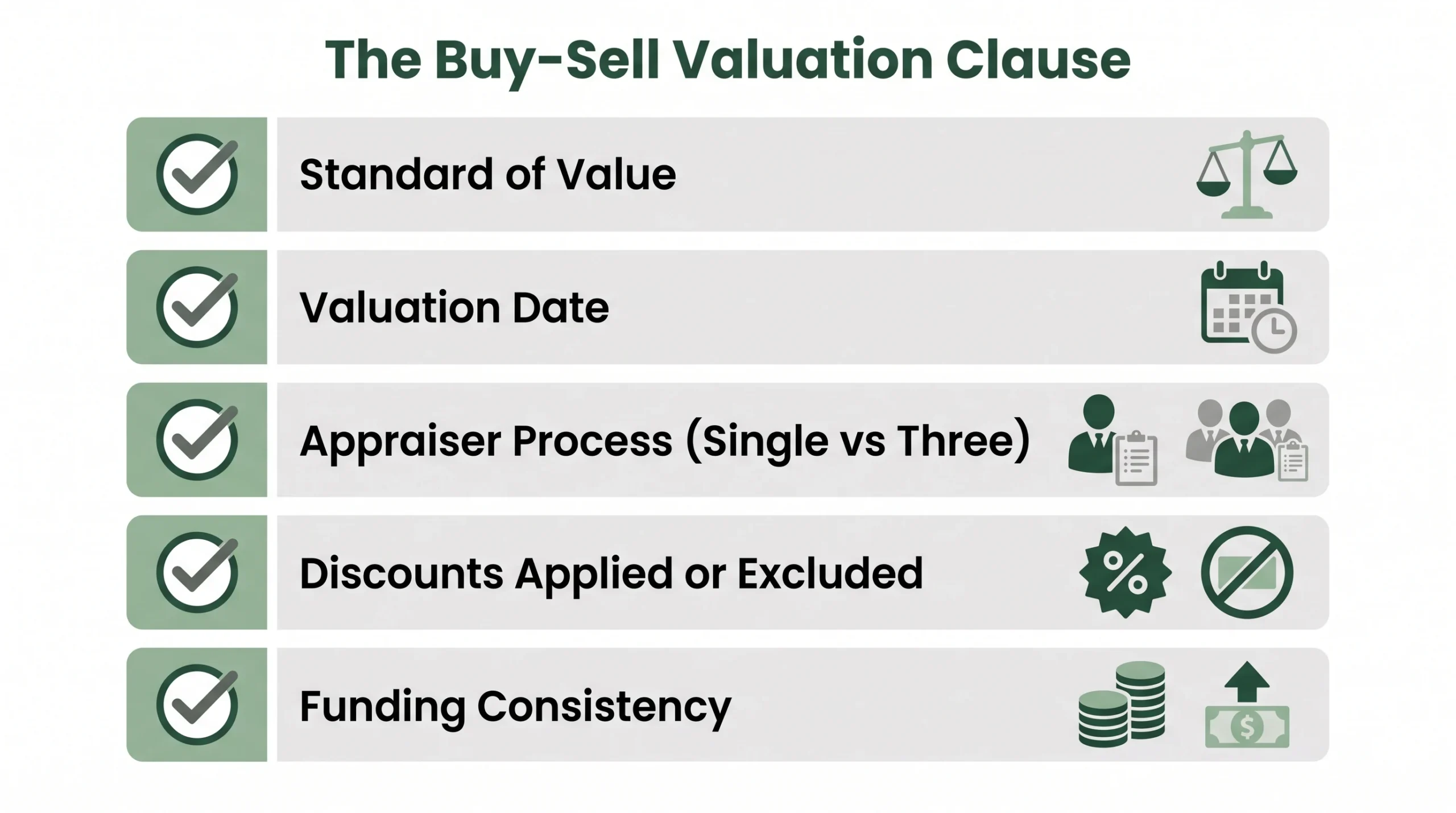
A buy-sell valuation clause tells the parties exactly how to price an owner’s stake when a trigger event happens. Good drafting names four things: the standard of value, the valuation date, the appraiser process, and whether discounts apply. Each choice moves the final number. Silence on any one of them invites a fight later.
Most disputes over a buy-sell price trace back to vague wording. One owner reads a term one way, and the other reads it another way. A clear clause closes that gap before it turns into a legal bill. This guide walks through the terms that set the price, and how to draft them with your valuation and legal team. It does not give legal or tax advice, so pair every choice here with your own counsel.
Sofer Advisors is a business valuation firm based in Atlanta, GA that serves clients across the United States. It gives neutral, third-party opinions of value for owners, attorneys, and CPAs. Its team has testified as an expert witness in 11+ cases across Georgia, Florida, California, and New Mexico, and it holds 180+ five-star Google reviews. That courtroom record shapes how the firm reads a buy-sell clause.
Key Takeaways
- Name the standard of value: fair market value, fair value, and investment value each yield a different price, so state which one applies.
- Fix the valuation date: say how the “as of” date is set relative to the trigger, such as the trigger date or the prior fiscal year-end.
- Choose the appraiser process: a single agreed appraiser is faster and cheaper, while a three-appraiser process adds a check when trust is low.
- State discounts expressly: say whether a lack-of-control and a lack-of-marketability discount apply or are excluded; the swing can top 40%.
- Match funding and level of value: keep life insurance treatment and the control level consistent with the price the clause produces.
The sections below show how to draft each one.
What is a buy-sell valuation clause, and why does the wording matter?
A buy-sell valuation clause is the part of the agreement that sets the price when an owner exits. It matters because the words, not the market, control the payout. A clause can pick a fixed price, a formula, or an appraisal. This guide focuses on the appraisal path. Our guide on the buy-sell agreement versus the shareholder agreement covers where the clause sits.
The trigger events are the moments the clause fires. Common ones include death, disability, retirement, divorce, or a voluntary exit. The clause should treat each trigger the same way, or state why one differs. A weak clause leaves the method open, so the parties argue at the worst time.
What standard of value should the clause name?
The clause should name the standard of value in exact words, because each standard gives a different number. Fair market value is the price between a willing buyer and a willing seller, with neither forced to act. Fair value is a legal term that often skips discounts, and states define it in their own statutes and case law. Investment value is the worth to one specific buyer. Pick one and name it.
Silence here is a common and costly mistake. If the clause just says “value,” an appraiser must guess which standard fits, and each side reads it to its own gain. Fair value and fair market value can differ by 20% or more on the same company, mostly through discount treatment. Because “fair value” is defined by state law, confirm the meaning with your attorney. A credentialed appraiser applies the standard the clause names and documents that choice in the report.
How should the clause fix the valuation date?
The clause should say exactly how the “as of” date is set relative to the trigger, since the date can shift the price by a wide margin. Two clean options work well. The first uses the trigger date itself. The second uses the last fiscal year-end before the event, which lines up with finished statements.
Each choice has a trade-off. The trigger date is current but may need interim, unaudited numbers. The prior year-end is clean but can lag the real economics. Whichever you pick, state a firm rule so no one debates it later. Also set a deadline for when the appraisal must start and finish, since a date rule with no clock still leaves room to stall.
Should the clause use one appraiser or a three-appraiser process?
The clause should choose the appraiser process on purpose, and both models work when drafted well. A single mutually-agreed appraiser is faster and cheaper, but it needs a neutral both sides trust. A three-appraiser process adds a check when trust is low. Each side names one appraiser, and the two chosen appraisers pick a third. A common variant averages the two values if they fall within a set range, and brings in the third only when the gap is wide.
Whichever model you pick, spell out the details. State the required credential, such as an ABV, ASA, or CVA holder with valuation experience. Say who pays for each appraisal. Set timing and a deadlock rule so a stalled process does not freeze the payout. The table below compares the two main models.
| Feature | Single appraiser | Three-appraiser process |
| Cost | Lower; one fee | Higher; up to three fees |
| Speed | Faster | Slower |
| Best when | Both sides trust one neutral | Trust is low or stakes are high |
| Main risk | Disagreement over who is neutral | Cost and delay |
Do minority and marketability discounts apply?
The clause should state expressly whether discounts apply or are excluded, because this one choice can swing the price the most. A discount for lack of control, also called a minority discount, lowers the value of a stake that cannot direct the company. A discount for lack of marketability, or DLOM, lowers the value because a private stake is hard to sell quickly. Together they can cut a price by 20% to 40% or more.
Leaving discounts silent is one of the most expensive drafting mistakes. If the clause says nothing, the parties fight over the level of value at the worst time. Many buy-sell clauses exclude discounts on purpose so a departing owner gets a pro-rata share, while others keep them. Our explainers on the discount for lack of marketability and on minority interest and marketability discounts show how each one works. Sofer Advisors models the price both ways so owners see the real gap before they sign.
How should funding and level of value line up with the clause?
The clause should keep funding and the level of value consistent with the price it produces. Level of value means whether the stake is priced on a control basis or a minority basis. That level must match the discount choice above, or the report contradicts itself.
Funding is the other half. Many buy-sells are funded with life insurance so cash is ready at a death trigger. The clause should say whether the insurance proceeds are added to the agreed value or are already inside it. That single line changes the payout. Our guide on funding a buy-sell with life insurance covers the mechanics. Draft the valuation and funding terms in one pass so they agree.
Which valuation firm should draft the clause with your attorney?
Owners usually choose among an independent valuation firm, a broker, and a large advisory firm, and their incentives differ. An independent firm follows standards and gives a neutral number, with a flat fee not tied to a sale. A broker often ties value to a deal it wants to close, since the commission depends on price. Large firms like Alvarez & Marsal, Stout, and Kroll serve the biggest deals but can be a heavy fit for a closely held company. The right partner works alongside your attorney, because the clause is both a valuation and a legal document.
An independent, credentialed appraiser reads the draft the way a court would. It flags a vague standard, a missing date rule, or a silent discount term before the clause is signed. That review follows the USPAP framework and the standards of the American Society of Appraisers, and the valuation guidance of the AICPA. Tax rules also apply, since IRS Section 2703 can set aside a price that is not a bona fide business term. Confirm that point with your tax counsel. This is where the transaction advisory work pays off.
Sound drafting settles the number before anyone needs it. The questions below cover what owners ask most about the clause.
Frequently Asked Questions
What should the valuation clause in a buy-sell agreement say?
A strong valuation clause names the standard of value, fixes the valuation date, sets the appraiser process, and states whether discounts apply. It should also cover credentials, who pays, timing, and how a deadlock resolves. The goal is a clause so clear that two appraisers would reach nearly the same result.
Should a buy-sell use a single appraiser or a three-appraiser process?
A single appraiser is faster and cheaper and works when both sides trust one neutral expert. A three-appraiser process adds a check when trust is low or the stakes are high, since each side names one and the two pick a third. Many clauses average two values that fall within a set range.
What standard of value and valuation date should a buy-sell fix?
The clause should name one standard, such as fair market value or fair value, because each gives a different number. Fair value is defined by state law and often excludes discounts, so confirm its meaning with counsel. For the date, pick either the trigger date or the last fiscal year-end before the event, and write the rule plainly.
Should marketability and minority discounts be specified in a buy-sell clause?
Yes, the clause should state expressly whether a lack-of-control discount and a lack-of-marketability discount apply or are excluded. This choice can move the price 20% to 40% or more, so silence is risky. Many owners exclude discounts so a departing owner gets a pro-rata share. Others keep them.
How is the price actually set under a buy-sell valuation clause?
The price is set by applying the named standard of value as of the fixed date, through the appraiser process the clause requires. The appraiser then applies or excludes discounts as the clause directs. If it is vague, the appraiser must make judgment calls that one side will contest.
What is the difference between fair market value and fair value in a buy-sell?
Fair market value is the price between a willing buyer and a willing seller, and it usually allows discounts for control and marketability. Fair value is a legal standard set by state statute and case law, and it often excludes those discounts. Because fair value is state-specific, verify its local meaning with your attorney.
Who pays for the appraisals in a buy-sell?
The clause decides who pays, and drafting this in advance avoids a fresh dispute. A single-appraiser clause often puts the cost on the company. A three-appraiser clause often has each side pay for its own appraiser and split the third.
Is life insurance added to the value or included in it?
That depends on what the clause says, which is why the point must be written down. Some clauses treat insurance proceeds as an addition to the agreed value paid to the exiting owner. Others treat the proceeds as already inside the funded price. Draft the funding and valuation terms together so they agree.
How much does a buy-sell valuation from Sofer Advisors cost?
A buy-sell valuation from Sofer Advisors typically runs $7,500 to $25,000, in line with a standard business valuation engagement, with the timeline usually four to eight weeks. Cost depends on company size, the complexity of the interest, and whether a discount analysis is needed. For a quote tied to your agreement, contact us with your documents and clause draft.
Related Case Studies
- Buy-Sell Agreement Valuation: A Complete Guide for Business Partners
- Shareholder Dispute Valuation: Resolving Business Partner Conflicts
- Partnership Dissociation: How a Departing Partner’s Stake Is Valued
Executive Summary
A buy-sell valuation clause should fix every input that decides the price, so the parties do not fight later. Name the standard of value in exact words, since fair market value and fair value give different numbers. State how the valuation date is set relative to the trigger. Choose a single appraiser or a three-appraiser process, and set credentials, cost, timing, and a deadlock rule. State expressly whether a lack-of-control discount and a lack-of-marketability discount apply or are excluded, because that choice can swing the price 20% to 40% or more. Keep the level of value and the funding consistent with that number. Draft these terms with valuation and legal counsel together.
What Should You Do Next?
Start by reading your current clause and marking each of the four terms: standard of value, date, appraiser process, and discounts. Note any term that is missing or vague. Next, model the price both with and without discounts so you see the real gap. Then sit down with your attorney and an independent appraiser to redraft the clause so the words, the funding, and the level of value all agree. Sofer Advisors runs this review through The Sofer Difference, its four-phase process of Discovery, Diligence, Analysis, and Delivery, and works with a Heart of a Teacher so owners understand each choice.
David Hern CPA ABV ASA, founder of Sofer Advisors, gives neutral, defensible valuations and clause reviews for owners and their attorneys. Schedule a consultation to discuss your agreement.
People Also Read
- Valuation Discounts: DLOC and DLOM on Estate and Gift Tax Returns
- Earn-Out Valuation in M&A: Structuring and Fair Value
About the Author
This guide was prepared by David Hern CPA ABV ASA, founder of Sofer Advisors, a business valuation firm headquartered in Atlanta, GA serving clients across the United States. David holds dual accreditations as an Accredited Senior Appraiser (ASA) and is Accredited in Business Valuation (ABV), credentials recognized by the IRS, SEC, and FINRA. He also holds the Certified Exit Planning Advisor (CEPA) designation. With 15+ years of valuation experience, David has served as an expert witness in 11+ cases across multiple jurisdictions and built Sofer Advisors into an Inc. 5000-recognized firm with 180+ five-star Google reviews. Its full W2 employee team maintains subscriptions to all major valuation databases and operates under a next business day response policy.
For professional business valuation services, visit soferadvisors.com/about-us/ or contact Sofer Advisors at soferadvisors.com/contact-us/.
Disclaimer: This content is for informational purposes only and does not constitute professional valuation advice. Business valuation conclusions depend on specific facts and circumstances. Contact Sofer Advisors for guidance regarding your specific situation.









