


Last Updated: July 2026
Contingent consideration is deal compensation a seller receives only if the acquired business hits set targets after closing. An earnout is the common form. Earnouts appeared in about 22 percent of M&A deals, per the 2024 IBBA Market Pulse Survey. When the conditions are met, the buyer releases extra cash or equity on the agreed terms.
These structures need clear, objective definitions of success to prevent disputes. Sofer Advisors tests whether the targets are realistic and sets their fair value for financial reporting. Its analysts hold CPA, ABV, and ASA credentials and have provided testimony in 11+ expert-witness cases across several states, so each figure is built to survive an auditor’s review. That work follows The Sofer Difference, a Discovery, Diligence, Analysis, and Delivery process.
Owners and advisors have to balance the motivation an earnout creates against the accounting it adds. Because these payments can stretch for years, they bring recurring valuation duties for reporting and tax. This guide shows how to model the value, report it, and manage the tax.
Key Takeaways
- Contingent by design: the payment is part of the price, released only if future milestones are met.
- Fair value at close: ASC 805 records contingent consideration at fair value on the acquisition date.
- Model the uncertainty: scenario analysis, Monte Carlo simulation, and option models handle the range of outcomes.
- Remeasure each period: liability-classified earnouts are re-valued at every reporting date, and changes hit earnings.
- Tax follows payment: sellers are often taxed on receipt, frequently under installment-sale treatment.
These points shape how post-closing performance changes the final price and the ongoing reporting. The sections below work through the value, the reporting, and the tax.
What is contingent consideration under ASC 805?
Under ASC 805, contingent consideration is an obligation to transfer more cash or equity to former owners if specific future events occur. These arrangements tie the final price to post-closing metrics such as revenue or earnings targets. The buyer records the potential payments in the total purchase price at their acquisition-date fair value, so the statements reflect the full expected cost at close. Our guide to purchase price allocation under ASC 805 shows where it fits in the wider allocation.
The buyer classifies the obligation as a liability or as equity based on the terms. If the deal requires a variable number of shares or cash, it usually functions as a liability. Correct classification is essential for reporting under the AICPA standards. Sofer Advisors handles the valuation these unique deal terms require.
How is the fair value of an earnout calculated?
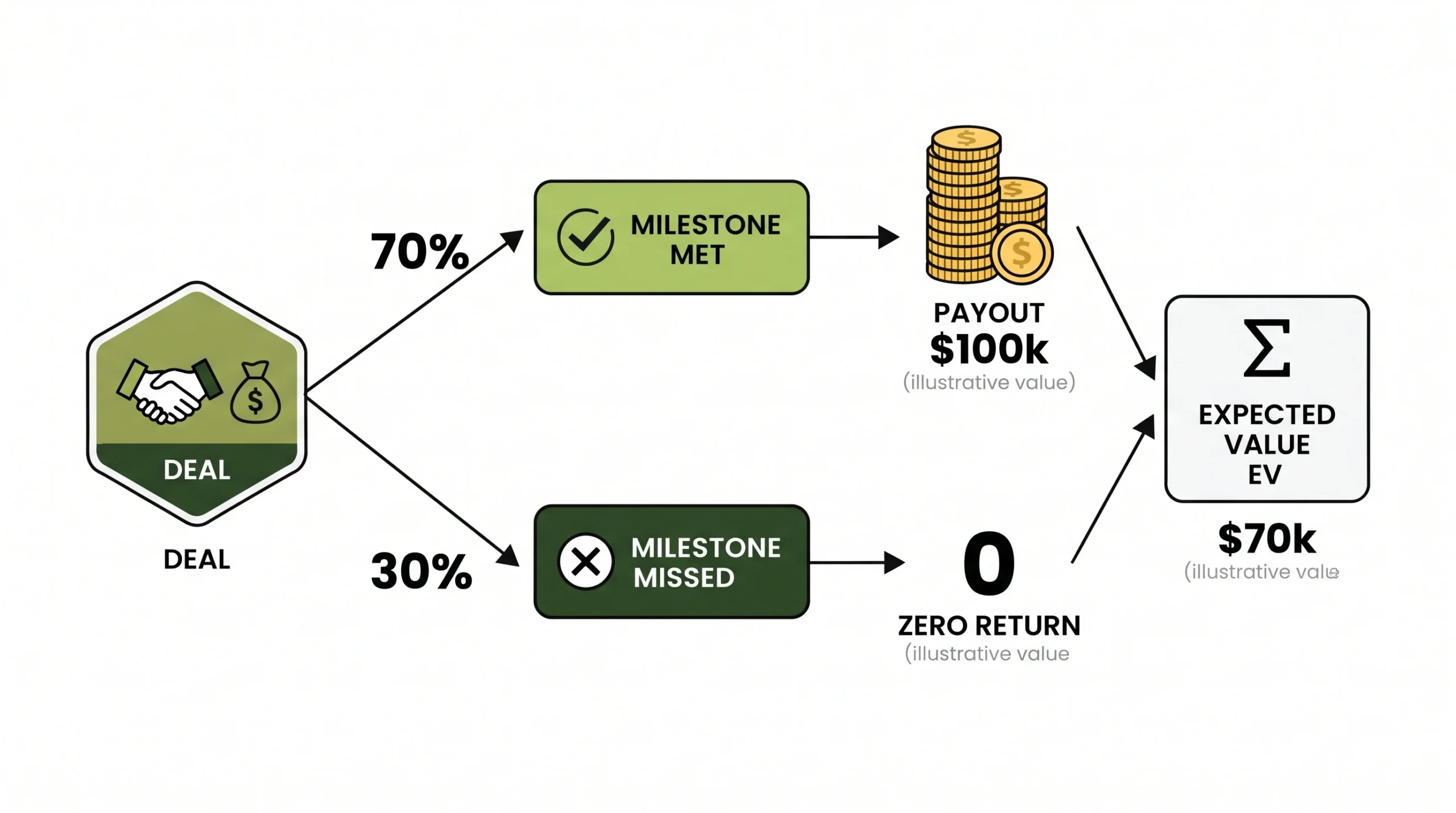
The fair value of an earnout is the present value of expected future payments, given the performance milestones. A scenario-based method weighs possible outcomes and assigns each a probability, producing one risk-adjusted value at close.
For more volatile results, Monte Carlo simulation models thousands of performance paths to capture the range. Option models, such as Black-Scholes or a binomial lattice, fit agreements with fixed payout terms, treating the earnout like a derivative tied to business performance.
Every model relies on the same core inputs:
- The performance targets and payout formula
- The discount rate
- Expected revenue or earnings growth
- The probability that a threshold is missed
Sofer Advisors explains how each input moves the value in the Heart of a Teacher spirit, so owners see the financial effect of the terms they signed. Small changes in the growth rate or the discount rate can swing the fair value materially, which is why the assumptions get documented as carefully as the math itself.
Talk to a Sofer Advisors valuation specialist about an ASC 805 fair value model for your deal.
What are common earnout performance metrics?
Common earnout metrics track financial benchmarks such as revenue or EBITDA to bridge a price gap between buyer and seller. Tying part of the payment to objective data aligns both sides after closing. Earnouts often focus on the primary growth indicators that reflect the health of the business.
Beyond financial goals, earnouts add non-financial milestones suited to the business. A biotech deal might hinge on regulatory approval; a software deal on a completed integration. Some tie payments to renewal of key accounts. Every metric must be defined clearly in the agreement, because vague targets breed disputes. A neutral third party helps build a framework that is fair and measurable.
How is contingent consideration reported after the acquisition?
Contingent consideration classified as a liability is remeasured to fair value at the end of every reporting period. That requirement comes from ASC 820 fair value measurement, which says entities update the value with the best information available at each date. Because the obligation stays on the balance sheet until payout or expiration, the recorded amount shifts with new performance data.
Any change in fair value is recognized in profit and loss in the period it occurs. That can create earnings volatility, as updates to projected milestones flow through as gains or losses. Contingent consideration classified as equity is different: once set at close, the initial amount stays fixed regardless of later results.
What are the tax implications of earnouts?
Tax treatment often differs from accounting because the seller is usually taxed on receipt, not when the liability is booked. GAAP records the contingent liability at the deal date, but the IRS generally treats the payments as part of the sale price. Sellers weigh the installment-sale method against recharacterization risk. If the contract lacks adequate interest, the IRS may impute interest under Section 483 and convert part of a capital gain into ordinary income.
Allocation matters. If the earnout is tied to continued employment, the authority may treat it as compensation rather than sale proceeds, which shifts capital gains into ordinary income. Parties should define the nature of each payment in the agreement to hold the intended tax status.
What challenges arise in valuing earnouts?
Earnouts are hard to value because they require modeling future uncertainty through subjective probabilities. Because the payouts hinge on events that have not happened, the value rests on projections that often sit at the center of the negotiation.
Management bias is the main risk, since leaders may lean optimistic or conservative to suit their goals. Market swings can move the discount rate applied to the payments, and parties often disagree on how the contract language triggers a payout. A neutral third-party expert reduces bias and keeps the estimate compliant with ASC 805. National firms like Alvarez & Marsal, Stout, and Kroll handle large-cap deals; Sofer Advisors brings the same rigor to middle-market acquirers, with senior involvement on every file.
How do valuation providers compare for ASC 805 work?
The table below shows how provider types differ for contingent-consideration work.
| Provider | Focus | Best for | Trade-off |
| Sofer Advisors | Independent ASC 805 and 820 fair value for reporting and tax | Acquirers needing an audit-ready valuation | Valuation only; does not perform the audit |
| Large advisory firms (Alvarez & Marsal, Stout) | Broad transaction advisory and integration | Large-cap deals needing bundled services | Often costly for middle-market deals |
| Big Four audit firms | Valuation within audit and consulting | Existing audit clients | Independence rules can require separate teams |
Provider types differ in mandate and depth. Large advisory firms bundle wide services but bill for larger deals; Big Four firms must navigate independence rules that split audit from consulting, which can slow the timeline for their own audit clients. An independent specialist like Sofer Advisors focuses on valuation under SEC and AICPA standards and gives direct access to senior analysts. Owners should weigh whether the deal needs simple compliance or a bundle of integrated support before choosing.
Earnout valuation sits where deal terms, accounting, and tax meet. The questions below cover what acquirers and CFOs ask most.
Frequently Asked Questions
What is the difference between contingent and deferred consideration?
Contingent consideration pays a seller more based on the future performance of the acquired company, so it depends on hitting milestones like revenue or earnings targets. Deferred consideration is a fixed amount simply delayed to a later date, regardless of performance. Sofer Advisors reviews these structures so each component is classified correctly for financial reporting.
Is contingent consideration an asset or a liability?
Under ASC 805, the acquirer records contingent consideration as a liability or as equity based on whether it must pay cash or issue shares. Cash-settled terms usually classify as a financial liability on the balance sheet. Sofer Advisors helps clients determine the proper classification from the specific contract terms before the value is booked.
What are the types of contingent consideration?
Contingent consideration usually takes the form of earnouts tied to financial metrics or milestone payments tied to operational events. Financial metrics include revenue, EBITDA, or net income targets, while operational events might be a patent or a product launch. Sofer Advisors uses standard techniques to estimate the fair value of each path for purchase price allocation.
How much does a contingent consideration valuation cost?
A contingent consideration valuation from Sofer Advisors runs $7,500 to $25,000, based on its published engagement data. Pricing depends on the earnout formula, the number of milestones, and the reliability of the projections. Purchase price allocation and impairment engagements can reach higher tiers. For a quote tied to your deal, request a valuation estimate with your purchase agreement and projections.
How often must contingent consideration be remeasured?
Liability-classified contingent consideration is remeasured at fair value at every reporting date until the contingency resolves. Changes in fair value outside the measurement period are recognized in current earnings. Sofer Advisors provides regular valuation updates so the reported balance stays compliant with ASC 805 and related guidance as performance data changes.
Can the terms of an earnout change after a deal closes?
Amending an earnout after closing requires a formal legal modification between buyer and seller. The change can carry accounting consequences, since it may be treated as a change to the settlement rather than a simple estimate update. Sofer Advisors recommends that parties consult legal and accounting advisors before finalizing any post-closing change to these contracts.
What is the difference between an earnout and a seller note?
An earnout is a variable payment contingent on future performance, so it carries risk for both sides. A seller note is a loan with generally fixed principal and interest and a predictable schedule that does not hinge on targets. Sofer Advisors helps owners weigh the distinct risk profiles of the two during deal structuring.
Is contingent consideration part of purchase price allocation under ASC 805?
Yes. Contingent consideration is recognized at fair value on the acquisition date as part of the total purchase price allocation under ASC 805. That inclusion makes the balance sheet reflect the full price paid, including the present value of potential future payouts. Sofer Advisors builds these obligations into its allocation models to reach compliant reporting.
Who is responsible for valuing contingent consideration after the deal?
Management of the acquiring entity is responsible for the accuracy of financial reporting, including the fair value of contingent consideration. Management often relies on an independent specialist for the technical work and documentation, but the final figures remain the company’s responsibility. Sofer Advisors serves as that independent technical resource, producing figures that meet auditor standards.
Related Case Studies
- Earn-Out Valuation in M&A: Structuring and Fair Value
- What Is an Earnout in a Business Sale?
- Business Valuation for Mergers: Buy-Side vs Sell-Side
Executive Summary
Contingent consideration ties part of a purchase price to future performance, and ASC 805 requires it at fair value on the acquisition date. Analysts use scenario analysis, Monte Carlo simulation, or option models, keyed to the payout terms and the volatility of the metrics. Liability-classified earnouts are remeasured each reporting period, so changes flow through earnings, while equity-classified amounts stay fixed. Tax usually follows payment, with installment-sale and Section 483 imputed-interest issues to manage. To begin, gather your purchase agreement, the earnout formula, and management projections so a credentialed analyst can build an audit-ready value.
What Should You Do Next?
Pull together your purchase agreement, the earnout formula and milestones, and management’s projections. These records let an analyst choose the right model and document each input. A defensible fair value at close keeps the reporting clean and reduces friction with auditors at every remeasurement date.
David Hern CPA ABV ASA, founder of Sofer Advisors, brings CPA, ABV, and ASA credentials and 11+ expert-witness cases to ASC 805 and purchase price allocation engagements. Schedule a free consultation to discuss your deal.
People Also Read
About the Author
This guide was prepared by David Hern CPA ABV ASA, founder of Sofer Advisors, a business valuation firm headquartered in Atlanta, GA serving clients across the United States. David holds dual accreditations as an Accredited Senior Appraiser (ASA) and is Accredited in Business Valuation (ABV), credentials recognized by the IRS, SEC, and FINRA. He also holds the Certified Exit Planning Advisor (CEPA) designation. With 15+ years of valuation experience, David has served as an expert witness in 11+ cases across multiple jurisdictions and built Sofer Advisors into an Inc. 5000-recognized firm with 180+ five-star Google reviews. Its full W2 employee team maintains subscriptions to all major valuation databases and operates under a next business day response policy.
For professional business valuation services, visit soferadvisors.com/about-us/ or contact Sofer Advisors at soferadvisors.com/contact-us/.
Disclaimer: This content is for informational purposes only and does not constitute professional valuation advice. Business valuation conclusions depend on specific facts and circumstances. Contact Sofer Advisors for guidance regarding your specific situation.









