


Last Updated: October 2026
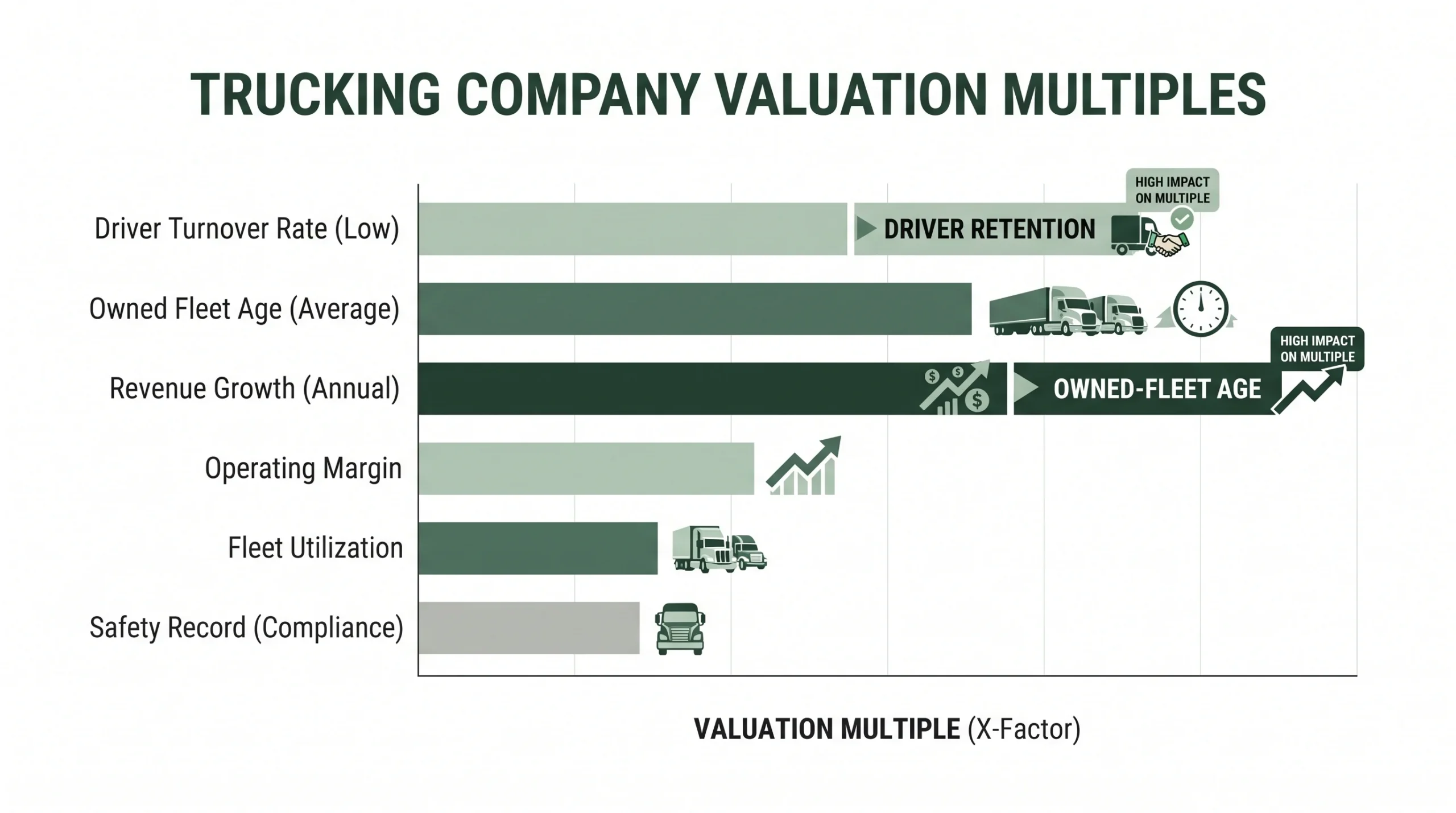
Driver retention and the age of an owned fleet move a trucking company’s multiple more than top-line revenue does. A carrier can bill ten million dollars a year and still sell for a thin multiple if its trucks are worn out and its drivers quit every eight months. Buyers price the risk of the trucks stopping, not the invoices.
The team at Sofer Advisors values trucking and logistics businesses for owners, buyers, and lenders, backed by Inc. 5000 recognition in both 2024 and 2025. Two carriers with matching revenue can sit two full turns apart on EBITDA once a buyer looks at the equipment and the people who drive it.
This guide walks through what a trucking company is worth, how the value is built, and which risks a buyer weighs. It covers fleet, freight, drivers, working capital, the right earnings metric, and the IRS reporting that follows a sale.
Key Takeaways
- Drivers and fleet age lead the multiple: stable drivers and newer owned trucks lift value, while turnover and aging equipment pull it down, often more than revenue moves it.
- Freight mix sets the floor: contract and dedicated lanes earn a higher multiple than spot freight, which swings with the market.
- Working capital is part of the price: carriers wait weeks to get paid, so factoring and receivables shape both cash flow and the deal.
- SDE or EBITDA depends on size: small owner-run carriers trade on SDE, while larger fleets trade on EBITDA, each with asset-heavy adjustments.
- The sale triggers IRS reporting: depreciation recapture, Form 4562, and an asset allocation under Section 1060 all follow the deal and belong in the valuation.
Each of these pieces feeds the final number. The sections below take them one at a time.
Why Is Trucking Company Valuation Important to Understand?
A trucking valuation decides how an owner exits, how a buyer bids, and how a lender sizes a loan. Trucking is asset-heavy and margin-thin, so small changes in the inputs swing the price. An owner who expects six times earnings can be met with an offer at three, built on the age of the trucks and the churn in the cab. Knowing how value is set lets an owner fix the weak spots before the deal, not during it.
How Do Fleet Size, Age, and Owned vs Leased Equipment Affect Value?
The fleet is the engine of the valuation, and its condition speaks louder than its count. A truck with 300,000 miles is close to a major overhaul, and a buyer discounts for that cost before the sale closes. A newer owned fleet carries real resale value and lower repair risk, so it supports a higher multiple. An aging fleet does the reverse, since the buyer must plan to replace it soon.
Owned equipment adds tangible asset value a buyer can borrow against or resell. Leased equipment does not, and the lease payments become an obligation the buyer inherits. Still, leasing can smooth cash flow and keep trucks newer, so the question is not owned versus leased alone but how the choice fits the lanes. An appraiser looks at the average age of the fleet, the maintenance records, the mix of owned and leased units, and whether the trucks match the freight the carrier hauls.
How Does Freight Type and Volume Change the Multiple?
Freight tells a buyer how steady the revenue is. Contract freight, booked under a rate agreement with set volume, earns a higher multiple because it is predictable. Dedicated lanes, where the carrier runs the same routes for the same shipper, are better still, since they come with relationships that are hard to pry loose. Spot freight, booked load by load on the open market, is the weakest. It swings with the freight cycle and can dry up when rates fall.
Volume matters too, but concentration matters more. A carrier that earns 60 percent of its revenue from one shipper carries a customer-concentration risk a buyer prices in hard. The same volume spread across a dozen shippers is worth more. Buyers weigh the contract versus spot split and the length of the contracts.
Why Are Driver Qualifications and Retention the Real Value Driver?
Trucks do not move without drivers, and qualified drivers are scarce. A carrier with a stable, experienced driver roster is worth more than one with the same trucks and constant turnover. High turnover means recruiting costs, training time, and idle trucks. Each empty seat is a truck that earns nothing while it sits.
A buyer reads the driver story closely. Low turnover signals good pay, good routes, and a culture that keeps people. A clean safety record and a strong CSA score from the Federal Motor Carrier Safety Administration lower insurance and legal risk. When driver retention is strong, the trucks keep rolling and the revenue holds, which lifts the multiple above a carrier that looks identical on paper.
How Do Working Capital and Factoring Affect a Trucking Valuation?
Carriers pay for fuel, drivers, and maintenance now but wait 30 to 60 days to collect from shippers. That gap is working capital, and it is a real part of the deal. A buyer expects a normal level of it to come with the business, so a seller who strips out cash before closing will see it clawed back in the price. The valuation sets a working-capital target and adjusts the equity value around it.
Many carriers bridge the gap with factoring, selling their receivables for quick cash at a discount. Factoring keeps trucks fueled, but the fee shrinks margin, and heavy reliance on it signals a thin cash cushion. An appraiser normalizes for factoring fees and judges whether the carrier could stand on its own receivables.
Should a Trucking Company Use SDE or EBITDA, and What Follows at the IRS?
The right earnings metric depends on size. A small owner-operator carrier, where the owner dispatches, drives, and books freight, trades on Seller’s Discretionary Earnings, or SDE, which adds the owner’s pay and perks back to profit. A larger fleet with a management layer trades on EBITDA, since the owner’s labor is not the engine. Either way, the number needs asset-heavy adjustments. Depreciation on trucks is large and real, so a buyer looks past EBITDA to the capital the fleet consumes each year. A multiple that ignores truck replacement overstates value.
For benchmarks, appraisers pull comparable private transactions from databases such as DealStats and match them to the carrier’s size, freight mix, and region. A deal built on those comps holds up far better than a rule of thumb. The sale also carries tax reporting. Truck depreciation is reported on IRS Form 4562, and selling trucks above their depreciated basis triggers depreciation recapture. In an asset sale, buyer and seller allocate the price across the assets under Internal Revenue Code Section 1060, and that split drives the tax both sides pay. Owners weighing a sale can start with a transactional advisory valuation built for the deal.
Who Values a Trucking Company, and How Do the Options Compare?
Owners choose a valuation partner based on fleet size, the reason for the valuation, and the budget. Large national advisory practices such as Alvarez & Marsal, Stout, and Kroll serve big public carriers and complex restructurings. Sofer Advisors focuses on defensible, partner-led valuations for closely held and middle-market carriers, with expert witness testimony in 11+ cases behind its reports and 180+ five-star Google reviews. The table below sets out the common options.
| Provider | Typical role | Best for |
|---|---|---|
| Specialized valuation firm (e.g. Sofer Advisors) | Values the fleet, freight, and earnings and documents the number for a sale, loan, or dispute | Closely held and middle-market carriers needing audit-ready support |
| Large national advisory | Broad restructuring and advisory work at enterprise scale | Large public carriers with complex, multi-entity plans |
| Business broker | Markets and sells the business; gives a price opinion, not a valuation | Owners ready to list who want a buyer found |
Sofer Advisors runs each engagement through a four-phase process it calls The Sofer Difference, moving from Discovery to Diligence to Analysis to Delivery. That structure keeps every adjustment tied to the records behind it. It reflects the Heart of a Teacher approach, which means explaining why a fleet or a freight book moves the number rather than just handing over a figure. For a carrier whose value turns on trucks and drivers, an independent valuation supplies the number and the evidence behind it.
Frequently Asked Questions
How do you value a trucking company?
You value a trucking company by normalizing its earnings, then applying an industry multiple drawn from comparable sales. The earnings start as SDE or EBITDA, adjusted for the real cost of replacing trucks. The multiple then moves up or down with fleet age, driver retention, and freight mix. Owned equipment adds asset value on top. Sofer Advisors builds each step from the carrier’s own records so the final number can stand up to a buyer or a lender.
Is owning a trucking company worth it?
It can be, but the returns depend on scale and discipline. Trucking runs on thin margins, so a single carrier lives or dies on fuel cost, driver pay, and keeping trucks loaded. Owners who build contract freight and hold drivers earn steady returns and a business worth selling. Those who chase spot freight with aging trucks often struggle. Sofer Advisors values carriers at both ends, so owners can see what their returns are actually worth.
What profit margins does a trucking company run?
Most carriers run operating margins in the low single digits to high single digits, often around 3 to 8 percent, depending on freight mix and cost control. Dedicated and contract lanes earn more than spot freight. Fuel, driver pay, and maintenance eat most of the revenue, so a point or two of margin separates a strong carrier from a weak one. Sofer Advisors normalizes these margins during a valuation so a buyer sees the true earning power.
Does fleet age change a trucking company’s value?
Yes, and it is one of the biggest levers. A newer owned fleet carries resale value and lower repair risk, which supports a higher multiple. An aging fleet forces a buyer to plan for replacement soon, so the price drops to cover that cost. The average age, the mileage, and the maintenance records all feed the number. Sofer Advisors inspects the fleet data closely, because fleet age often moves value more than revenue does.
How does driver retention affect the multiple?
Driver retention is a core value driver because trucks earn nothing without drivers. Low turnover means loaded trucks, steady revenue, and lower recruiting and training cost, all of which lift the multiple. High turnover signals thin pay or poor routes and warns a buyer that revenue could slip. A clean safety record helps too. Sofer Advisors weighs driver tenure and turnover directly, since stable drivers often matter more to value than raw revenue.
Should a trucking company be valued on SDE or EBITDA?
It depends on size. A small owner-operated carrier is valued on SDE, which adds the owner’s pay and benefits back to profit. A larger fleet with a management team is valued on EBITDA, since the owner’s labor is not the engine. Both need asset-heavy adjustments for truck depreciation and replacement. Sofer Advisors picks the metric that fits the carrier and documents the add-backs, so the earnings figure reflects what a buyer would actually keep.
How does freight factoring affect the valuation?
Factoring gives a carrier quick cash by selling receivables at a discount, which keeps trucks fueled while shippers pay slowly. The fee is a real cost that trims margin, and heavy reliance on it signals a thin cash cushion. A valuation normalizes for factoring fees and measures how long collections take. Sofer Advisors adjusts for factoring so the earnings reflect the business itself, not the cost of waiting to get paid.
What IRS forms and depreciation rules matter when selling a trucking company?
Truck depreciation is claimed on Form 4562, and selling trucks above their depreciated basis triggers depreciation recapture that is taxed as income. In an asset sale, the buyer and seller split the price across the assets under Section 1060, which shapes the tax both pay. These rules change the net proceeds, not just the headline price. Sofer Advisors builds the tax picture into the valuation so owners see what they actually take home.
How much does a trucking company valuation cost?
Most trucking valuations run from $5,000 to $20,000 and take about two to five weeks, depending on fleet size and the reason for the valuation. The range covers fleet review, earnings normalization, and comparable research. A flat fee is quoted up front, so the cost is clear before the work starts. Sofer Advisors scopes the engagement first, then quotes a fixed price. Request a free estimate for your situation.
Related Case Studies
- How to Value a Logistics or 3PL Company in 2026
- When the Cost Approach Wins: Valuing Asset-Heavy Businesses
- What Multiple Do Businesses Sell For? By Industry in 2026
Executive Summary
A trucking company is valued on normalized earnings times an industry multiple, but the multiple is where the real work sits. Driver retention and owned fleet age move it more than revenue does, because stable drivers keep trucks loaded and newer trucks lower the buyer’s replacement risk. Freight mix sets the floor, with contract and dedicated lanes worth more than spot. Working capital and factoring shape the cash flow and the price. Small carriers trade on SDE, larger ones on EBITDA, each with asset-heavy adjustments. The sale then brings depreciation recapture, Form 4562, and a Section 1060 allocation that decides the tax. The first step is a clean read of the fleet, the drivers, and the freight book, benchmarked against real comparable sales.
What Should You Do Next?
Gather the fleet list with ages and mileage, the driver roster with tenure and turnover, and the freight book split between contract and spot, since a clean file supports a defensible number. Pull the last three years of financials so the earnings can be normalized. This guide was prepared by David Hern CPA ABV ASA, founder of Sofer Advisors, an Inc. 5000 firm specializing in neutral third-party valuations for sales, loans, and disputes. Schedule a free consultation to discuss your specific situation.
People Also Read
- SDE vs EBITDA: Which Metric Values Your Business Correctly?
- How to Value an HVAC Company: Multiples and Buyer Demand 2026
About the Author
This guide was prepared by David Hern CPA ABV ASA, founder of Sofer Advisors, a business valuation firm headquartered in Atlanta, GA serving clients across the United States. David holds dual accreditations as an Accredited Senior Appraiser (ASA) and is Accredited in Business Valuation (ABV), credentials recognized by the IRS, SEC, and FINRA. He also holds the Certified Exit Planning Advisor (CEPA) designation. With 15+ years of valuation experience, David has served as an expert witness in 11+ cases across multiple jurisdictions and built Sofer Advisors into an Inc. 5,000-recognized firm with 180+ five-star Google reviews. Its full W2 employee team maintains subscriptions to all major valuation databases and operates under a next business day response policy.
For professional business valuation services, visit soferadvisors.com/about-us/ or contact Sofer Advisors at soferadvisors.com/contact-us/.
This content is for informational purposes only and does not constitute professional valuation advice. Business valuation conclusions depend on specific facts and circumstances. Contact Sofer Advisors for guidance regarding your specific situation.









