

Last Updated: September 2026
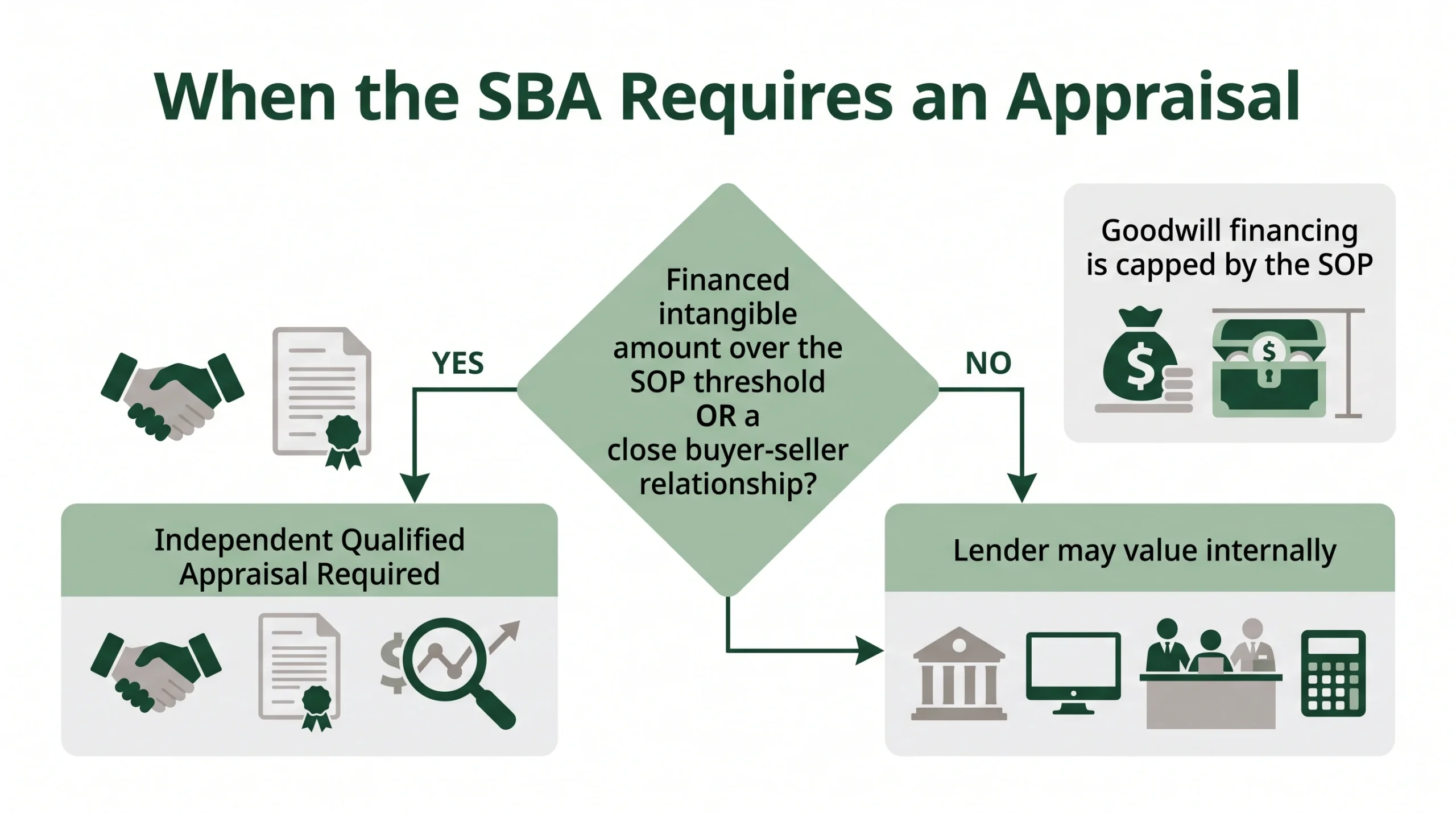
An SBA 7(a) change-of-ownership business appraisal is an independent opinion of value that a lender orders before it finances the purchase of a business. The SBA Standard Operating Procedures, known as SOP 50 10, tell the lender when this appraisal is required. The rule turns on two things: how much intangible value the loan finances and whether the buyer and seller are closely related. When the financed intangible amount tops the current SOP threshold, historically $250,000, an independent appraisal from a qualified source is required.
This matters because the appraisal protects both the lender and the SBA guaranty behind the loan. The appraisal gives the lender a defensible value for the price and gives the buyer a neutral check before signing. The dollar figures in the SOP change over time, so confirm the version in effect for your deal.
Sofer Advisors provides independent business valuations for bank and SBA financing across the United States. With 180+ five-star Google reviews and Inc. 5000 recognition, the firm applies recognized standards to acquisition deals. Its senior team has served as expert witness in 11+ cases and holds dual credentials recognized by the IRS, SEC, and FINRA. That independence is what SBA lenders require.
Key Takeaways
- Two triggers: An independent appraisal is required when the financed intangible amount tops the current SOP threshold, or when the buyer and seller are closely related.
- The test is the intangible amount: It looks at the financed goodwill and business value, not the real estate or equipment portion of the loan.
- Qualified source only: The appraiser must hold a recognized credential such as ASA, ABV, CVA, or CBA and be independent of the deal.
- Goodwill has a cap: The SOP limits how much goodwill the loan can finance unless the buyer or seller adds equity.
- Figures change: The SOP updates from time to time, so confirm the current threshold and goodwill limit before you rely on them.
These rules decide whether your deal needs an outside appraisal and who can sign it. The sections below explain each trigger, the goodwill limit, and how to pick a qualified source.
When does the SBA require an independent appraisal?
The SBA requires an independent appraisal when the financed intangible amount is over the current SOP threshold, or when the buyer and seller have a close relationship. The threshold has historically been $250,000 of financed goodwill and business value. That figure is the loan minus the appraised value of any real estate and equipment. If the amount is at or below the threshold and the parties are unrelated, the lender may use its own valuation instead.
This split keeps the rule on the risky part of the price. Real estate and equipment have their own appraisals and a clear resale market, while intangible value is harder to pin down and easier to overpay for. The SBA 7(a) loan program sets these rules and updates them through new SOP releases.
Because the number can move with each SOP version, confirm the current threshold before you assume a deal is exempt. Our guide to SBA loan business valuation and what lenders require covers the wider lending picture. A deal below the line last year may cross it after an update, so check the SOP in effect.
How does a close relationship change the rule?
A close relationship between the buyer and seller triggers an independent appraisal no matter the loan size. This covers family members, business partners buying each other out, and an owner selling to a key employee. The SBA treats these deals as higher risk, because the price may not reflect an arm’s length negotiation. Here the appraisal must come from a qualified source outside the transaction, even when the amount is small.
When two related parties set a price, it can drift from fair market value. An inflated price lets the seller pull more cash out through the loan, which raises the risk for the lender and the SBA guaranty. An independent appraisal checks the price against real market data. If you are buying out a partner or a relative, plan for the appraisal early, since these deals often use seller financing to bridge the gap between price and loan proceeds.
Who qualifies to perform the SBA appraisal?
A qualified appraiser holds a recognized business valuation credential and stays independent of the deal. The SBA accepts appraisers who hold the ASA (Accredited Senior Appraiser), the ABV (Accredited in Business Valuation), the CVA (Certified Valuation Analyst), or the CBA (Certified Business Appraiser) designation. The person cannot hold a stake in the sale or a tie to either party. That independence makes the value defensible to the lender and the SBA.
These credentials signal training and a duty to recognized standards. The CVA is granted by NACVA, while the ABV comes from the AICPA. Most business appraisals also follow USPAP and the AICPA Statement on Standards for Valuation Services. Large national firms such as Alvarez & Marsal, Stout, and Kroll serve the biggest deals, while independent firms handle most small business acquisitions. The table below compares the choices.
| Provider type | Best fit | SBA independence |
| Sofer Advisors | Small and mid-market acquisitions | Independent; credentialed; no stake in the sale |
| Large national firm | Enterprise and complex deals | Independent, but priced for large budgets |
| Business broker estimate | Marketing a listing | Not independent; tied to the sale |
A broker’s price estimate does not meet the SBA rule, because the broker earns a fee on the sale and has a stake in closing. Sofer Advisors keeps the appraisal separate from any deal role and follows a Heart of a Teacher approach, so buyers and lenders understand the value, not just the number. Our look at a certified business valuation versus a broker opinion explains why the difference matters for a financed deal.
How does the SBA limit goodwill financing?
The SBA caps how much goodwill and intangible value a 7(a) loan can finance. Historically, the SOP has limited financed goodwill to $500,000 unless the buyer or seller injects more equity. Goodwill is the price above the value of hard assets, such as the brand, customer base, and trained workforce. When goodwill runs high, the buyer may need to add cash or seller financing to close the gap.
The appraisal sets the value of the business and shows how much of the price is goodwill. If that goodwill is above the SOP limit, the loan cannot cover all of it, and the parties must find other funds. Our guide to calculating goodwill in an acquisition shows how appraisers split the price between hard assets and intangible value. As with the threshold, the goodwill cap is set by the current SOP and can change, so confirm the figure that governs your loan.
What does the appraisal report include and how long does it take?
The appraisal report gives a supported opinion of value that the lender can defend to the SBA. It covers the income approach and the market approach, normalized earnings, and a check of the price against comparable sales. Most reports take about four to eight weeks, based on the size of the business.
An independent firm follows a set process to keep the work consistent. The Sofer Difference runs in four phases: Discovery, Diligence, Analysis, and Delivery. Discovery gathers the financials and deal terms. Diligence tests the numbers and normalizes earnings for owner perks and one-time costs. Analysis applies the valuation methods and reconciles a value. Delivery hands over a written report the lender can rely on. This keeps the fair market value conclusion defensible if the SBA or a reviewer asks later.
Frequently Asked Questions
When does an SBA 7(a) change-of-ownership loan need an appraisal?
A change-of-ownership loan needs an independent appraisal when the financed intangible amount is over the current SOP threshold, historically $250,000, or when the buyer and seller are closely related. The intangible amount is the loan minus the appraised real estate and equipment. If the deal is below the threshold and the parties are unrelated, the lender may use its own valuation instead. Confirm the current SOP figure for your loan.
Can you transfer ownership of an SBA loan?
You usually do not transfer an existing SBA loan to a new owner. Instead, the buyer applies for a new 7(a) change-of-ownership loan to fund the purchase, and the seller’s loan is paid off at closing. The lender underwrites the new borrower and the new deal from the start. Because this is a fresh loan for a business purchase, the SOP appraisal rules apply based on the financed amount and the buyer-seller relationship.
Are appraisals necessary for all SBA loans?
No, not every SBA loan needs a business appraisal. The requirement is tied to change-of-ownership deals that finance goodwill and business value above the SOP threshold, or that involve closely related parties. Working capital loans and equipment loans follow different rules. Real estate in a deal gets its own real estate appraisal. For a business purchase, the lender checks the financed intangible amount and the relationship to decide if an independent business appraisal is required.
What is the goodwill financing limit on an SBA 7(a) loan?
The SBA caps how much goodwill a 7(a) loan can finance. The SOP has historically set this limit at $500,000, unless the buyer or seller adds equity to the deal. Goodwill is the price above the value of hard assets, such as brand and customer relationships. When goodwill is high, the buyer often needs extra cash or seller financing. The exact cap can change with each SOP release, so confirm the current figure.
Who can perform an SBA business appraisal?
An SBA business appraisal must come from a qualified source who is independent of the deal. The SBA accepts appraisers who hold a recognized credential, such as the ASA, the ABV, the CVA, or the CBA. The appraiser cannot have a financial stake in the sale or a tie to the buyer or seller. A business broker who is marketing the listing does not qualify, because the broker earns a fee tied to closing the sale.
Does the appraisal differ for a stock purchase or an asset purchase?
The appraisal trigger works the same way for a stock purchase and an asset purchase. In both, the lender looks at the financed intangible amount and the buyer-seller relationship to decide if an independent appraisal is required. The deal structure does change the tax result and how the price is allocated, which can shift how much of the price is goodwill. An asset sale versus a stock sale carries different tax outcomes worth reviewing early.
What does the lender do with the appraisal?
The lender uses the appraisal to support the purchase price and the loan request. If the appraised value comes in below the agreed price, the lender may cut the loan amount or ask the parties to close the gap with more equity or seller financing. The appraisal also documents the file for the SBA guaranty. A supported value protects the lender if the loan is reviewed or if the business later runs into trouble.
How long does an SBA change-of-ownership appraisal take?
Most SBA business appraisals take about four to eight weeks from the start of the engagement. The timeline depends on the size of the business, the number of entities, and how organized the financial records are. A clean, single-location company moves faster than a multi-location group. Rush timelines are sometimes possible for a fee. To keep a closing on schedule, order the appraisal early and send the requested documents in one complete package.
How much does an SBA business valuation cost?
An SBA business valuation typically runs $7,500 to $25,000, based on the size and complexity of the business. A single-location company with clean books sits at the lower end, while a multi-entity deal costs more. Sofer Advisors scopes each engagement to the specific transaction and lender needs. For a quote tied to your purchase, request a valuation estimate with your financials and the loan details.
Related Case Studies
- Business Valuation for Partner Buyout: Complete Transition Guide
- Asset Sale vs Stock Sale: Tax and Deal Structure Guide
- Small Business Valuation Georgia: What Every Owner Should Know
Executive Summary
An SBA 7(a) change-of-ownership loan needs an independent business appraisal in two cases. The first is when the financed intangible amount tops the current SOP threshold, historically $250,000. The second is when the buyer and seller are closely related, no matter the amount. The appraiser must hold a recognized credential, such as ASA, ABV, CVA, or CBA, and stay independent. The SOP also caps financed goodwill, historically at $500,000 unless the parties add equity. Because these figures change, confirm the SOP in effect for your loan.
What Should You Do Next?
Start by checking the financed intangible amount, which is the loan minus the appraised real estate and equipment, and note whether you and the seller are closely related. Next, confirm the current SOP threshold and goodwill cap with your lender, since these figures move over time. Then engage a qualified, independent appraiser early so the report is ready before your closing date.
David Hern CPA ABV ASA, founder of Sofer Advisors, provides independent, defensible valuations for bank and SBA financing. See the firm’s bank and venture financing valuation services to learn more. Schedule a consultation to discuss your acquisition, using the contact page to reach the team.
People Also Read
- Quality of Earnings Report: What Buyers Discover Before a Sale
- How to Transfer Business Ownership: Options and Tax Impact
About the Author
This guide was prepared by David Hern CPA ABV ASA, founder of Sofer Advisors, a business valuation firm headquartered in Atlanta, GA serving clients across the United States. David holds dual accreditations as an Accredited Senior Appraiser (ASA) and is Accredited in Business Valuation (ABV), credentials recognized by the IRS, SEC, and FINRA. He also holds the Certified Exit Planning Advisor (CEPA) designation. With 15+ years of valuation experience, David has served as an expert witness in 11+ cases across multiple jurisdictions and built Sofer Advisors into an Inc. 5000-recognized firm with 180+ five-star Google reviews. Its full W2 employee team maintains subscriptions to all major valuation databases and operates under a next business day response policy.
For professional business valuation services, visit soferadvisors.com/about-us/ or contact Sofer Advisors at soferadvisors.com/contact-us/.
Disclaimer: This content is for informational purposes only and does not constitute professional valuation advice. Business valuation conclusions depend on specific facts and circumstances. Contact Sofer Advisors for guidance regarding your specific situation.









