


Last Updated: July 2026
A fairness opinion for a related-party transaction is an independent expert report. It states whether the financial terms of a deal between a company and an insider are fair to the company and its non-affiliated shareholders. The work takes close technical review, because these deals often create a conflict of interest. The SEC treats them as high-risk areas for weak disclosure, so they draw extra scrutiny during financial statement reviews.
When a company faces one of these sensitive events, a defensible third-party analysis protects everyone involved. Sofer Advisors provides this service with seven years of experience. Its analysts pair technical accounting skill with the Heart of a Teacher approach, so every party understands the valuation logic. With 180+ five-star Google reviews and 11+ expert-witness cases, it prepares documentation that stands up to regulatory challenge.
Owners, boards, and their legal counsel rely on these opinions to meet fiduciary duties in complex deals. Whether the goal is aligning interests or meeting transparency rules, a clear report is essential. This guide covers how these opinions work, the methods behind them, and the reporting standards that guide each engagement.
Key Takeaways
- Independent verification: the report confirms that terms between related parties meet fair market standards.
- Built-in risk: deals with executives or directors create conflicts that need objective, third-party oversight.
- Fiduciary defense: rarely required by statute, but a key shield against shareholder suits and breach-of-duty claims.
- Defensible range: the income, market, and asset approaches set the range the deal price must fall within.
- Independence is decisive: credibility hinges on a provider with no success-fee bias.
These points show how independent review manages conflicts during structural deals. The sections below cover the methods and documentation your organization needs at each phase.
What defines a related-party transaction?
A related-party transaction is any deal, asset transfer, or loan between a company and its insiders. That includes executives, directors, or major shareholders who control or influence the entity. These deals need review because the lack of an arm’s length negotiation creates a conflict of interest. Companies must flag them to keep financial reporting transparent.
The definition reaches past direct insiders to their close family and any other entity where an officer holds a large stake. Accounting rules such as ASC 850 require clear disclosure so users see the true economic substance. By isolating these items, a company proves it handled the deal with the same care as one with an independent third party. Proper protocols keep trust in the accuracy of the records.
Why do these transactions require scrutiny?
These deals require scrutiny because an insider might put personal gain over the health of the company. When one person sets terms for a deal they also sit across from, the company can pay too much or receive too little. That threatens financial integrity and can erode the value held by minority shareholders.
Such deals are sensitive because they may breach the board’s duty to act in the company’s best interest. If the people in charge cannot show a deal met an arm’s length standard, they expose the business to shareholder suits. Boards often turn to litigation and dispute valuation to set objective, third-party benchmarks. Transparency is the main defense against a breach-of-duty claim.
When is a fairness opinion legally required?
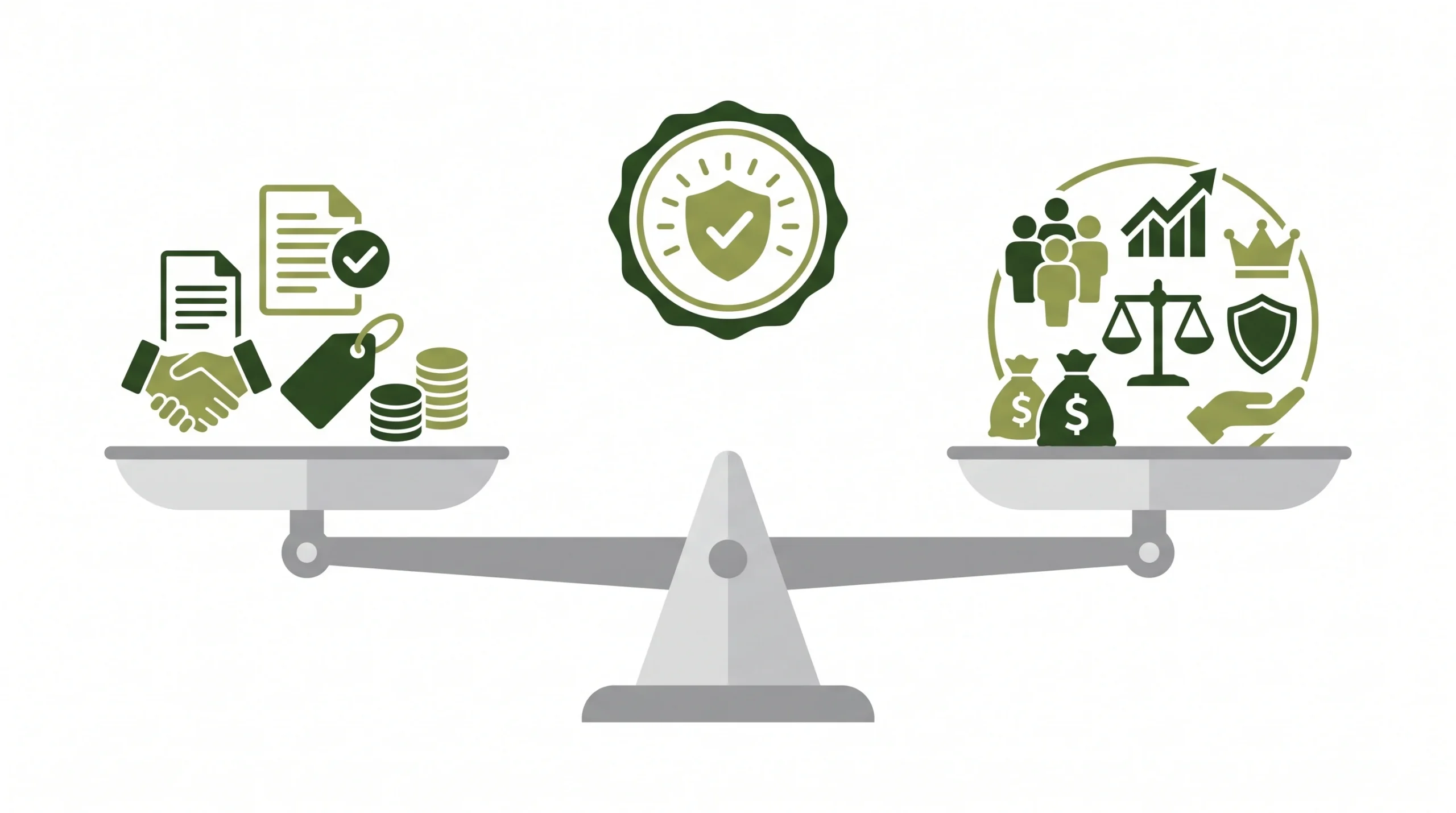
A fairness opinion is not required for every related-party transaction. It is a vital safeguard when a board must defend its decisions against a legal challenge. State statutes do not always mandate an independent review, but Delaware law puts strict duties on directors to prove a deal meets the entire fairness standard when a conflict exists. Without an objective report, a board that relies on a special committee often struggles to shift the burden of proof back to the business judgment rule. Our guide to fairness opinions in M&A covers that process in depth.
Delaware courts often examine whether a deal reached a fair price through a fair process. When a board uses an independent advisor to weigh the offer, the resulting opinion is strong evidence that directors acted with care and independence. That diligence lowers litigation risk during major structural changes or squeeze-out mergers. Valuation experts supply the analysis that shows the board met its duties to all shareholders.
How is financial fairness determined in an opinion?
Financial fairness is measured by comparing the proposed terms to an independent valuation range built from the income, market, and asset approaches. The process relies on objective data to confirm the price and structure give a fair outcome for the target and its stakeholders.
Analysts use a discounted cash flow method to project future benefits based on growth and risk. They run a comparable company analysis to benchmark the business against similar public entities. A precedent transaction analysis then reviews what buyers paid in similar past deals, as documented by Business Valuation Resources (BVR / DealStats). From these inputs, experts set the range that reflects fair market value for the interest being transferred. If the offer falls inside that range, the opinion supports the deal’s fairness from a financial view.
Talk to a Sofer Advisors valuation specialist about which approach fits your transaction.
What does the provider’s process involve?
The provider runs a full due diligence process to test the economic reality of the deal. That work reviews the transaction background and checks the financial projections the company supplies. Experts then apply independent valuation methods to judge whether the terms fall in a fair range. The review typically covers:
- The background and rationale of the deal
- Management’s financial projections and key assumptions
- Any sign of bias in how the deal was formed
- Comparable companies and precedent transactions
This effort follows a four-phase path, The Sofer Difference. In Discovery and Diligence, the team gathers data and watches for bias. Analysis tests the internal assumptions behind the figures. Delivery produces a formal opinion letter that details the exact steps used to reach the conclusion. That rigor gives the board a clear, defensible record of its actions. The same discipline appears in an ESOP transaction, where independence is equally vital.
Who can issue a credible fairness opinion?
A credible fairness opinion must come from a truly independent firm with zero financial stake in the outcome. The role needs a neutral party that runs a rigorous, unbiased review of the price, so the logic holds up before directors, shareholders, and regulators.
An independent firm avoids the success-fee conflict built into investment banking. Many banks get paid only if a deal closes, which can bias their view of fairness. An advisor with an ASA credential or CPA designation weighs the facts without that incentive. FINRA Rule 5150 reinforces this by setting clear rules for disclosing such conflicts. Separating the advisory role from deal execution gives an objective viewpoint aligned with USPAP standards.
Which provider is best for a fairness opinion?
Owners must weigh how the choice of firm affects the perceived objectivity of the report. Large advisory practices like Alvarez & Marsal, Stout, and Kroll bring deep resources to big public-company deals. A boutique valuation firm often gives the personalized, conflict-free approach that middle-market private deals need. The table below compares the options.
| Provider type | Typical focus | Independence |
| Sofer Advisors | Private-company deals, tax, and disputes | High; no transaction success fees |
| Investment bank | M&A advisory plus valuation | Varies; may also act as deal advisor |
| Large national firm | Public-company M&A and complex reporting | Moderate; audit conflicts must be managed |
Sofer Advisors focuses on technical independence so every analysis holds up in an IRS audit or court testimony. Choosing a firm that matches the transaction helps ensure the documentation serves its purpose. The decision often shapes the success of a tax filing or the defense of a dispute.
Fairness opinions reward independence and a documented process. The questions below cover what boards ask most.
Frequently Asked Questions
What is an example of a fairness opinion?
A common example is a private company buying a business unit from its founder to settle an estate matter. Because the founder is both seller and decision-maker, the board needs independent proof the price is not skewed by personal interest. Sofer Advisors produces the opinion by valuing the unit with market benchmarks and income projections to confirm the offer sits in a fair range for shareholders.
Who can issue a fairness opinion?
A fairness opinion must come from a qualified, independent third party with no gain tied to the deal closing. Many investment banks issue these reports, but their success fees create conflicts that weaken their neutrality in court. Sofer Advisors keeps strict independence by refusing success-based pay, so attorneys and CPAs can rely on its analysis as evidence.
What is a fairness opinion used for?
Boards use fairness opinions to show they acted with due care and independence when approving major deals, especially when a conflict exists. The report shifts the burden of proof to critics if the deal later faces a shareholder suit. Sofer Advisors includes a detailed procedural summary so boards can show they met their fiduciary duties.
How does a fairness opinion protect the board of directors?
It gives directors a defensible record of financial due diligence, which is vital for meeting the entire fairness standard in Delaware courts. An independent report proves the board weighed the interests of all shareholders, not just the majority. Sofer Advisors documents every step of the analysis, giving the board evidence the valuation ran free of internal influence.
What is the difference between a fairness opinion and a business valuation?
A business valuation estimates the objective value of a company or asset at a point in time. A fairness opinion judges whether the terms of a proposed deal are fair to stakeholders. The valuation gives the number; the opinion gives the context of the deal structure and its fairness. Sofer Advisors delivers both, matched to the purpose of the engagement.
Is a fairness opinion legally required for all related-party transactions?
No law mandates a fairness opinion for every related-party transaction, but it is often needed to avoid litigation or satisfy regulators. Small, simple deals may not warrant the cost, yet any deal with an influential owner carries higher risk of shareholder or IRS scrutiny. Sofer Advisors recommends it for clients who must prove their dealings avoid the appearance of self-dealing.
What is the entire fairness standard in Delaware law?
The entire fairness standard is the strictest level of court review for corporate deals, requiring directors to prove both fair dealing and fair price. When a conflict exists, such as a deal with a controlling shareholder, the burden shifts to the board to show the deal was objectively reasonable. Sofer Advisors provides independent opinions that give boards the documentation to argue they met this standard.
How long does it take to get a fairness opinion?
A typical engagement takes four to eight weeks, based on data availability and the complexity of the interest reviewed. The team needs that time to run deep diligence, test management projections, and draft a report that withstands scrutiny. Sofer Advisors manages the timeline through its four-phase process so the deal keeps moving.
How much does a fairness opinion for a related-party transaction cost?
A fairness opinion from Sofer Advisors typically runs $15,000 to $40,000, based on its published engagement data, with multi-asset or estate-linked deals reaching the higher end. Cost depends on deal complexity and the technical time needed for independent verification. For a quote tied to your deal, request an engagement estimate with your draft terms and financials.
Related Case Studies
- What Is a Solvency Opinion? A Complete Guide
- Buy-Sell Agreement Valuation: A Complete Guide for Partners
- The Management Buyout Process: Steps, Financing, and Valuation
Executive Summary
A fairness opinion is an independent judgment on whether the terms of a related-party deal are fair to the company and its outside shareholders. It is rarely required by statute, but it shields a board against shareholder suits when a conflict exists, especially under Delaware’s entire fairness standard. Analysts measure fairness by comparing the offer to a valuation range built from the income, market, and asset approaches. The provider must be truly independent, with no success fee that could bias the view. To prepare, identify whether your deal needs a formal opinion, then gather draft terms, historical financials, and management forecasts so the engagement stays inside the usual four to eight week window.
What Should You Do Next?
Identify whether your transaction needs a formal opinion to meet fiduciary duties or satisfy a lender. Provide draft deal terms, historical financials, and management forecasts to your advisor as soon as you decide an independent review is needed. That keeps the engagement inside the four to eight week window typical for complex deals.
David Hern CPA ABV ASA, founder of Sofer Advisors, helps boards and owners secure defensible fairness opinions for related-party transactions and structural changes. Schedule a free consultation to discuss your situation.
People Also Read
- Buy-Sell Agreement vs Shareholder Agreement: Key Differences
- Divorce Business Valuation: What Business Owners Need to Know
About the Author
This guide was prepared by David Hern CPA ABV ASA, founder of Sofer Advisors, a business valuation firm headquartered in Atlanta, GA serving clients across the United States. David holds dual accreditations as an Accredited Senior Appraiser (ASA) and is Accredited in Business Valuation (ABV), credentials recognized by the IRS, SEC, and FINRA. He also holds the Certified Exit Planning Advisor (CEPA) designation. With 15+ years of valuation experience, David has served as an expert witness in 11+ cases across multiple jurisdictions and built Sofer Advisors into an Inc. 5000-recognized firm with 180+ five-star Google reviews. Its full W2 employee team maintains subscriptions to all major valuation databases and operates under a next business day response policy.
For professional business valuation services, visit soferadvisors.com/about-us/ or contact Sofer Advisors at soferadvisors.com/contact-us/.
Disclaimer: This content is for informational purposes only and does not constitute professional valuation advice. Business valuation conclusions depend on specific facts and circumstances. Contact Sofer Advisors for guidance regarding your specific situation.









