


Last Updated: September 2026
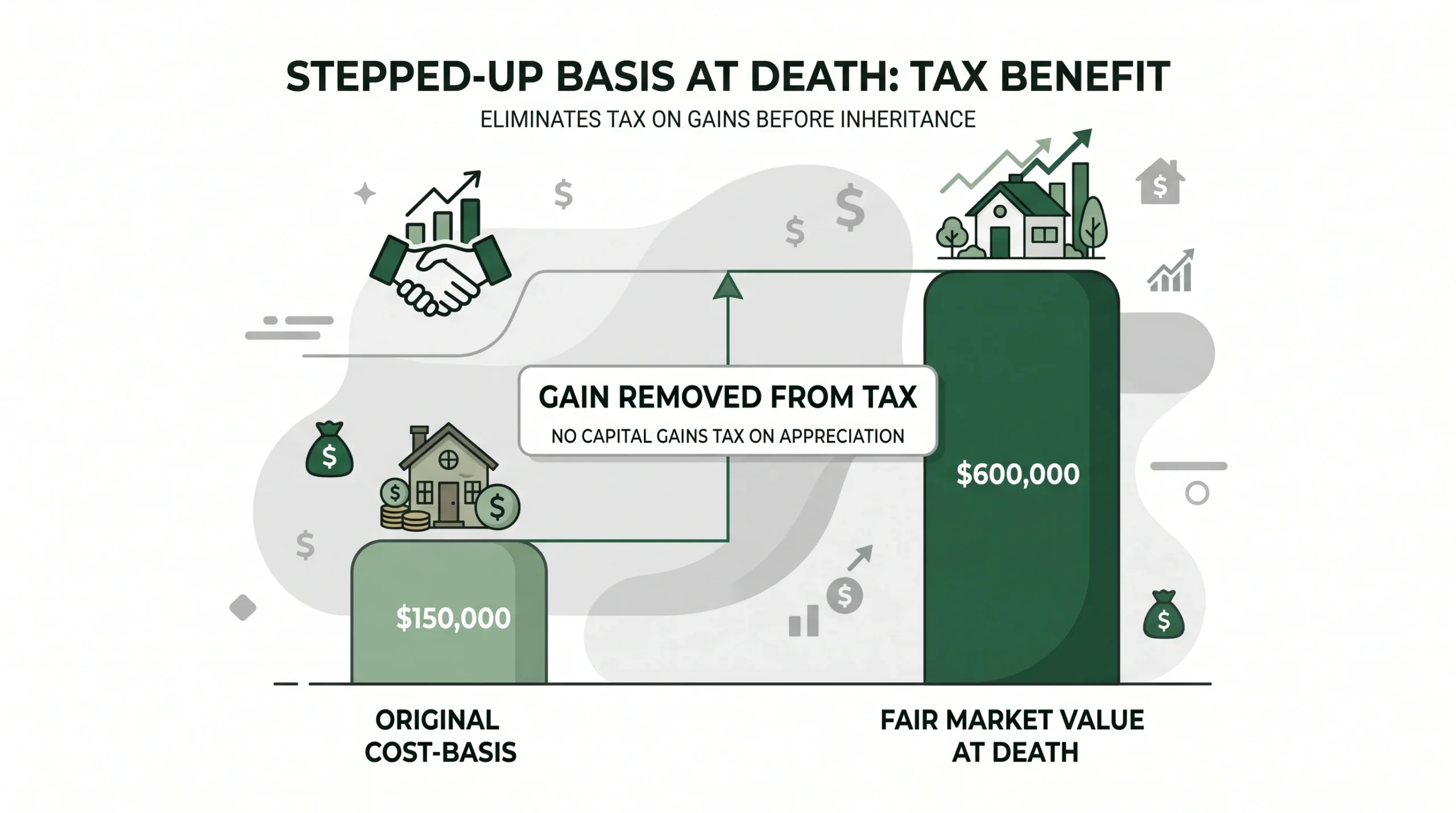
A business valuation for step-up in basis sets the fair market value of an inherited company on the owner’s date of death. That value becomes the heirs’ new cost basis. It replaces the original owner’s often much lower basis. The reset can erase decades of gain. Under IRC Section 1014, this adjustment can trim a future capital gains tax bill by up to 23.8 percent when heirs later sell.
Sofer Advisors prepares these date-of-death reports for owners, CPAs, and estate attorneys. Its work is built to stand up to IRS review. Its professionals have testified as expert witnesses in 11+ cases across Georgia, Florida, California, and New Mexico. It also holds 180+ five-star Google reviews. Every estate engagement starts with the facts of the specific business.
Getting the basis right protects what heirs keep after a sale. Many families face this task while filing Form 706, the federal estate tax return. The wrong number invites an audit and extra tax. The sections below explain how the valuation works and what the IRS expects.
Key Takeaways
- Basis resets at death – Inherited assets take a cost basis equal to fair market value on the date of death, which can wipe out prior gain.
- A qualified appraisal is required – The IRS wants an independent valuation to support the value claimed on Form 706.
- The date drives the number – Value is set on the date of death, or on the alternate date six months later under IRC Section 2032.
- Fair market value is the standard – Revenue Ruling 59-60 governs the analysis, not a strategic-buyer deal price.
- Some assets do not qualify – Traditional IRAs and other income in respect of a decedent get no step-up.
Each of these rules shapes the tax that heirs will owe later. The sections below examine each one in plain terms.
Why does a step-up in basis matter for heirs?
A step-up in basis matters because it can erase the capital gains tax on a lifetime of growth. At death, the cost basis resets to fair market value. IRC Section 1014 authorizes this reset. Without it, heirs would inherit the owner’s old, low basis. They could owe tax on gain that built up over many years.
When an heir sells, the taxable gain is the sale price minus the basis. A higher basis means a smaller gain. So a date-of-death valuation can save real money. Picture a founder who started a company for almost nothing. Over 30 years, it grew to $8 million. Heirs who sell soon after death may owe little or no capital gains tax. Their basis is now $8 million, not the founder’s original cost. A timely, defensible valuation locks in that figure.
How is fair market value set for a business?
Fair market value is the price a willing buyer and willing seller would agree on. Neither side is forced to act. Both know the relevant facts. This standard comes from IRS Revenue Ruling 59-60. It anchors almost every estate and tax appraisal. Appraisers apply it at arm’s length in an open market.
A credentialed appraiser weighs three approaches. The income approach values future cash flow in today’s dollars. The market approach compares the company to similar sales. The asset approach nets the balance sheet. Each approach checks the others.
The appraiser then weights the results to fit the business. A steady, profitable company leans on the income approach. An asset-heavy holding company leans on the asset approach. A credentialed appraiser reconciles the three into one supported conclusion. The goal is a value that survives IRS scrutiny. Each analysis reflects the economic facts on the valuation date, not conditions months later.
What documents does the IRS require for this?
The IRS requires a formal, independent valuation report to back the value on Form 706. A qualified appraiser prepares it. The report shows how the value was reached. It must meet federal standards for estate and gift filings. To build a defensible report, an appraiser reviews several records:
- Financial statements from the past three to five years
- Federal and state tax returns for the same period
- Corporate governing documents and ownership records
- Any buy-sell agreement that limits a transfer
- Details on real estate, equipment, and debt
These records show the company’s earnings, assets, and any transfer limits. A buy-sell agreement, for example, can cap what an interest is worth. Gathering them early keeps the filing on schedule. It also gives the appraiser a full picture of the business. You can read the IRS overview on Form 706 for the estate return itself. An estate appraiser requests these items early during discovery.
When must the business valuation be dated?
The valuation must set fair market value as of the owner’s date of death. That date anchors the estate return and the new basis. Executors may instead elect the alternate valuation date. It falls exactly six months after death, under IRC Section 2032. The choice can lower the tax when values drop.
The alternate date helps only when values fall. It applies to the whole estate, not to selected assets. To qualify, both the gross estate and the estate tax must be lower on that later date.
The appraiser works after the death but reports the value on the chosen date. Market and company facts as of that date drive the number. Executors often model both dates before they decide. The 2025 One Big Beautiful Bill Act made the federal estate tax exemption permanent at $15 million per person and $30 million per married couple. Step-up in basis at death still applies under current law. An experienced appraiser helps executors weigh each date.
How do estate and M&A valuations differ?
Estate and M&A valuations differ mainly in purpose. An estate valuation must follow the fair market value standard for tax. It asks what any willing buyer would pay. An M&A valuation often asks what one specific buyer would pay. That single difference changes the whole analysis.
M&A deals can add buyer-specific cost savings. Think shared overhead or new market access. Those extras are not allowed in an estate appraisal. The estate value looks only at the interest the estate holds.
This gap matters at audit time. An inflated, strategic-buyer figure can draw an IRS challenge and extra tax. A neutral fair market value figure is easier to defend. Sofer Advisors builds estate reports on that neutral standard. The result is a number that holds up in review, not a deal price shaped by one buyer’s plans.
Which assets qualify for a step-up in basis?
Most capital assets in an estate qualify for a step-up. That includes closely held business interests, real estate, and brokerage accounts. Each resets to fair market value at death. The reset can cut the capital gains tax heirs face on a later sale. Private company interests usually need a formal appraisal to document the value.
Not everything qualifies. Income in respect of a decedent, or IRD, is the main exception. These are amounts the owner had earned but not yet been taxed on. Traditional IRAs, 401(k) accounts, and deferred compensation fall here.
Heirs pay ordinary income tax on IRD when they withdraw it. There is no basis reset to soften that bill. Sorting qualifying assets from IRD early prevents costly filing errors. For inherited property basis rules, the IRS explains the details in Publication 551. A thorough appraiser flags these items during the valuation, so the estate plan stays accurate.
Which valuation provider fits an estate?
The best provider for an estate is an independent, credentialed valuation firm. Solo CPAs may lack the appraisal credentials for tax reporting. Large national firms often price for billion-dollar estates. Middle-market families sit in the gap between them. The table below compares the options.
| Provider type | Typical focus | Best fit |
| Solo practitioner CPA | Tax prep and basic accounting | Simple estates with easy-to-value assets |
| Large national firm | Public reporting and big litigation | Complex, multi-billion-dollar estates |
| Sofer Advisors | Independent business valuation | Private owners who need IRS-ready reports |
Large firms like Alvarez & Marsal, Stout, and Kroll serve enterprise clients. Their overhead rarely fits a private, middle-market estate. Solo practitioners may not carry ABV or ASA credentials. An independent, credentialed firm sits between the two. Its W2 team of credentialed experts follows AICPA and IRS standards. The Sofer Difference guides every file through four phases: Discovery, Diligence, Analysis, and Delivery. A Heart of a Teacher approach means its professionals explain each method in plain words, so owners and advisors understand the result.
An accurate date-of-death valuation protects heirs and satisfies the IRS. The questions below cover what owners and executors ask most.
Frequently Asked Questions
What are common mistakes with stepped-up basis?
The most common mistake is skipping a formal, independent valuation and guessing the value. A second mistake is treating income in respect of a decedent as if it qualifies for a step-up. Both errors can trigger an audit or a penalty. Missing the correct valuation date is another frequent slip. A qualified appraiser helps executors avoid these traps with defensible, date-of-death reports that meet federal standards.
What are the IRS rules for stepped-up basis?
Under IRC Section 1014, inherited property resets to its fair market value on the owner’s date of death. The IRS wants that value backed by a qualified appraisal on estate returns like Form 706. Arbitrary or outdated figures can lead to a rejected filing. Revenue Ruling 59-60 governs how the value is reached. A thorough appraiser documents each step so the report meets these IRS rules.
Is a step-up in cost basis a good thing?
Yes, a step-up in cost basis usually helps heirs. It resets the basis to the date-of-death value. That erases the gain that built up during the owner’s lifetime. Heirs are then taxed only on growth after they inherit. For a long-held business, the savings can be large. A clear, independent valuation helps heirs capture the full benefit that current federal law allows.
What assets do not get a step-up in basis?
Income in respect of a decedent does not get a step-up. This includes traditional IRAs, 401(k) accounts, and certain deferred compensation. These assets carry income the owner never paid tax on. Heirs pay ordinary income tax as they withdraw the funds. The basis reset does not apply to them. A careful appraiser identifies these items during the valuation so the estate plan reflects them accurately.
How much does a business valuation for step-up in basis cost?
A business valuation for a step-up in basis typically runs $7,500 to $25,000. Most reports take four to eight weeks. The price depends on the size of the company, the number of entities, and the timeline. Historical data and the type of interest also affect the fee. For a quote tied to your estate, schedule a consultation with your financials ready.
Can an old business valuation be used for step-up basis?
An old valuation rarely works for a step-up. The IRS wants fair market value as of the specific date of death. Company results, market conditions, and industry trends shift over time. A stale report invites extra scrutiny and may be rejected. Only a current, date-of-death valuation reflects the true value. A qualified appraiser prepares a fresh report tied to the correct date.
What happens if the IRS disputes the valuation?
When the IRS disputes a valuation, it usually questions the method, the inputs, or the appraiser’s independence. A weak report can lead to added tax, interest, and penalties. A strong, third-party report is the best defense. It shows a clear, standards-based path to the value. A well-supported report stands up to review, giving executors solid ground to defend the reported figure.
Does step-up basis apply to assets held in a trust?
It depends on the trust. Assets in a revocable trust usually qualify, because they stay in the decedent’s taxable estate. Assets in some irrevocable trusts may not, based on how the trust was built and what control the owner kept. These rules are technical and fact-specific. A skilled appraiser works with legal counsel to value interests held in trust and to gauge the step-up impact.
Who obtains the business valuation after a death?
The executor or personal representative obtains the valuation. This person reports the value on the estate tax return. Skipping a qualified appraisal can expose the executor to personal liability if an audit follows. The task calls for close work with tax and legal advisors. An independent, credible report gives executors what they need to meet these fiduciary duties.
Related Case Studies
- Stepped-Up Basis at Death: What Business Owners Must Know
- Fair Market Value for Estate Tax: What Executors Need
- Valuation of Closely Held Business for Estate Tax Purposes
Executive Summary
A step-up in basis resets an inherited business to its fair market value on the owner’s date of death, under IRC Section 1014. That reset can erase decades of gain and cut a later capital gains tax bill by up to 23.8 percent. The IRS wants the value backed by a qualified appraisal on Form 706, set on the date of death or the alternate date six months later. Fair market value, guided by Revenue Ruling 59-60, is the standard. Gather three to five years of financials and tax returns to prepare. An independent, date-of-death valuation protects heirs and holds up under IRS review.
What Should You Do Next?
Start by gathering three to five years of business tax returns and financial statements. Confirm the correct valuation date, either the date of death or the alternate date six months later. Then engage an independent appraiser before you file Form 706, so the value is defensible from the start.
David Hern CPA ABV ASA, founder of Sofer Advisors, provides independent, court-defensible estate valuations for business owners and their families. Schedule a consultation to discuss your situation.
People Also Read
- Cost Basis vs Fair Market Value: Key Differences Explained
- Revenue Ruling 59-60: The IRS Foundation of Business Valuation
About the Author
This guide was prepared by David Hern, CPA ABV ASA, founder of Sofer Advisors, a business valuation firm headquartered in Atlanta, GA, serving clients across the United States. David holds dual accreditations as an Accredited Senior Appraiser (ASA) and is Accredited in Business Valuation (ABV), credentials recognized by the IRS, SEC, and FINRA. He also holds the Certified Exit Planning Advisor (CEPA) designation. With 15+ years of valuation experience, David has served as an expert witness in 11+ cases across multiple jurisdictions and built Sofer Advisors into an Inc. 5000-recognized firm with 180+ five-star Google reviews. Its full W2 employee team maintains subscriptions to all major valuation databases and operates under a next business day response policy.
For professional business valuation services, visit soferadvisors.com/about-us/ or contact Sofer Advisors at soferadvisors.com/contact-us/.
Disclaimer: This content is for informational purposes only and does not constitute professional valuation advice. Business valuation conclusions depend on specific facts and circumstances. Contact Sofer Advisors for guidance regarding your specific situation.









