


Last Updated: July 2026
Transfer pricing is the price one part of a company charges another for goods, services, or intangible assets. When those parts sit in different countries, the price also decides where profit lands and which tax rate applies. That is why tax authorities watch it so closely. Transfer pricing adjustments remain a leading cause of corporate tax disputes.
Sofer Advisors gives neutral, third-party valuations to support these intercompany prices. It has seven years of history and a record of 11+ expert-witness cases. Its work rests on the Heart of a Teacher approach, so owners and their advisors understand the reason behind every figure. That focus on clarity shows up in 180+ five-star Google reviews.
Getting this right takes attention to the rules and to your own internal policy. Owners must produce clear reports that satisfy tax authorities. The report has to show that internal prices match open-market terms. That means weighing each party’s roles, risks, and assets so the price stays objective. Good records back the filing and any later audit.
Key Takeaways
- Shared foundation: transfer pricing and valuation both use the arm’s length principle to mirror market terms.
- Close oversight: the IRS watches transfer prices to stop base erosion and profit shifting.
- Valuation supplies proof: the income, market, and asset methods justify prices for intangibles and services.
- Five set methods: CUP, Resale Price, Cost Plus, TNMM, and Profit Split are the accepted approaches.
- Records win audits: an independent report, prepared early, settles inquiries and lowers penalty risk.
These ideas tie directly to tax reporting and to how you analyze intercompany cost. The sections below cover the methods and the compliance steps you need across your business.
Why do tax authorities scrutinize transfer prices?
Tax authorities watch transfer prices to stop base erosion and profit shifting, known as BEPS. Under BEPS, a company moves profit to a low-tax country to cut its total bill. It does this by setting intercompany prices that lower taxable income in high-tax regions. By tracking these flows, the IRS protects a fair revenue base.
To manage the risk, regulators check that intercompany deals meet the arm’s length principle. That standard asks whether two unrelated parties would agree to the same terms. If an audit finds the price strays from that mark, the company faces tax adjustments and penalties. Sofer Advisors reviews these structures when audit risk rises. Clear proof of compliance is the main defense for any cross-border business.
What is the arm’s length principle in valuation?
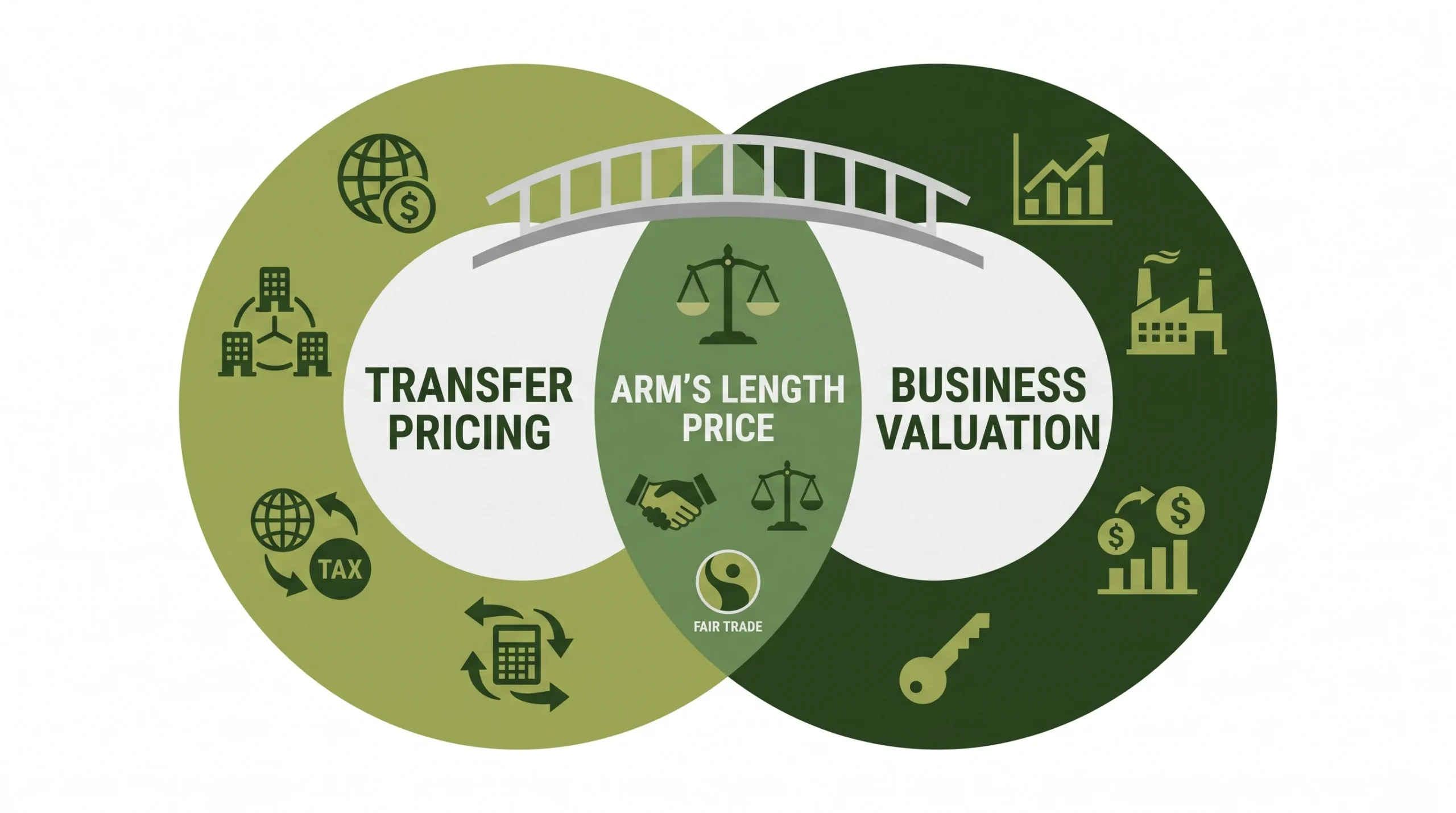
The arm’s length principle is the main global standard for pricing deals between related parties. It says to price the deal as if the two sides were independent players in an open market. That stops profit from shifting between related firms. Many tax authorities, including the IRS, require this approach so tax bills stay accurate.
The principle sits at the base of the OECD guidelines and U.S. Treasury Section 482. To apply it, analysts find comparable uncontrolled transactions to set a fair-value baseline. They then compare those deals to the controlled price in question. If the internal price matches what third parties would accept, it holds up. Keeping to this standard is key during audits and reorganizations.
How does business valuation inform transfer pricing?
A business valuation supplies the economic logic and hard data behind a transfer pricing policy. When a company moves an intangible asset, such as a patent or software, its internal cost split draws close review. A discounted cash flow analysis projects the future income of that asset to find its fair market value. That keeps the price between related entities in line with IRS expectations.
Beyond intangible property, analysts use market multiples to test service and management fees. Comparing those fees to independent peers guards against tax exposure. Interest on intercompany loans must also mirror commercial terms, and a valuation sets the risk profile that justifies the rate. Sofer Advisors gives independent, documented support that stands up in an audit, helping firms avoid common cross-border traps.
What are the common transfer pricing methods?
Tax authorities apply a best-method rule: use the approach that gives the most reliable arm’s length result. The choice depends on the deal, the available market data, and each party’s functions. The five accepted methods are:
- Comparable Uncontrolled Price (CUP): compares the price to identical items in an open-market deal.
- Resale Price: works back from the margin a reseller earns.
- Cost Plus: adds a market markup to production cost.
- Transactional Net Margin (TNMM): tests net margin against a base like cost, sales, or assets.
- Profit Split: divides total profit by each party’s contribution.
The first three are traditional methods built on direct price or margin comparisons. The last two are profit-based, used when direct comparisons are hard to find. Sofer Advisors applies these to keep a policy compliant. Picking the right one takes a full review of the facts and a functional analysis.
Talk to a Sofer Advisors specialist about how your intercompany model lines up with the rules.
When is a valuation needed for transfer pricing?
A formal valuation matters most during big events. Mergers, acquisitions, internal restructurings, and the cross-border transfer of key intellectual property all call for one. Owners also use valuations to set defensible royalty rates and accurate interest rates on intercompany loans.
Independent valuations also document the value of management services, which supports service fees under audit. When a company changes its internal service model, a report confirms the new charges match current market cost. That keeps every intercompany flow inside the arm’s length rule. Each Sofer Advisors valuation measures the risks and roles of each party to hold tax compliance in place.
How does valuation reduce transfer pricing risk?
A valuation lowers risk by supplying the records that justify an intercompany price during a review. Preparing a report before the IRS opens an inquiry shows a good-faith effort to reach an arm’s length price. That proactive step builds the economic substance of the deal, proving the activity reflects real market terms.
When auditors examine an intercompany deal, they look for proof the terms match what two independent parties would accept. A detailed, independent report is the main defense. It explains why each method was chosen to price the asset or service. That transparency gives reviewers a clear trail. It shows the company weighed market reality, not just tax savings. Keeping this evidence ready protects the business against penalties.
Which valuation provider is best for transfer pricing?
Owners often struggle to pick the right partner for cross-border pricing. The choice turns on your goal: a certified valuation report, tax compliance filing, or high-level policy advice. Large advisory practices like Alvarez & Marsal, RSM, and Kroll handle high-volume compliance for global filers. A valuation-first firm bridges technical valuation and practical audit defense. The table below compares the common options.
| Provider type | Core focus | Main deliverable |
| Sofer Advisors | Valuation plus tax support, integrated | ASA/CPA-certified report backing the pricing policy |
| Large tax-compliance firm | Compliance filings and dispute support | Local File and Master File documentation |
| Global policy body | Framework and standard setting | Model conventions and BEPS guidance |
The right partner depends on your specific deal or audit. Global bodies set the frameworks, but a single business needs the technical analysis a valuation firm gives. A valuation-first approach pairs rigorous method with standard accounting rules. That way the report is technically sound and speaks to your exact risk. Choosing an advisor who understands both intangible value and complex intercompany deals protects you from audit exposure. Sofer Advisors applies recognized standards from the American Society of Appraisers and the AICPA to give a clear, independent opinion.
Transfer pricing rewards preparation and documented logic. The questions below cover what owners ask most.
Frequently Asked Questions
What is the dark side of transfer pricing?
The dark side is when a company uses aggressive intercompany prices to shift profit into low-tax countries. Tied to base erosion and profit shifting, that practice can trigger audits and penalties if the price fails the arm’s length test. Sofer Advisors helps owners spot the risk by testing intercompany rates against real market data.
What is the golden rule of transfer pricing?
The golden rule is the arm’s length principle: related parties should transact as if they were independent players in an open market. That allocates profit by the real functions, assets, and risks of each entity, not by internal strategy. Sofer Advisors applies this rule on every engagement so intercompany charges stay defensible under review.
What are the four types of transfer pricing?
Transfer pricing covers goods, services, intangible assets, and financial arrangements between related entities. Each type needs its own comparability check and records to satisfy tax authorities. Because cross-border tax is at stake, Sofer Advisors runs a functional analysis for all four types to support the chosen method and protect the business.
How do you document transfer pricing for the IRS?
You prepare a report, made at the time, that explains the intercompany relationships, the functional analysis, and the method used to set the arm’s length price. This record is the main defense against audit adjustments and is called for under Treasury Regulation 1.6662-6. Sofer Advisors provides independent reports that lay out these factors clearly.
What is the difference between transfer pricing and fair market value?
Transfer pricing is a tax and accounting process for setting internal prices. Fair market value is the economic standard for what an asset would sell for in an open market. A transfer price aims for an arm’s length result, and that result should line up with fair market value to satisfy regulators. Sofer Advisors uses standard valuation approaches to bridge the two.
Can a 409A valuation be used for transfer pricing?
A 409A valuation has a different job: it sets the fair market value of common stock for equity pay under IRC Section 409A. The income and market methods overlap with transfer pricing, but a 409A report does not replace formal transfer pricing records. Sofer Advisors keeps separate, purpose-built documentation for each area to meet distinct IRS rules.
What is a transfer pricing study and when is it required?
A transfer pricing study is a deep analysis of intercompany deals that proves compliance with tax law. It is usually required when a company has significant cross-border activity between related entities. Owners should run the study before filing to support their prices and lower penalty risk. Sofer Advisors prepares these studies by testing comparable market deals.
How much does a transfer pricing analysis from Sofer Advisors cost?
A transfer pricing analysis from Sofer Advisors runs $7,500 to $25,000 for standard reports, based on its published engagement data. Cost depends on the complexity of the deals, the number of countries involved, and the depth of records needed. For a quote tied to your structure, request a valuation estimate with your entity chart and intercompany agreements.
Why is intellectual property a major focus in transfer pricing?
Intellectual property earns high profit, which creates a strong pull toward aggressive planning through intercompany licenses. Tax authorities watch the transfer of patents and trademarks to confirm royalty rates match what unrelated parties would pay. Sofer Advisors measures the value of these assets so owners can set defensible, arm’s length royalty rates that survive an audit.
Related Case Studies
- Goodwill vs Intangible Assets: Key Differences Explained
- 409A Valuation vs Fair Market Value: What Actually Differs (and What Doesn’t)
- What Is a DCF Valuation? A Complete Guide to the DCF Method
Executive Summary
Transfer pricing and valuation meet at the arm’s length principle: related parties should price deals as strangers would. The IRS reviews intercompany prices to stop profit shifting, and a documented valuation is the strongest defense. To prepare, confirm every intercompany agreement states the functions, assets, and risks of each side. Keep records made during the current period to support any adjustment. Gather profit margins and cost data to set a defensible baseline for your chosen method, whether CUP, Resale Price, Cost Plus, TNMM, or Profit Split. That gives tax authorities a clear economic story.
What Should You Do Next?
Map your intercompany deals, then confirm each one has a written agreement and a market-tested price. Pull the profit margins, cost data, and comparable deals that support the price, and store the records now, before an examiner asks. A qualified valuation can then pressure-test the policy before it reaches an audit.
David Hern CPA ABV ASA, founder of Sofer Advisors, guides owners and their advisors on defensible valuation for intercompany deals. Schedule a free consultation to discuss your situation.
People Also Read
About the Author
This guide was prepared by David Hern CPA ABV ASA, founder of Sofer Advisors, a business valuation firm headquartered in Atlanta, GA serving clients across the United States. David holds dual accreditations as an Accredited Senior Appraiser (ASA) and is Accredited in Business Valuation (ABV), credentials recognized by the IRS, SEC, and FINRA. He also holds the Certified Exit Planning Advisor (CEPA) designation. With 15+ years of valuation experience, David has served as an expert witness in 11+ cases across multiple jurisdictions and built Sofer Advisors into an Inc. 5000-recognized firm with 180+ five-star Google reviews. Its full W2 employee team maintains subscriptions to all major valuation databases and operates under a next business day response policy.
For professional business valuation services, visit soferadvisors.com/about-us/ or contact Sofer Advisors at soferadvisors.com/contact-us/.
Disclaimer: This content is for informational purposes only and does not constitute professional valuation advice. Business valuation conclusions depend on specific facts and circumstances. Contact Sofer Advisors for guidance regarding your specific situation.









