


Last Updated: July 2026
An auto dealership valuation finds the true worth of a car retail business, covering hard assets like land and inventory as well as soft assets like brand name and blue sky. Analysts find this value by studying past results, franchise deals, and current market trends. The IBBA Market Pulse Survey shows that sale multiples for retail firms, including car dealers, swing with brand strength and the economy.
Sofer Advisors started in 2019 as a W2 team focused on clear financial work, earning 180+ five-star Google reviews. The team has also given expert witness testimony in 11+ court cases across several states, so it can look past the balance sheet to find real value in private firms.
Owners, CPAs, and lawyers often need these numbers when they plan a sale, settle a dispute, or meet tax rules. By using trusted methods, owners can face their next big choice with a clear view of where their firm stands today.
Key Takeaways
- Total Valuation Composition: Value blends hard assets like land and inventory with blue sky goodwill.
- EBITDA Multiple Range: Market data often shows multiples between 3x and 7x. These depend on the brand and the facility.
- Drivers of Goodwill: Blue sky reflects future earning power. Brand strength and franchise terms shape it heavily.
- Normalization of Earnings: Good valuation adjusts reported results for add-backs, like extra owner pay, to find true earnings.
- Defensible Third-Party Analysis: A certified report gives a solid number for a sale, tax and estate work, or owner disputes. It follows standards set by The Appraisal Foundation (USPAP).
Knowing these value drivers helps you meet a sale or tax need. The parts below show how changes, tax rules, and market trends shape the final findings. This helps you prepare your records for a full review.
What is ‘blue sky’ in a dealership valuation?
Blue sky value is the extra amount paid for a dealership. It reflects goodwill, earning power, and market spot beyond hard assets, standing for future profit driven by things not on the balance sheet. In short, it bridges the gap between the sale value of property and the full worth of a live business.
This value comes from clear strengths, including strong franchise deals, a prime spot, and a good name. And loyal buyers that together support steady earnings over time. By weighing these soft assets, an owner sees what drives the total price. Because blue sky sits among a firm’s intangible asset values, it must be measured with method rather than guessed. Sofer Advisors studies these factors during the review so they count in the final report.
What valuation methods apply to car dealerships?
Methods for car dealers rely on three main paths. These are the market approach, the asset-based approach, and discounted cash flow (DCF) analysis. The market approach uses EBITDA multiples from similar sales. And it stays the most common start point for finding a franchise’s worth.
Most reviews use EBITDA multiples because they mirror current mood and past sale data. And analysts often check figures from Business Valuation Resources (BVR) to spot recent dealer trends. Earnings-based methods capture the goodwill and success of the franchise. Meanwhile, the asset-based path is key for valuing the land and car stock on their own. A DCF study rounds out the work by projecting future cash flow and discounting it to present value. Picking the best method means balancing these inputs to show the true economic spot of the dealer. Most defensible reports weigh two or three approaches together, then reconcile them into a single supported conclusion rather than leaning on one path alone.
How do EBITDA multiples for dealerships work?
EBITDA multiples for car dealers often fall between 3x and 7x. These numbers shift with the brand, the local market, and facility standards. Luxury car franchises often earn higher multiples than domestic brands, since buyers see them as more stable with better profit per car. An expert first finds the normalized EBITDA. This means removing one-time costs and fixing owner pay that sits above market rates.
After adjusting owner pay, an appraiser applies a market multiple that reflects recent sales of like firms in the Business Valuation Resources (BVR) database. Location and the shape of the facility also sway the final exit value. A clear grasp of normalized EBITDA matters because a single point of add-back can move the price by a full turn of the multiple. Sofer Advisors helps owners grasp these factors through Transaction & M&A Advisory services, showing how specific changes affect the final price. Reading these metrics well makes sure any view mirrors the true worth of the firm.
Which tangible assets are valued separately?
Some hard assets get valued on their own. These include the land, fixed assets (FF&E), new and used car stock, and parts stock. This stands apart from the full business value because each has its own market and role in daily work. Splitting these assets makes sure the value shows their replacement or sale worth, not just their part in future profit.
Land often gets a formal appraisal to find its market value. And owners may hold the facility in a separate firm during a sale. Fixed assets (FF&E) include service lifts, showroom finishes, and office gear, which must be valued for their age and shape. Car stock needs its own review to find fair value, weighing current trends and aging cars. Last, parts stock must be checked for old or slow-moving items. Splitting hard assets this way also matters at tax time, since the IRS expects each asset class to carry a supportable basis when a deal closes; owners can review the agency’s guidance at the IRS before filing. Sofer Advisors uses these asset details to give a full view of the dealer’s position.
Why is brand a key driver in dealership value?
The brand a dealer holds is a top value driver. It shapes demand, franchise terms, and the support from the Original Equipment Manufacturer (OEM), and buyers weigh a brand’s long-term staying power and its regional strength before setting a price. Luxury brands often earn higher multiples than mass-market brands because they carry richer profit margins and stronger brand equity. This shields the firm from a shaky economy.
The OEM tie stays a key factor in long-term value during any change. Strict franchise terms can shape how easy it is to transfer the firm. And they can also set what upgrades the maker may demand. A brand with steady support lets a dealer keep good service and stock. When prepping for a sale, analysts read these deals to weigh future risk. And Sofer Advisors uses these signs to guide their Transaction & M & M&A Advisory work.
How do add-backs affect a dealership’s value?
Add-backs are changes made to a dealer’s income statement. They reveal true profit, or normalized earning power, since owners often mix non-work costs or personal picks into their records and hide the real cash flow a buyer would get. By removing these extra costs, experts show a cleaner view of the business, letting buyers judge the dealer on core work rather than the owner’s spending.
Common add-backs include owner pay above market rates, meaning pay that tops what a hired manager would earn for the same job. Other cases are one-time upgrades, personal travel, or luxury costs run through the firm. Under NACVA standards, all such one-time or personal charges get added back to EBITDA to find the normalized earning power. Not every add-back survives a buyer’s review, though, and knowing which add-backs buyers accept protects the value you claim. This step is key to setting a solid value during a sale.
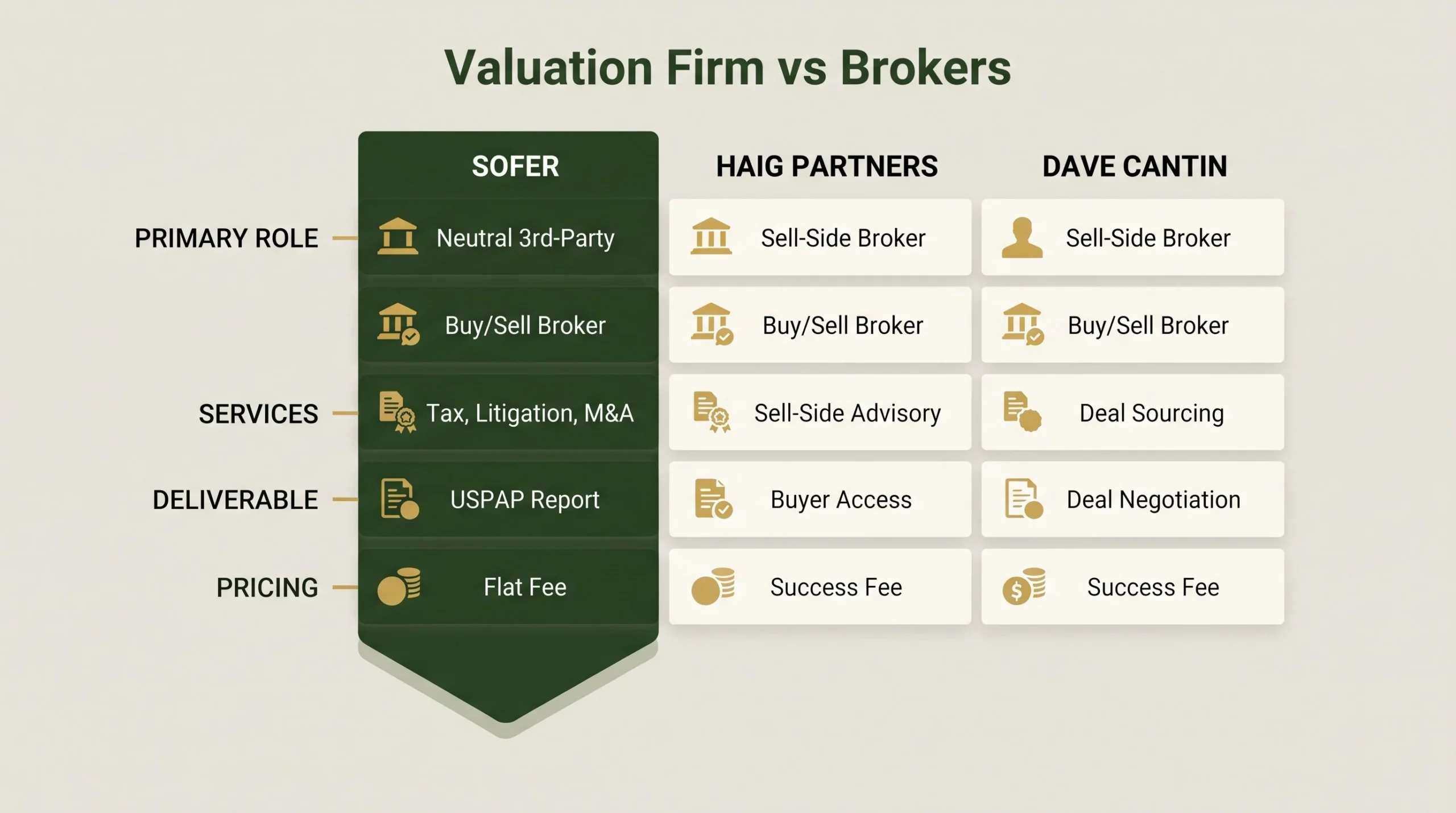
| Factor | Sofer Advisors (CPA-led Valuation Firm) | Haig Partners (M&A Broker) | Dave Cantin Group (M&A Broker) |
|---|---|---|---|
| Primary Role | Neutral 3rd-Party Valuation | Sell-Side Deal Brokerage | Buy-Side & Sell-Side Brokerage |
| Services Provided | Tax, Litigation, & M&A Support | Sell-Side Advisory | M&A Deal Sourcing & Negotiation |
| Key Deliverable | AICPA/USPAP Compliant Report | Marketing Materials & Buyer Access | Deal Negotiation Facilitation |
| Pricing Model | Flat-fee project basis | Success fee on transaction value | Success fee on transaction value |
Owners often need a certified firm when accuracy and neutral views come first, such as for tax reports or estate plans. A firm can then apply the strict standards in The Appraisal Foundation (USPAP) guidance, along with the business valuation standards set by the AICPA. Brokers, by contrast, act as agents who find buyers and push for the top sale price. Each path meets the valuation work in its own way. And the parts below show how these roles shape your plan.
Choosing between a valuation firm and a broker depends on your needs. You may need a solid number for a legal or tax rule, or a partner to run the sale. Firms like Sofer Advisors give a neutral lens to set value, while brokers work to close the deal. The final report should tie every method and input together, not treat any on its own, so the conclusion holds up under scrutiny from a buyer, a tax authority, or a court.
Frequently Asked Questions
How to value an auto dealership?
Valuing a dealer uses the income, market, and asset paths. These capture both earnings and hard holdings. Analysts spot key drivers, such as franchise strength and spot, and adjust records for normalized EBITDA.
How much does a car salesman make on a $10,000 car?
Pay depends on the dealer’s pay setup. This varies widely with profit margins, not the full sale price. A salesperson often earns a cut of the gross profit, the gap between the sale price and the car’s cost. Sofer Advisors weighs these pay costs during the normalization step so reported margins show true work efficiency for the firm.
How to value a motor dealership?
Valuation needs you to split the business from its assets. These assets are land and car stock, and separating them helps find the enterprise value. Analysts must count blue sky, which reflects the soft value of the franchise deal and local brand loyalty.
What is the EBITDA multiple for a car dealership?
Market multiples for dealers often range between 3x and 7x EBITDA. This depends on brand prestige, regional growth, and facility size. Sofer Advisors applies current multiples matched to brand segments so the value reflects up-to-date deal facts for the client.
What is the blue sky multiple for an auto dealership?
Blue sky multiples act as a premium on top of hard asset value. They stand for the steady earning power of a franchise in its market. And they react strongly to the stability of the tie between the dealer and the maker.
How does a valuation firm differ from an M&A broker?
A valuation firm gives a neutral, third-party number, often for tax reports, estate plans, or owner disputes. It follows standards set by The Appraisal Foundation (USPAP) and the AICPA. A broker, by contrast, acts as an agent who finds buyers and pushes for the top sale price. Sofer Advisors works on a flat-fee basis, while brokers usually charge a success fee tied to the deal.
Which tangible assets are valued separately in a dealership?
Some hard assets get valued on their own, including the land, fixed assets (FF&E), new and used car stock, and parts stock. Each has its own market and role in daily work. Land often gets a formal appraisal, while car and parts stock need review for aging or slow-moving items. This shows their replacement or sale worth apart from future profit.
What are common add-backs in a dealership valuation?
Add-backs are changes made to a dealer’s income statement to reveal true, normalized earning power. Common ones include owner pay above market rates, one-time upgrades, personal travel, and luxury costs run through the firm. Under NACVA standards, these charges get added back to EBITDA. This gives buyers a cleaner view of the core business rather than the owner’s spending.
Why does brand affect a dealership’s value?
Brand is a top value driver because it shapes demand, franchise terms, and support from the Original Equipment Manufacturer (OEM). Luxury brands often earn higher multiples than mass-market brands, since they carry richer profit margins and stronger equity. Buyers weigh a brand’s long-term staying power and regional strength before setting a price, which shields the firm from a shaky economy.
Related Case Studies
- Franchise Valuation Considerations for Business Owners
- Revenue Ruling 59-60: The IRS Foundation of Business Valuation
- EBITDA Multiple for Business Valuation by Industry
Executive Summary
An auto dealership valuation combines tangible holdings, land, facilities, FF&E, and vehicle and parts inventory, with intangible blue sky goodwill that captures future earning power. Analysts rely on three approaches, the market, asset-based, and discounted cash flow methods, and most often anchor the conclusion to EBITDA multiples that typically run from 3x to 7x. Those multiples move with brand prestige, OEM relationships, location, and facility condition, so luxury franchises usually price above domestic and mass-market stores.
Before applying any multiple, an expert normalizes earnings by adding back above-market owner pay, one-time costs, and personal expenses under recognized standards. A neutral, third-party firm delivers a USPAP- and AICPA-compliant report, which differs from a broker’s success-fee, deal-closing role. That defensible number supports sales, tax filings, estate plans, and litigation where accuracy and independence matter most.
What Should You Do Next?
Start by gathering at least three years of income statements, balance sheets, and tax returns so a reviewer can see steady performance over time. Next, organize your franchise agreements, OEM correspondence, and real estate leases, since these papers directly shape both blue sky and enterprise value. Finally, engage a certified, independent firm early so normalization and method selection are set before you negotiate a sale or file with a tax authority.
David Hern CPA ABV ASA, founder of Sofer Advisors provides neutral, defensible valuations for auto dealerships. Schedule a free consultation to discuss your situation.
People Also Read
- Retail Company Valuation Multiples: Complete Guide 2026
- Adjusted EBITDA vs EBITDA: Key Differences Explained
About the Author
This guide was prepared by David Hern CPA ABV ASAc, founder of Sofer Advisors, a business valuation firm headquartered in Atlanta, GA serving clients across the United States. David holds dual accreditations as an Accredited Senior Appraiser (ASA) and is Accredited in Business Valuation (ABV), credentials recognized by the IRS, SEC, and FINRA. He also holds the Certified Exit Planning Advisor (CEPA) designation. With 15+ years of valuation experience, David has served as an expert witness in 11+ cases across multiple jurisdictions and built Sofer Advisors into an Inc. 5000-recognized firm with 180+ five-star Google reviews. Its full W2 employee team maintains subscriptions to all major valuation databases and operates under a next business day response policy.
For professional business valuation services, visit soferadvisors.com/about-us/ or contact Sofer Advisors at soferadvisors.com/contact-us/.
Disclaimer: This content is for informational purposes only and does not constitute professional valuation advice. Business valuation conclusions depend on specific facts and circumstances. Contact Sofer Advisors for guidance regarding your specific situation.









