


Last Updated: July 2026
An EB-5 business valuation sets the fair market value of a new commercial enterprise for the U.S. Immigrant Investor Program. It confirms that the entity is a real, for-profit business and that the investor’s capital is genuinely at risk. It also documents the path to the jobs USCIS requires. Accurate financials matter here because they feed straight into the visa petition.
Sofer Advisors provides neutral, third-party reports for these engagements. Its analysts hold CPA, ABV, and ASA credentials and have supported more than 11 expert-witness cases, so each conclusion is built to survive review by regulators and counsel. Because EB-5 timelines are tight, the work stays focused on defensible methods and current market data, backed by 180+ five-star Google reviews.
Owners and their immigration counsel face real complexity in proving that an enterprise meets federal investment rules. A weak analysis can delay a petition or draw a denial. Following the USPAP standards set by the Appraisal Foundation is the baseline for these high-stakes reports. The sections below walk through job creation, accepted methods, and source of funds.
Key Takeaways
- Regulatory proof: the valuation gives USCIS independent evidence that the investment and enterprise are legitimate.
- Job creation: it supports a plan to create at least 10 full-time U.S. jobs per investor.
- Accepted methods: reports set fair market value through the income, market, or asset approaches under USPAP.
- Capital at risk: a compliant report shows the invested capital is truly at risk, not parked passively.
- Risk control: an independent expert helps avoid the red flags that trigger a Request for Evidence or denial.
Each point rests on a close read of the company’s finances and the terms of the investment. The sections below break down the technical pieces stakeholders need for compliance.
Why is a business valuation critical for EB-5?
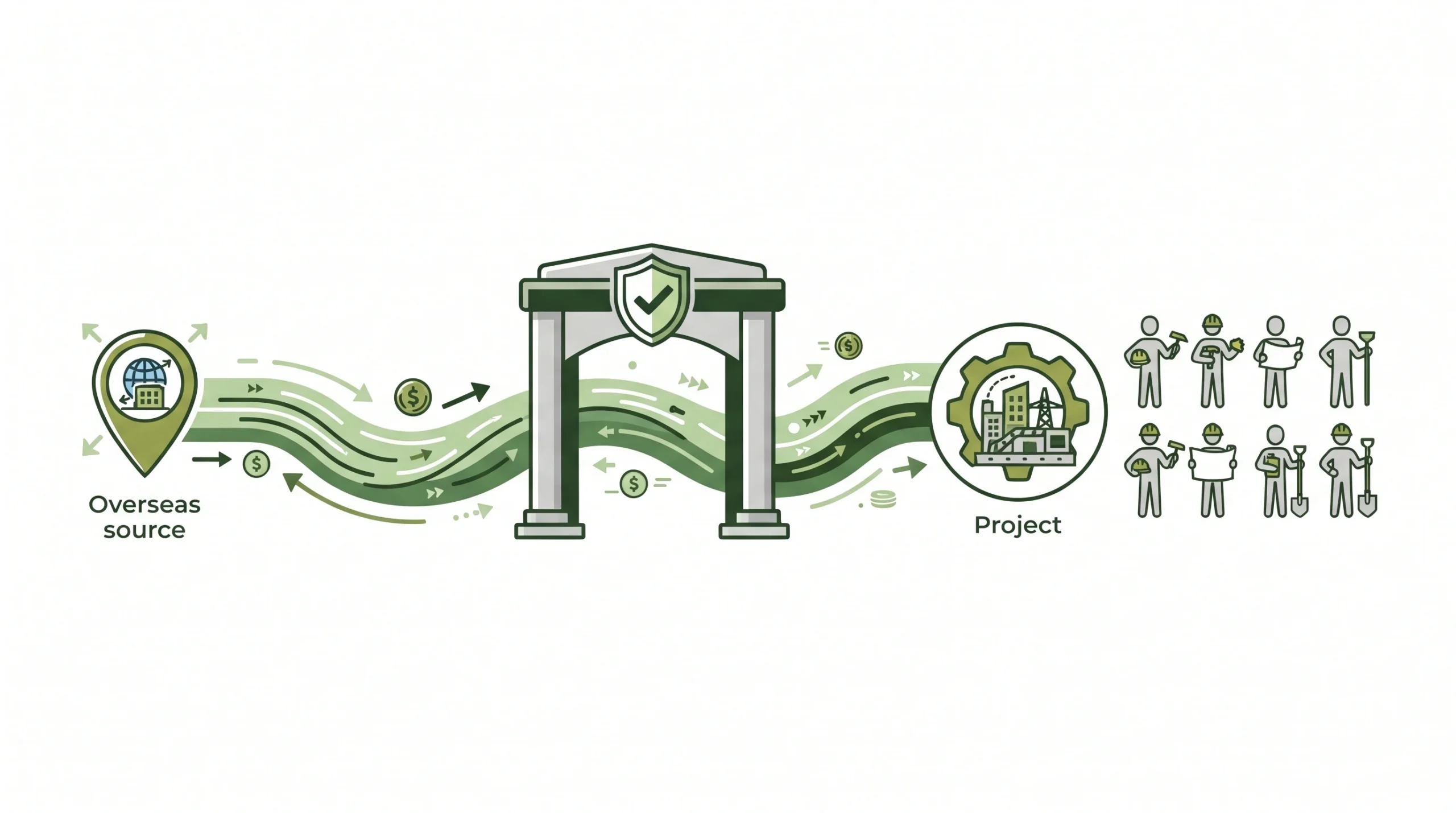
A valuation is critical because it gives U.S. Citizenship and Immigration Services (USCIS) third-party proof that the investment involves a legitimate new commercial enterprise. By fixing the fair market value, the report shows the capital is at risk as federal rules require.
This documentation anchors the Form I-526E petition. A clear report addresses likely questions up front and lowers the odds of a Request for Evidence. It shows how the funds are used and documented, which is exactly what adjudicators look for. Sofer Advisors builds reports around the specific financial conditions a residency petition must satisfy, so the facts on file line up with the immigration standard.
How does valuation support EB-5 job creation goals?
The valuation supplies the financial analysis that shows a project will generate 10 full-time jobs per investor. A credible business plan is the foundation for those projections. If a project misses the threshold within the two-year conditional residency window, the investor faces serious immigration risk.
The analysis confirms the economic feasibility of the investment. It draws on direct, indirect, and induced job estimates to build one coherent story. Regional Center projects often use standard economic multipliers to show wider impact. Transparent assumptions are essential; a model that hides its inputs invites scrutiny. Documenting how each role arises links capital directly to job growth.
Talk to a Sofer Advisors valuation specialist about a report for your commercial enterprise.
What valuation methods does USCIS accept for EB-5?
USCIS does not mandate a single method, but it expects reports to follow the income, market, and asset approaches to fair market value. Reports should track the principles in IRS Revenue Ruling 59-60, the foundation for valuing closely held interests. Our guide to Revenue Ruling 59-60 covers those eight factors.
The income approach, and the discounted cash flow method in particular, usually fits EB-5 best because it centers on the future job-creating potential of the enterprise. The analyst must explain why the chosen method suits the business and how it ties to the projections. National firms like Alvarez & Marsal, Stout, and Kroll handle large regional-center portfolios; Sofer Advisors brings the same standards to individual investors and single-enterprise petitions through The Sofer Difference, a Discovery, Diligence, Analysis, and Delivery process.
What belongs in an EB-5 compliant valuation report?
A compliant report analyzes the enterprise, its industry, its key people, and its financial projections, then reaches a value that holds up with USCIS. It ties into a Matter of Ho compliant business plan, so the project reads as credible and specific. It sets out the source and application of funds, showing exactly how investor capital is deployed to create jobs.
Multi-year forecasts give a logical path to the staffing the program requires. Together these pieces form the evidence behind an I-526E petition. When they are clear and consistent, adjudicators can judge the viability of the investment and the investor’s path to residency without guesswork.
How does valuation affect source of funds documentation?
A formal valuation supports source of funds by verifying the path of funds and confirming the capital enters a real, working business. Because federal reviewers trace the history of every invested dollar, the report acts as an independent witness to the economics of the deal.
When an investor contributes assets other than cash, such as machinery or equipment, a professional appraisal sets the U.S. dollar equivalent. That keeps the total contribution at or above the required threshold. Accurate reporting of non-cash contributions matters for the I-829 petition to remove conditions on residence. Anchoring these figures in verified data gives investors a clean record of participation.
What are common red flags in EB-5 valuations?
A few patterns reliably draw agency attention:
- Optimistic projections with no independent market support
- An appraiser with a conflict of interest or a fee tied to the outcome
- Numbers reverse-engineered to hit the investment threshold
Any of these can trigger a Request for Evidence or a Notice of Intent to Deny from USCIS. The safeguard is a neutral, third-party report that grounds every projection in verifiable industry data and keeps the appraiser independent of the deal. When the business plan and the valuation tell the same story, a petition clears review far more smoothly.
Inconsistent data hurts a petition too. When projections ignore industry trends, officers question the job-creation plan. Clear alignment between the business plan and the valuation is what passes review. Sofer Advisors keeps a neutral, third-party posture and grounds projections in verifiable industry data.
How do the roles in an EB-5 petition compare?
The table below shows how the valuation advisor, USCIS, and legal counsel each contribute to a compliant petition.
| Role | Focus | Contribution to the petition | Key output |
| Valuation advisor | Independent business valuation | Neutral analysis of fair market value and job-creation potential | Defensible valuation report for USCIS |
| USCIS | Adjudication | Sets requirements and approves or denies petitions | Policy manuals, forms, RFE or approval |
| Immigration counsel | Legal strategy | Files the petition and advises on risk and compliance | Completed Form I-526E and legal briefs |
These roles interlock to form one compliant packet. Counsel orchestrates the filing, the valuation advisor supplies the financial evidence, and adjudicators weigh whether the deal meets the statutory thresholds. Keeping the roles independent reduces conflict between the projections and the legal intent. Because the law requires capital to be genuinely at risk, an independent report insulates the project during administrative review.
EB-5 work blends valuation discipline with immigration procedure. The questions below cover what investors ask most before an engagement.
Frequently Asked Questions
What is the EB-5 $800,000 investment?
The $800,000 figure is the minimum EB-5 investment when the project sits in a Targeted Employment Area. The 2022 Reform and Integrity Act set this threshold to keep the program tied to real economic participation. Outside a Targeted Employment Area, the minimum is higher. Sofer Advisors verifies that an enterprise’s financial structure can properly account for these funds toward the required job-creation goals.
Is the EB-5 program worth it?
Whether EB-5 is worth it depends on an investor’s residency goals and tolerance for capital risk. The program offers a path to permanent residency, but it requires a large commitment and strict compliance. Sofer Advisors supports that decision with independent, data-backed reports that clarify the economic feasibility of an enterprise before an investor signs any binding agreement.
Can I start my own business for EB-5?
Yes. An investor can start a business for EB-5 as long as it operates as a new commercial enterprise that creates at least 10 full-time U.S. jobs. This route gives more control than a passive regional-center investment. Sofer Advisors helps founders build a defensible business plan and fair market value that align with the job-creation mandate federal reviewers apply.
How much does an EB-5 business valuation cost?
An EB-5 valuation from Sofer Advisors runs $7,500 to $25,000, based on its published engagement data, and most take four to eight weeks. The range reflects the complexity of the enterprise, the number of entities, and the timeline. The report covers the capital structure analysis and the job-creation model. For a quote tied to your project, request a valuation estimate with your business plan and financials.
What is a Targeted Employment Area for EB-5?
A Targeted Employment Area is a location USCIS designates for high unemployment or rural status, which lets investors qualify at the lower $800,000 minimum. The design steers capital to regions that need it. Sofer Advisors checks whether the project’s geographic and economic data actually qualify the business for the lower tier during the valuation.
How long does an EB-5 business valuation take?
An EB-5 valuation usually takes four to eight weeks from engagement to final report. That window covers a review of financial records, management interviews, and the required methods. Organized records shorten it. Sofer Advisors runs a transparent schedule so the financial data is fully vetted for compliance ahead of federal submission deadlines.
What is a new commercial enterprise in EB-5?
A new commercial enterprise is any for-profit entity formed for the ongoing conduct of lawful business and established after November 29, 1990. For EB-5, this entity must be the one that creates the required jobs. Sofer Advisors defines the enterprise structure in its reports so it clearly meets the statutory definition an investor’s eligibility depends on.
How does a valuation prove my investment is at risk?
A valuation shows capital is at risk by analyzing financial health, cash flow projections, and how funds are actually spent. It demonstrates the money funds real commercial activity, such as development or hiring, rather than sitting in a passive account. Sofer Advisors includes this test of capital exposure in every analysis to support the investor’s standing with federal reviewers.
What happens if USCIS issues a Request for Evidence on my valuation?
A Request for Evidence means USCIS wants more documentation or clarity on the financial or job-creation data. Counsel usually leads the response with added support. Sofer Advisors prepares updated or supplementary analysis to address the specific financial points raised, which helps resolve the questions and confirm the enterprise’s value.
Related Case Studies
- E-2 Visa Business Valuation: A 2026 Guide
- 409A Valuation for Startups: Compliance Guide
- Opportunity Zone Investors and IRS Appraiser Requirements
Executive Summary
An EB-5 business valuation proves three things to USCIS: the enterprise is real, the capital is at risk, and the plan can create 10 jobs per investor. Reports follow the income, market, and asset approaches under USPAP, with a discounted cash flow model usually carrying the most weight because it reflects future job creation. The report also documents the source and path of funds, including any non-cash contributions. Weak or reverse-engineered projections draw a Request for Evidence, so grounding every assumption in verifiable data is the safest path. To begin, confirm your business plan and capital figures reflect your most recent fiscal period.
What Should You Do Next?
Review your business plan and confirm the capital contributions and employment figures are current. A valuation has to reflect the latest fiscal period to hold up during the I-526E filing. If your entity has had recent structural or capital changes, hand those records to an independent valuation provider so the report matches reality.
David Hern CPA ABV ASA, founder of Sofer Advisors, provides independent valuations that support EB-5 petitions and investment goals. Schedule a free consultation to discuss your enterprise.
People Also Read
- What Are the Discounted Cash Flow Techniques? A Guide
- How to Value a Business Based on Cash Flow: Expert Guide
About the Author
This guide was prepared by David Hern CPA ABV ASA, founder of Sofer Advisors, a business valuation firm headquartered in Atlanta, GA serving clients across the United States. David holds dual accreditations as an Accredited Senior Appraiser (ASA) and is Accredited in Business Valuation (ABV), credentials recognized by the IRS, SEC, and FINRA. He also holds the Certified Exit Planning Advisor (CEPA) designation. With 15+ years of valuation experience, David has served as an expert witness in 11+ cases across multiple jurisdictions and built Sofer Advisors into an Inc. 5000-recognized firm with 180+ five-star Google reviews. Its full W2 employee team maintains subscriptions to all major valuation databases and operates under a next business day response policy.
For professional business valuation services, visit soferadvisors.com/about-us/ or contact Sofer Advisors at soferadvisors.com/contact-us/.
Disclaimer: This content is for informational purposes only and does not constitute professional valuation advice. Business valuation conclusions depend on specific facts and circumstances. Contact Sofer Advisors for guidance regarding your specific situation.