


Last Updated: June 2026
Lost business opportunity damages pay a plaintiff for the value of a venture that was blocked from starting. This is not a claim for profits from an existing business that was harmed. The legal difference matters. A lost profits claim uses historical earnings to project forward. A lost opportunity claim must show value with no operating history at all. Courts set strict standards before awarding these damages. An expert who fails to meet them will see damages excluded or cut sharply.
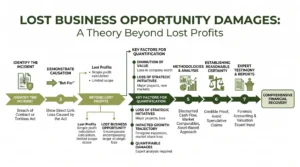
The legal theory is clear. Courts have held that a defendant who wrongfully blocks a business chance can be liable for its economic value. The plaintiff must prove causation, foreseeability, and value to a reasonable degree of certainty. That last element is where most claims succeed or fail. Sofer Advisors helps owners and their advisors work through exactly these questions and turn the analysis into a defensible business valuation they can act on.
The following takeaways summarize the key valuation and transaction factors covered in this guide.
Key Takeaways
- Lost Business Opportunity Damages – Lost business opportunity damages pay for a venture that never launched due to the defendant’s wrongful act. This is distinct from lost profits on an existing business.
- Courts Require Plaintiff Prove – Courts require the plaintiff to prove causation, foreseeability, and damages to a reasonable degree of certainty. Speculation is not enough, but absolute precision is not required.
- Hadley V Baxendale Remains – Hadley v. Baxendale remains good law. Its foreseeability principle directly governs whether lost opportunity damages are recoverable.
- Damages Expert Quantifies Lost – A damages expert quantifies lost opportunity using DCF analysis, comparable deal multiples, or market analysis of what similar ventures have sold for.
- Startup Prelaunch Ventures Face – Startup and pre-launch ventures face the hardest standard of proof. Courts reject projections with no grounding in signed contracts, proven demand, or comparable performance.
- Georgia Courts Apply Reasonable – Georgia courts apply the “reasonable certainty” standard, not “absolute certainty.” Experienced damages experts can meet this bar with a rigorous method.
Each of these factors is examined in depth in the sections that follow.
What Is a Lost Business Opportunity Claim?
A lost business opportunity claim arises when a defendant’s wrongful conduct blocks the plaintiff from launching, buying, or building a business venture with real economic value. The wrongful conduct can include breach of contract, fraud, or breach of fiduciary duty. The plaintiff is not claiming an existing business was damaged. The plaintiff is claiming a business that would have existed never got the chance.
Examples of lost business opportunity claims include:
- A franchisor who wrongfully ends a development agreement before the franchisee opens units. This blocks development of locations that were contractually promised.
- A licensor who breaches a technology license before a startup launches, forcing it to abandon its go-to-market plan.
- A landlord who wrongfully denies a lease to a business whose only viable location was the disputed space.
- A competitor who interfered with a business purchase that would have given the plaintiff access to a specific market.
- A joint venture partner who diverts the venture’s chance to a competing entity in breach of fiduciary duty.
In each case, the value being claimed is forward-looking. This creates both the legal challenge (uncertainty about the future) and the analytical challenge (how to assign a credible dollar value to something that never happened).
Engagements like this are performed under the AICPA Statement on Standards for Forensic Services, which sets enforceable standards for litigation and investigative work.
Is Hadley v. Baxendale Still Good Law?
Yes. Hadley v. Baxendale (1854) is one of the most durable rules in Anglo-American contract law. It directly governs whether lost opportunity damages are recoverable in breach of contract cases. The rule holds that consequential damages are recoverable only if they were reasonably foreseeable to the breaching party. This includes lost profits and lost business chances. Foreseeability is measured at the time the contract was formed.
The foreseeability test from Hadley works in two parts. Damages are recoverable if they either (1) arise naturally from the breach in the ordinary course, or (2) were in the reasonable view of both parties at the time of contracting based on special facts shared with the breaching party.
For a lost business chance, the defendant must have known, or should have known, that breach could block the plaintiff from launching or building a venture. In many commercial contracts, franchise agreements, development agreements, technology licenses, this foreseeability is stated or clearly implied from the contract’s purpose.
Courts applying Hadley to lost opportunity claims have held that a development agreement by its nature means breach will deprive the franchisee of the value of units that would have been built. The foreseeability element is often easily met when the contract itself is built around creating business value.
Where Hadley creates a hurdle is in cases where the lost chance was not foreseeable from the contract’s face. A general supply contract, for example, does not put a supplier on notice that the buyer planned to build an entire new business around the supplied product. If that context was not shared at contracting, the resulting lost opportunity damages may be excluded.
What Must a Plaintiff Prove to Recover Lost Business Opportunity Damages?
Courts generally require the plaintiff to show four elements:
- Wrongful conduct by the defendant. The defendant must have committed an actionable wrong, breach of contract, tort, or statutory violation. Courts do not pay for chances lost to lawful competition.
- Causation. The defendant’s wrongful conduct must be the but-for cause of the lost chance. If the chance would have failed anyway, due to market conditions, financing failures, or the plaintiff’s own performance, causation fails.
- Foreseeability. Under Hadley and its descendants, the type of loss (lost business chance) must have been reasonably foreseeable at the time of contracting or at the time of the tort.
- Reasonable certainty of damages. This is the most contested element. Courts require that damages be proven to a reasonable degree of certainty. Not with math precision. But with enough factual and expert support to avoid pure speculation. The standard does not require that the business would have succeeded. It requires the plaintiff to show a genuine chance with credible value, supported by market analysis, comparable deals, or proven demand.
Georgia courts have applied the reasonable certainty standard in commercial disputes. In franchise agreement breach cases, Georgia courts have allowed recovery for lost unit development when supported by expert analysis showing projected performance grounded in comparable franchisee results.
How Does a Damages Expert Quantify a Lost Business Opportunity?
The method depends on the stage and nature of the chance. Damages experts, including certified business valuators and forensic accountants, use several approaches:
- Discounted Cash Flow (DCF) of Projected Enterprise. For a business with signed contracts, committed financing, or proven comparable revenue, a DCF can project future cash flows and discount them to present value. The key is grounding projections in verifiable market data. Courts have excluded DCF analyses that relied entirely on management projections without independent support.
- Comparable Deal Multiples. For chances involving the purchase or development of businesses in active M&A markets, comparable deal databases (Capital IQ, PitchBook, DealStats) can show what similar businesses at similar stages have sold for. Applying a revenue or EBITDA multiple from comparable deals to the projected metrics of the lost venture gives a market-based value estimate.
- Lost Market Value / Business Enterprise Value. When the chance involved buying an existing business at a below-market price, e.g., a right of first refusal that was wrongfully denied, the damages are the difference between the fair market value of the target and the price at which the plaintiff had the right to buy it.
- Stage-Adjusted Probability Analysis. For early-stage ventures, some experts apply venture capital success probability data. This approach acknowledges uncertainty and adjusts expected value downward. Courts find this more credible than projections that assume 100% success.
| Method | Best For | Court Credibility |
|---|---|---|
| DCF with corroborated projections | Ventures with signed contracts or comparable performance | High when grounded in verified data |
| Comparable deal multiples | Industries with active M&A, similar-stage comparables | High with quality comparable selection |
| Lost acquisition chance | Right of first refusal or option price disputes | High – damages are market price minus contract price |
| Probability-adjusted enterprise value | Pre-revenue startups | Moderate – courts accept if method is disclosed |
| Management projection only | Any stage | Low – courts routinely exclude as speculative |
David Hern CPA ABV ASA, founder of Sofer Advisors, brings a Heart of a Teacher to every engagement – translating complex valuation methodology into clear, actionable guidance that clients can act on before and after the report is delivered. With 15+ years of valuation experience, 11+ expert witness cases across multiple jurisdictions, and 180+ five-star Google reviews, David built Sofer Advisors into an Inc. 5000-recognized firm. The Sofer Difference is a four-phase process of Discovery, Diligence, Analysis, and Delivery that ensures every conclusion is defensible, documented, and tied to the specific facts of the business.
While national firms like Stout and Kroll serve large enterprise clients, Sofer Advisors specializes in middle-market businesses that require personalized attention, direct access to credentialed professionals, and a next business day response policy.
How Do Lost Business Opportunity Damages Differ From Lost Profits Damages?
Lost profits damages and lost business opportunity damages are related but distinct theories:
- Lost profits are damages on an existing, operating business that was harmed. The method typically uses historical financial performance to set a baseline. It then projects the earnings the business would have generated but for the defendant’s conduct. Courts are generally more receptive to lost profits claims. The business’s track record provides an objective foundation for projections.
- Lost business chance is the value of a venture that never started. There is no historical baseline. The entire damages analysis is forward-looking. It is grounded in market data, comparable businesses, and proven demand rather than the plaintiff’s own operating history.
The practical result: lost chance claims require far more upfront work to survive a Daubert challenge. An expert relying on a plaintiff’s own projections without independent support will be excluded. An expert who starts with comparable market deals, adjusts for the venture’s traits, and applies a recognized method, produces testimony that courts accept.
One more distinction: lost chance damages are often classified as consequential damages in contract cases. This means they are subject to the Hadley foreseeability test and, often, to contractual liability limits that exclude consequential damages. If the contract contains such a clause, the plaintiff may be limited to direct damages even if a large business chance was lost.
How Does Sofer Advisors Support Litigation on Opportunity Loss Claims?
Sofer Advisors serves as a damages expert and business valuation expert in commercial litigation involving lost business opportunity claims. Our work in this area includes:
Providing expert reports and testimony in franchise agreement breach cases where planned unit development was blocked. Our damages analysis was grounded in comparable franchisee performance data from the franchisor’s own disclosure records.
Finding the value of business purchase chances denied through breach of right-of-first-refusal agreements. We used market deal databases to set fair market value of the target.
Analyzing joint venture opportunity losses where a partner’s diversion of corporate chance deprived the venture of a specific market entry.
In Georgia, courts in the Northern and Middle Districts have qualified damages experts in business opportunity cases where the method was transparent and grounded in recognized valuation principles. Sofer Advisors’ reports are prepared to the standards required for federal and state court expert testimony.
The questions below address the most common issues attorneys raise before engaging a qualified appraiser for a lost business opportunity damages engagement.
Frequently Asked Questions
Can you sue for a lost business opportunity?
Yes, under the right facts. You must show that the defendant’s wrongful conduct caused the loss, that the chance was foreseeable to the defendant, and that damages can be proven to a reasonable degree of certainty. Courts will not award speculative damages, but they do not require exact certainty either.
Is Hadley v. Baxendale still good law?
Yes. Hadley v. Baxendale (1854) remains foundational to consequential damages analysis in U.S. contract law. Its foreseeability test directly controls whether lost business opportunity damages are recoverable in a breach of contract case.
What is a lost business opportunity?
A lost business chance is the economic value of a venture that was blocked from coming into existence due to a defendant’s wrongful conduct. Unlike lost profits (which measure harm to an existing business), lost chance measures the value of something that never launched.
How do courts assess the value of a startup or pre-launch venture?
Courts apply the reasonable certainty standard, requiring factual grounding such as signed contracts, letters of intent, proven comparable performance, or credible market analysis. Pure projection without support is excluded. Probability-adjusted models that acknowledge and measure uncertainty are more credible than all-or-nothing projections.
What is the difference between lost profits and lost business opportunity?
Lost profits pay for harm to an existing business’s ongoing earnings. Lost business chance pays for a venture that never launched. Lost profits use historical earnings as a baseline. Lost chance has no historical baseline and requires market-based analysis to show prospective value.
Do Georgia courts award lost business opportunity damages?
Yes. Georgia courts apply the reasonable certainty standard. They have awarded lost business opportunity damages where the plaintiff showed a genuine chance, proved causation, and supported the damages claim with expert analysis using recognized method.
What is a consequential damages exclusion and how does it affect opportunity claims?
Many commercial contracts include clauses excluding consequential damages, defined to include lost profits, lost revenue, and lost business chance. If such a clause exists and is enforceable, lost chance damages may be barred even if the breach caused a real economic loss. Review the contract before pursuing this theory.
What expert credentials are most relevant for lost business opportunity analysis?
CVA and ABV professionals are well-positioned to perform the business enterprise valuation at the core of an opportunity loss analysis. CFF forensic accountants add value when the analysis requires rebuilding projected financial performance or analyzing comparable financial data.
How does the “reasonable certainty” standard work in practice?
Courts require damages to be based on objective evidence, comparable deals, signed contracts, market research, industry data, not the plaintiff’s internal hopes. The standard is lower than absolute certainty but higher than mere possibility. Expert testimony that discloses its method and grounds results in verified data will generally meet the standard.
Can a contractual limitation-of-liability clause eliminate lost opportunity damages?
Yes, in most cases. Courts generally enforce consequential damages exclusions in commercial contracts between sophisticated parties. If such a clause is in the operative contract, lost chance damages are likely excluded regardless of how well the plaintiff proves the economic value of the lost venture.
Related Case Studies
- Expert Witness Business Valuation Georgia What Attorneys Need To Know
- Shareholder Dispute Valuation Atlanta Resolving Georgia Business Partner Conflicts
- Business Interruption Valuation Insurance Claims Guide For Business Owners
Executive Summary
- Lost business opportunity damages pay for ventures that never launched due to a defendant’s wrongful conduct – a higher analytical bar than lost profits claims.
- Hadley v. Baxendale governs foreseeability of consequential damages and remains the foundational test in breach of contract cases.
- Courts require causation, foreseeability, and reasonable certainty of damages. Speculative claims without factual grounding are excluded.
What Should You Do Next?
If you are an attorney or business owner pursuing or defending a lost business opportunity claim, the quality of the damages analysis will shape the outcome. David Hern CPA ABV ASA, founder of Sofer Advisors, holds dual ASA and ABV credentials recognized by the IRS, SEC, and FINRA, with 15+ years of valuation experience and 180+ five-star Google reviews. Schedule a consultation to discuss your business valuation needs.
People Also Read
- Why You Must Start Planning Your Business Exit Now With The Right Valuation Expert
- What To Expect During A Business Valuation Step By Step Process
About the Author
This guide was prepared by David Hern CPA ABV ASA, founder of Sofer Advisors – a business valuation firm headquartered in Atlanta, GA serving clients across the United States. David holds dual accreditations as an Accredited Senior Appraiser (ASA) and is Accredited in Business Valuation (ABV), credentials recognized by the IRS, SEC, and FINRA. He also holds the Certified Exit Planning Advisor (CEPA) designation. With 15+ years of valuation experience, David has served as an expert witness in 11+ cases across multiple jurisdictions and built Sofer Advisors into an Inc. 5000-recognized firm with 180+ five-star Google reviews. The firm’s full W2 employee team maintains subscriptions to all major valuation databases and operates under a next business day response policy.
For professional business valuation services, visit soferadvisors.com/about-us/ or schedule a consultation at soferadvisors.com/contact-us/.
This content is for informational purposes only and does not constitute professional valuation advice. Business valuation conclusions depend on specific facts and circumstances. Contact Sofer Advisors for guidance regarding your specific situation.