


Last Updated: June 2026
This article is for urgent care owners, investors, practice brokers, and transaction attorneys who want a clear framework for clinic pricing. After reading, you will know which methods apply, what metrics matter most, and what to do before going to market.
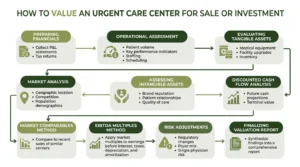
Urgent care valuation refers to the process of finding the fair market value of a walk-in medical clinic using the income approach, market approach, and asset approach. It matters because the gap between an accurate value and a rough estimate can cost a buyer or seller hundreds of thousands of dollars. Valuators analyze patient volume, payer mix, lease terms, and EBITDA multiples from comparable clinics to arrive at a defensible conclusion.
Whether you are selling, acquiring, or structuring a partner buy-in, an accurate valuation shapes every deal term. Sofer Advisors, headquartered in Atlanta, GA, provides credentialed healthcare business appraisals for owners across the United States. Getting the value wrong means every downstream decision is built on uncertain ground.
Key Takeaways
- EBITDA Multiples Set the Price – Most urgent care centers sell at 4x to 8x adjusted EBITDA, with multi-site platforms reaching 9x to 10x in competitive PE processes.
- Three Methods Apply Together – The income approach, market approach, and asset approach are all considered, with income carrying the most weight for going-concern clinics.
- Payer Mix Is a Primary Driver – A clinic with 60% or more commercial insurance revenue commands a higher multiple than one relying heavily on Medicaid or self-pay patients.
- Stark Law Shapes Every Deal – Stark Law and Anti-Kickback Statute compliance affects deal structure and can reduce the final price if gaps surface during due diligence.
- Personal Goodwill Can Be Separated – Value tied to the founding physician may qualify as personal goodwill, which carries capital gains treatment rather than ordinary income rates.
- Preparation Adds Value – Clinics entering the market with clean financials and no compliance gaps consistently close at the top of the applicable multiple range.
Each factor interacts with how a credentialed appraiser builds the valuation conclusion. The sections below examine each one in detail.
What Methods Apply to Urgent Care Value?
Urgent care valuation applies three methods: the income approach, market approach, and asset approach. For a going-concern clinic, the income approach carries the most weight. For distressed or asset-heavy situations, the asset approach is more relevant.
The income approach uses capitalization of earnings or a DCF model. Both require normalized financials before applying a capitalization rate or discount rate. The market approach compares the clinic to closed transactions. Research firms like scoperesearch.co and databases such as DealStats provide transaction multiples appraisers use when calibrating conclusions.
A credentialed appraiser considers all three methods and reconciles them into one supportable conclusion. Using a single method in isolation produces a number that often collapses under scrutiny from a buyer’s lender or the IRS.
How Do EBITDA Multiples Work for Clinics?
EBITDA (earnings before interest, taxes, depreciation, and amortization) is the primary pricing benchmark in urgent care transactions. Most clinics transact at 4x to 8x adjusted EBITDA. The multiple is driven by size, payer mix, and buyer type.
| Center Profile | Typical EBITDA Multiple |
|---|---|
| Single site, owner-dependent | 3.5x – 4.5x |
| 1-3 sites, mixed payer mix | 4.5x – 5.5x |
| 3-10 sites, commercial-skewed | 5.5x – 7.0x |
| 10+ sites, PE platform deal | 7.0x – 10.0x |
| Real estate included | Add 0.5x – 1.0x |
These ranges reflect transaction data from firms including lbmc.com and mercercapital.com. They are estimates, not guarantees for any specific center.
A single-site clinic with $1.2 million in EBITDA might trade at 5x, producing a $6 million enterprise value. A five-site group with $4 million might command 7x to 8x, producing $28 to $32 million. The gap is scalability and reduced owner-dependence that buyers price into every offer. Knowing your normalized EBITDA before speaking with buyers is the most critical number in any sale process.
Why Does Payer Mix Drive Urgent Care Value?
Payer mix finds the quality of a clinic’s cash flow. Commercial insurance patients generate 30% to 50% more revenue per visit than Medicaid or uninsured patients. They also reimburse on a more consistent schedule with fewer denials.
A clinic with 60% commercial payer mix is a different asset from one with 20% commercial and 50% Medicaid, even if gross revenue looks similar. Buyers model revenue per visit by payer class. Any erosion in commercial mix shows up in the DCF as reduced cash flow and a higher risk discount.
Clinics with heavy Medicaid volume face state rate-change risk and audit exposure. Adding occupational health contracts or employer direct-pay agreements in the 12 to 24 months before listing is one of the highest-return pre-sale moves available. A stronger payer trend supports a higher multiple and greater total proceeds.
What Regulatory Issues Affect Deal Price?
Healthcare transactions carry compliance complexity that general business deals do not. Buyers review every urgent care deal for Stark Law and Anti-Kickback Statute exposure. Both laws govern financial arrangements between physicians and entities they work with. Both affect deal structure and final price.
Stark Law matters most when the selling physician continues working after closing. That pay arrangement must satisfy a recognized safe harbor. Buyers require a credentialed fair market value opinion as a closing condition. In states restricting non-physician ownership, management services organization structures are common and require segregated analysis of economic rights across entities.
Sellers with clean payer audit histories and documented compliance reduce post-close escrow risk. Unresolved IRS tax issues or prior federal settlements carry value discounts because buyers model the cost of resolution. Healthcare-specific appraisal experience is not optional when regulatory risk is present.
How Should You Prepare Before Going to Market?
Preparation separates deals at the top of the range from those that stall in due diligence. Organize three to five years of normalized financial statements before any buyer conversation. Buyers who find gaps during diligence impose discounts larger than the cost of fixing the problems in advance.
Here is what buyers typically request first:
- Three to five years of tax returns and reviewed financial statements
- Monthly revenue by payer class and visit volume by service type
- Current lease agreements with renewal options and all material terms
- Provider employment contracts and non-compete agreements with expiration dates
- Compliance records including HIPAA policies and any payer audit history
Centers with documented quality metrics attract more bidders. The Sofer Difference is a four-phase process – Discovery, Diligence, Analysis, and Delivery. It gives urgent care owners a clear path from financial review to a final report explaining what drives value and where the clinic stands relative to market comparables.
What Role Does Goodwill Play in Value?
Goodwill represents value above the tangible asset base – patient loyalty, provider reputation, and transferable systems. For tax purposes, goodwill divides into two categories with different seller implications.
Personal goodwill is tied to the founding physician’s reputation. When purchase price is allocated to personal goodwill, the seller pays long-term capital gains rates on that portion rather than ordinary income rates. Enterprise goodwill covers value that survives the owner’s departure: trained staff, billing systems, and payer contracts.
Documenting transferable systems before going to market shifts value from personal to enterprise goodwill. This improves both the tax outcome and buyer confidence. David Hern CPA ABV ASA, founder of the firm, brings a Heart of a Teacher approach to each healthcare valuation, walking owners through how goodwill allocation affects price and post-close tax in plain terms they can act on.
The most common questions from urgent care owners cluster around pricing, timing, and regulatory compliance. The FAQ section below addresses each using the frameworks covered above.
Frequently Asked Questions
How much do owners of urgent care centers make?
Urgent care center owners typically earn between $150,000 and $500,000 per year in pay and distributions. High-volume suburban sites with strong commercial payer mix can generate $600,000 to $800,000 in annual adjusted EBITDA before owner pay. Actual income varies based on lease cost, staffing structure, and local reimbursement rates. Multi-site operators typically earn considerably more through combined distributions across their portfolio than single-site owners do.
Are urgent care centers profitable?
Most well-run urgent care centers are profitable, with EBITDA margins ranging from 12% to 25% of net revenue. Suburban centers with commercial payer concentration tend to perform at the higher end. Urban centers with elevated rent, heavy Medicaid volume, or high staffing costs run thinner margins. Most single-location centers need 40 to 60 daily patient visits to reach stable profitability and produce returns that justify the operator’s risk.
Who owns urgent care centers now?
Private equity-backed platforms, health systems, and corporate chains now control a large share of urgent care locations in the United States. Companies such as Concentra, CityMD, and GoHealth operate hundreds of locations each. Independent physician-owned centers still represent a meaningful share of the market, particularly in smaller markets. Consolidation has accelerated, and this trend benefits independent sellers because PE and health system buyers actively compete for quality assets.
How much does a valuation cost?
A healthcare practice valuation typically ranges from $10,000 to $30,000, depending on complexity, number of locations, and the purpose of the appraisal. Most urgent care valuation engagements are completed within four to eight weeks from the date all financial documents are received. Rush engagements are available at a 25% to 50% premium. Schedule a free consultation to receive a scoped estimate for your specific situation.
What is normalized EBITDA and why does it matter?
Normalized EBITDA is the clinic’s adjusted earnings after removing personal expenses, one-time items, and above-market owner pay. Common add-backs include excess owner salary, personal vehicle expenses, related-party rent above market, and non-recurring consulting fees. The result is the true earning power a buyer can realistically expect under new ownership. It is the single most important number going into any urgent care sale or buy-in negotiation.
How does Stark Law affect an urgent care sale?
Stark Law prohibits physicians from referring patients to entities where they hold a financial relationship unless a specific exception applies. When the selling physician continues working post-closing, pay must satisfy a recognized safe harbor. Both the bona fide employment and personal services exceptions require fair market value pay documented before services begin. Buyers require a credentialed fair market value opinion as a formal closing condition to manage regulatory risk.
What regulatory standards govern healthcare appraisals?
Healthcare business appraisals must comply with USPAP (Uniform Standards of Professional Appraisal Practice) as published by the Appraisal Foundation, and IRS qualified appraiser standards for tax-related engagements. Engagements between healthcare entities also require Stark Law and Anti-Kickback Statute safe harbor analysis. These mandates require that pay reflect fair market value. The AICPA Forensic and Valuation Services section publishes guidance for appraisers working in healthcare transaction contexts.
What credentials should an urgent care appraiser hold?
Your appraiser should hold the ABV (Accredited in Business Valuation) or ASA (Accredited Senior Appraiser) designation, both recognized by the IRS, SEC, and FINRA. Healthcare valuations benefit from appraisers experienced with Stark Law fair market value opinions. A CPA credential adds credibility for tax reporting and deal structuring. Firms without specific healthcare valuation experience present real risk in transactions of this size and regulatory complexity.
How long does an urgent care valuation take?
A credentialed urgent care valuation typically takes four to eight weeks from the date all financial documents are received. Complex multi-site engagements can extend to ten to twelve weeks. Rush engagements in two to three weeks are available at a premium. Owners planning a sale should begin the appraisal at least three months before their target closing date. This allows time for due diligence and any re-pricing discussions.
Related Case Studies
- Business Valuation For Mergers Buy Side Vs Sell Side
- How to Determine What a Business Is Worth: Complete Guide
- Medical Practice Valuation Atlanta Healthcare Sale Transition Guide
Executive Summary
Urgent care valuation uses the income approach, market approach, and asset approach to find fair market value. Most clinics trade at 4x to 8x normalized EBITDA, with platform deals reaching 9x to 10x in competitive processes. Payer mix, size, compliance posture, and goodwill structure are the primary drivers. Stark Law and Anti-Kickback Statute compliance shapes deal structure and affects final price directly. Owners who prepare financials and engage a credentialed ABV or ASA appraiser before going to market consistently close at higher values.
What Should You Do Next?
Start by pulling three to five years of normalized financial statements and an accounts receivable aging report before engaging an appraiser. Review your payer mix percentages and identify any compliance gaps that could affect deal structure. Then commission a professional appraisal before any buyer conversation, whether that is a formal sale, a partner buy-in, or a family transfer.
David Hern CPA ABV ASA, founder of Sofer Advisors, has led healthcare practice valuations for transaction, tax, and dispute purposes across the United States. With dual accreditations recognized by the IRS and FINRA, 180+ five-star Google reviews, and a next business day response policy, the firm delivers credible conclusions that stand up under scrutiny. Schedule a consultation to discuss your urgent care valuation needs and get a scoped estimate for your situation.
People Also Read
- Why You Must Start Planning Your Business Exit Now With The Right Valuation Expert
- What To Expect During A Business Valuation Step By Step Process
About the Author
This guide was prepared by David Hern CPA ABV ASA, founder of Sofer Advisors – a business valuation firm headquartered in Atlanta, GA serving clients across the United States. David holds dual accreditations as an Accredited Senior Appraiser (ASA) and is Accredited in Business Valuation (ABV), credentials recognized by the IRS, SEC, and FINRA. He also holds the Certified Exit Planning Advisor (CEPA) designation. With 15+ years of valuation experience, David has served as an expert witness in 11+ cases across multiple jurisdictions and built Sofer Advisors into an Inc. 5000-recognized firm with 180+ five-star Google reviews. The firm’s full W2 employee team maintains subscriptions to all major valuation databases and operates under a next business day response policy.
For professional business valuation services, visit soferadvisors.com or schedule a consultation.
This content is for informational purposes only and does not constitute professional valuation advice. Business valuation conclusions depend on specific facts and circumstances. Contact Sofer Advisors for guidance regarding your specific situation. No medical advice. No treatment recommendations. HIPAA/Stark Law acknowledgment. Consult healthcare professionals.